DIY Pore Strips

Kate and I are always concocting potions. You may remember Kate’s DIY dry shampoo, deodorant or her rosemary body scrub.  Today we’re teaching you how to make homemade pore strips so call your girl friends and schedule a sleepover, because you’ll make more than enough for one nose!

Have you ever tried Biore pore strips? They’re the amazing!  I mean, it is creepy how much I love seeing tiny stems of dirt, oil and blackheads, but it is also awesome knowing that the gunk is no longer in my pores.  Even though I love the instant gratification of pore strips, I do have a few complaints.  For starters, they are expensive.  I don’t have a big budget for bath and beauty products so spending at least $6 ($1 for each strip) on a box of pore strips is an extremely rare occurrence.  I also feel like I only have a 75% success rate with the store-bought strips.  Sometimes they work SO well and other times they don’t adhere to the side creases of my nose, which is where I have the most black heads. When a friend told me about DIY pore strips, I decided to try them out for myself and share the results with you guys and gals.

output_mbsX4j

liveseasoned_fall14_porestrips-1-6

Continue reading

Upcycled Tiny Vases

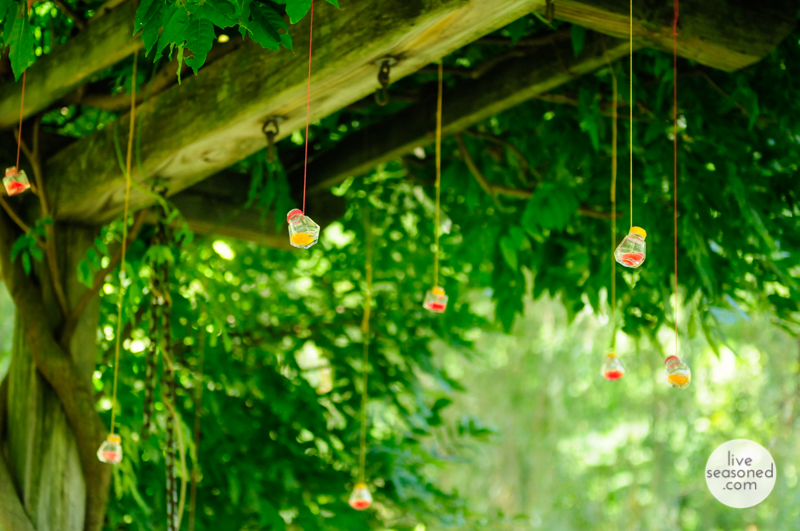
Hey party people! Labor day is this weekend and even if you don’t have a barbecue to host or attend, it’s a nice, long weekend that is meant for chillaxin’ and treatin’ yourself.  (Did you know chillax was added to the dictionary? My high school self is punching the air with excitement right now)  If you are hosting a party, you should think about making these spectacular little upcycled hanging glow vases to add to your decor. While you are crafting aforementioned vases, you should sip on these fruity mocktails and decide which one you’ll be concocting this weekend!

liveseasoned_summer14_hangingvases-5-3


My sister Kristin and I sprinkled them about our land to decorate for a camping festival that we hosted this past weekend (more on that to come).  They looked adorable during the day and mesmerizing at night!  These vases were one of the few decorations that really worked well both day and night.  Our enormous dreamcatchers were completely lost at night (they had no light-up features) and our sweet dance floor was plain ol’ grass and sky during the daytime, but these tiny vases looked great at all hours!

If you have some spare time, string and a few small vessels, then this craft is for you.  There is no glue or taped involved, so whatever you choose to use as a vase can be reused again in the future.  We had a large quantity of salt and pepper shakers left over from Katie’s wedding, which is why Kristin (our middle sister) thought up this project.  We saved the tops so that we can easily dismantle and sterilize these shakers if we ever need to use them in the future.

Supplies:

  • String, hemp or embroidery thread
  • small vessels (we used salt and pepper shakers)
  • scissors
  • glow sticks (optional)
  • flowers (optional)

The How:

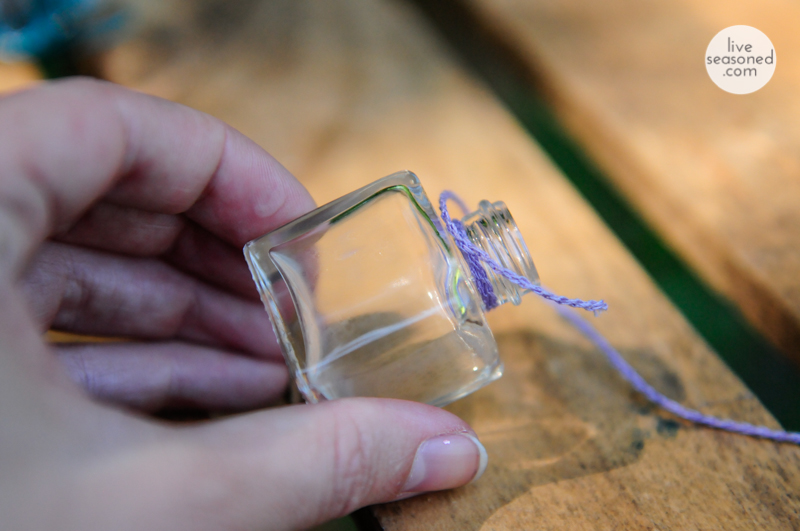
  • Cut off a length of string at least 2 feet long.  (The length really depends on where you want to hang the vases. Overestimate if you aren’t sure-I didn’t measure any of my strings) Wrap the string around the top of the vessel and leave a quarter inch tail.

liveseasoned_summer14_hangingvases-5-2

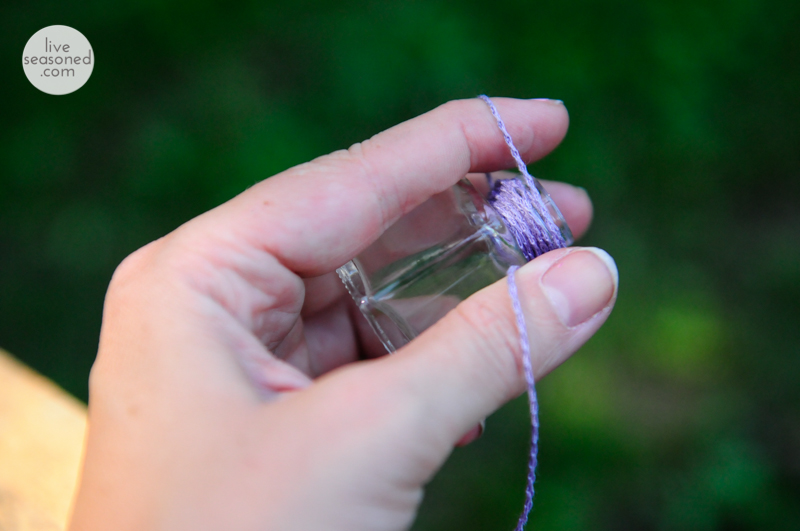
  • Hold the tail vertically across the rim so that you can wrap more string around the bottle and over the tail, which will secure the tail and string in place.
  • Continue wrapping the string around the rim of the vessel until you’re satisfied with how it looks.

liveseasoned_summer14_hangingvases-1

  • Place your pointer finger over the wrapped rim and wrap the string over your finger and then loop the string through to create a knot. Repeat two more times.  You should have a long tail leftover so that you can hang your vase.
  • After you hang your vases you can fill them with water and a tiny bloom.  Before dusk, cut a glow stick in half and empty the liquid into the vessels to create tiny glowing orbs. (Be extra careful when cutting open glow sticks.  They contain chemicals, not deadly dangerous chemicals, but chemicals nonetheless. If youngsters are going to be around, please skip the glow stick vases.  They look so super cool that kids will not be able to resist them and we wouldn’t want anyone to ingest the hydrogen peroxide or phenyl oxalate este).
  • Rinse and repeat as often as you’d like.  To be honest, empty vases look pretty as well!

Since I’m being honest, (does it irk you when people say that? shouldn’t you always be honest? I catch myself saying it quite often..) I have to admit this is my favorite craft of the summer.  I can’t take credit for it though, it was all Kristin, our middle sister and {hopefully} future-blog-contributor.  The tiny vases are just *so* cute and the way they glow is really magical.  Party guests were complimenting them all weekend!  It’s pretty neat how something so ordinary becomes so extraordinary when it’s swiped from the table and hung from a branch.  If you don’t feel like crafting these little glow vases, why not bake these galactic brownies?

*Glow vase photo by theflyry and empty vase photo by saleem.


Dry Shampoo to the Rescue!

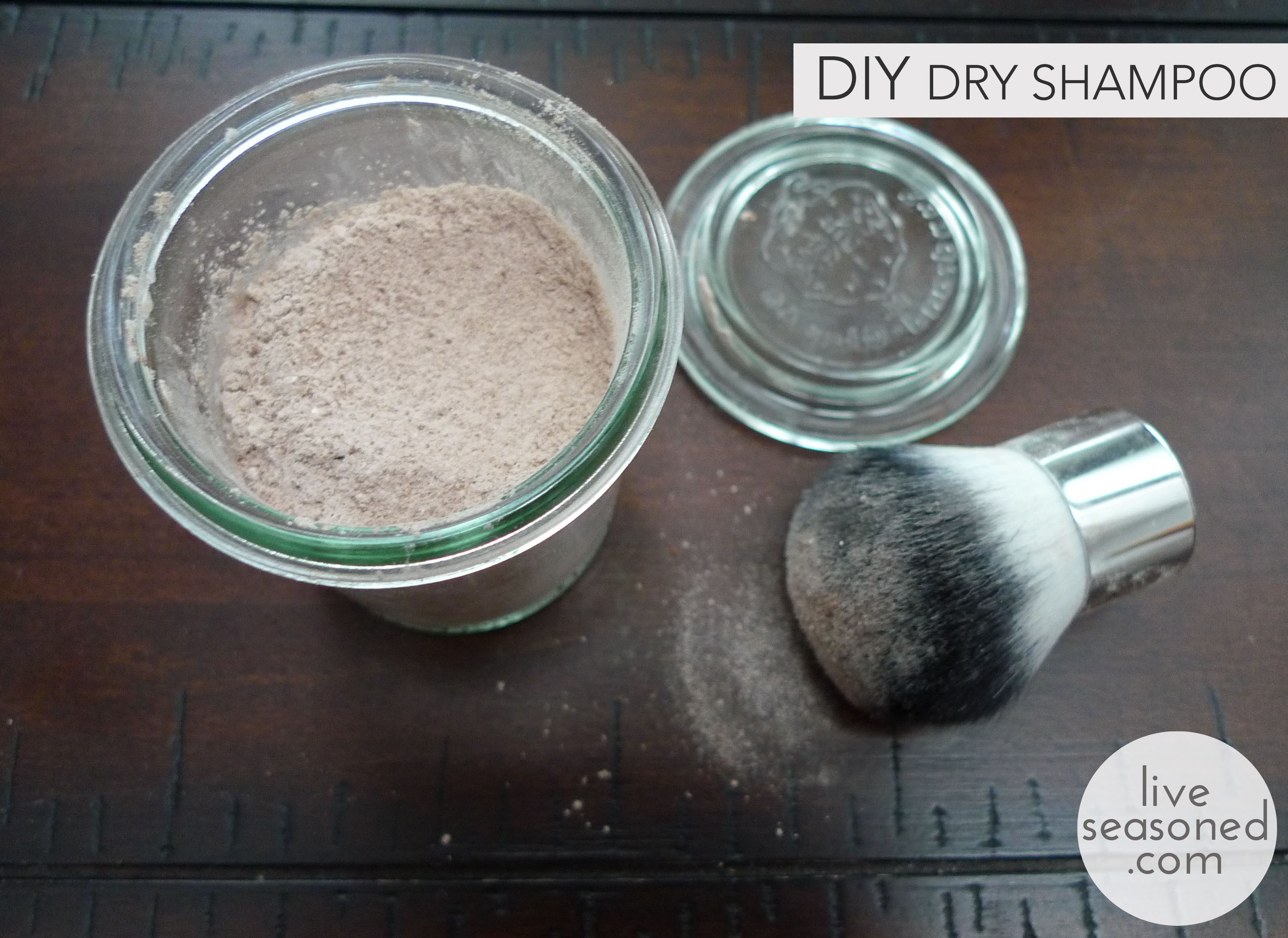
It’s no surprise that Sarah and I like to make our own cosmetic and household potions whenever possible. We’ve tried our hands at deodorant, body scrubs, and laundry detergent. We like to know exactly what’s going into them, but we also really enjoy personalizing the potions to our tastes, and we often find that homemade is cheaper than store bought.

liveseasoned_summer2014_dryshampoo6_wm copy

Today we’re sharing yet another cosmetic potion: dry shampoo. I didn’t start using dry shampoo until after Alex was born (it really is every new mom’s best friend), but truthfully, I probably should have started using it sooner! I’m not a big fan of showering; I think it just strips my body of the good oils, drying out my skin and hair. I usually take a shower every three days or so, and in between you can start to see my hair gets greasy – that’s where dry shampoo saves the day. It soaks up those excess oils and gives my thin, limp hair a bit of body! The potion I’ve settled on is a mash-up of the different recipes I’ve seen out there, simplifying and using measurements that seem to fit my hair.

Continue reading

Clean Up Your Act: Laundry Detergent DIY

liveseasoned_spring2014_detergent_tutorial

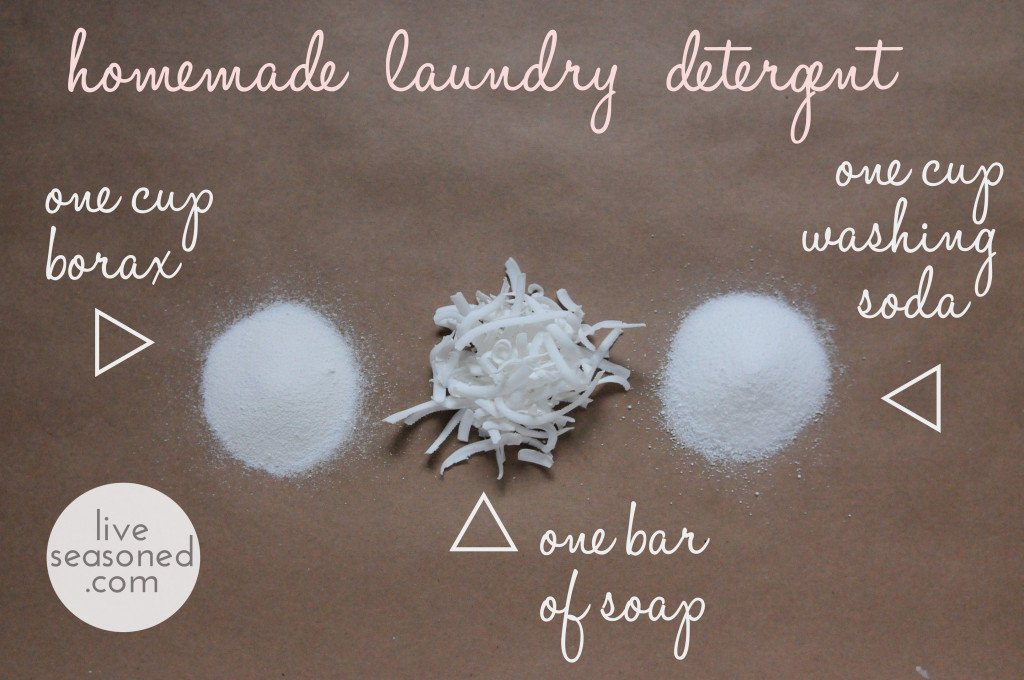
There’s a whole load (har har) of benefits that go along with making your own laundry detergent, but the biggest one for me is cost.  Don’t get me wrong, I love knowing exactly what’s swirling around in my machine and feeling comfort in knowing there’s not a whole host of perfumes and chemicals on my cottons, but the cost difference of store bought and homemade detergent is significant.

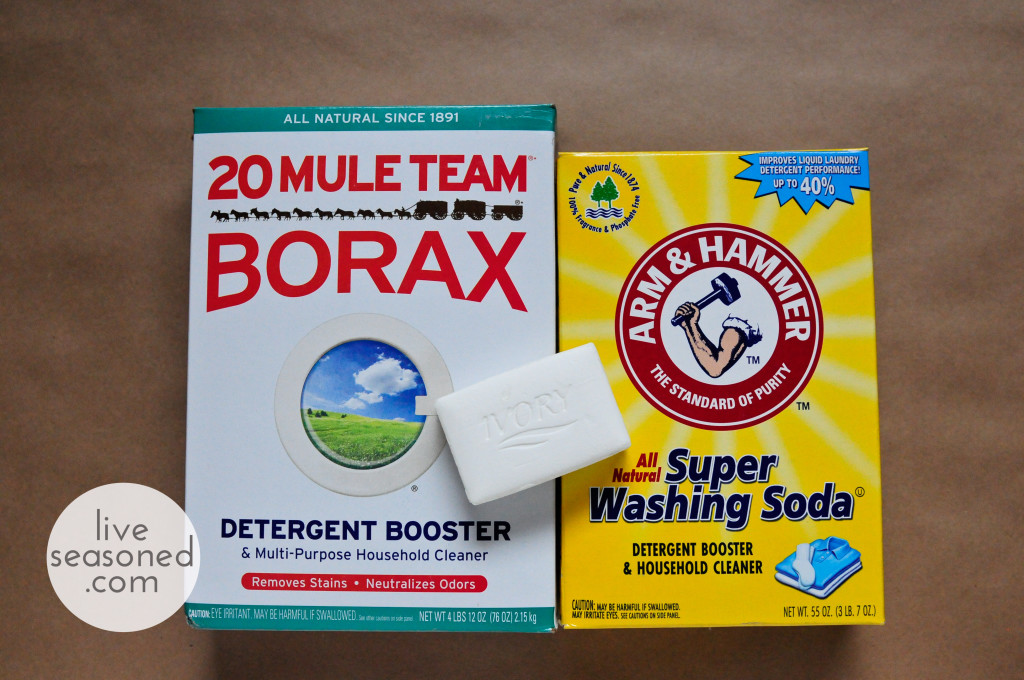
It only costs $.07 a load compared to the cheapest Tide option, which is almost double at $.12 a load.  Also, once you buy the 76oz box of Borax, 55oz box of Washing Soda and 10 pack of Ivory Soap for a grand total of $12.00, you won’t have to worry about laundry detergent for a looooooong time, like an entire year. True story.

While my main motivation for DIY detergent is to save money, I take comfort in knowing I’m not bringing (potentially cancer-causing) carcinogens into my home and rubbing them all over my largest organ and depositing them into the water supply. I’m also saving lots of petroleum-based plastic jugs from entering landfills. DIY detergent is good for the environment, your skin, and your wallet.  I guess what I’m saying is, this recipe is a win, win, win.

liveseasoned_spring2014_detergent-1

Supplies and Equipment:

  • 1 c Borax
  • 1 c Washing Soda
  • 1 bar soap
  • Bowl
  • Grater
  • Spoon

Quick Tip:

  • You can find these ingredients at the grocery store near dryer sheets and dyes.
  • Wear a scarf over your face or pull your shirt up over your nose to keep from inhaling the fine powders.

liveseasoned_spring2014_detergent-3

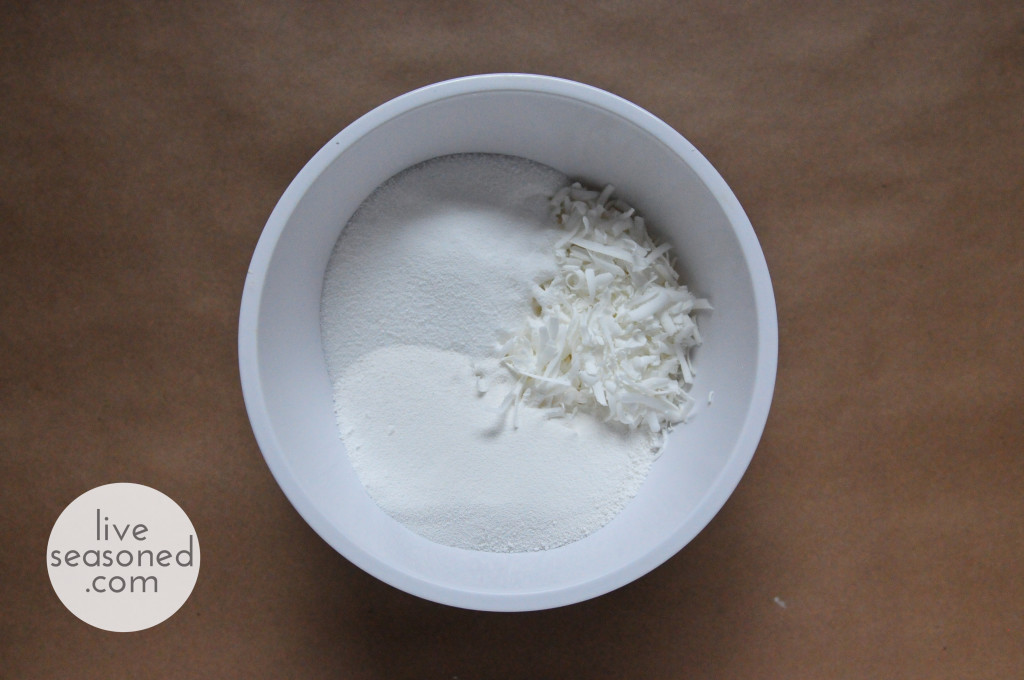
  • In a large bowl, grate one bar of soap then add the Borax and washing soda.  Chop the soap pieces into smaller bits with a spoon as you mix the ingredients together.
  • You can also add a few scoops of powdered detergent booster if you wish.  Sometimes I add Tri-Zyme (a biodegradable version of oxi-clean), but most times I forget and leave it out.
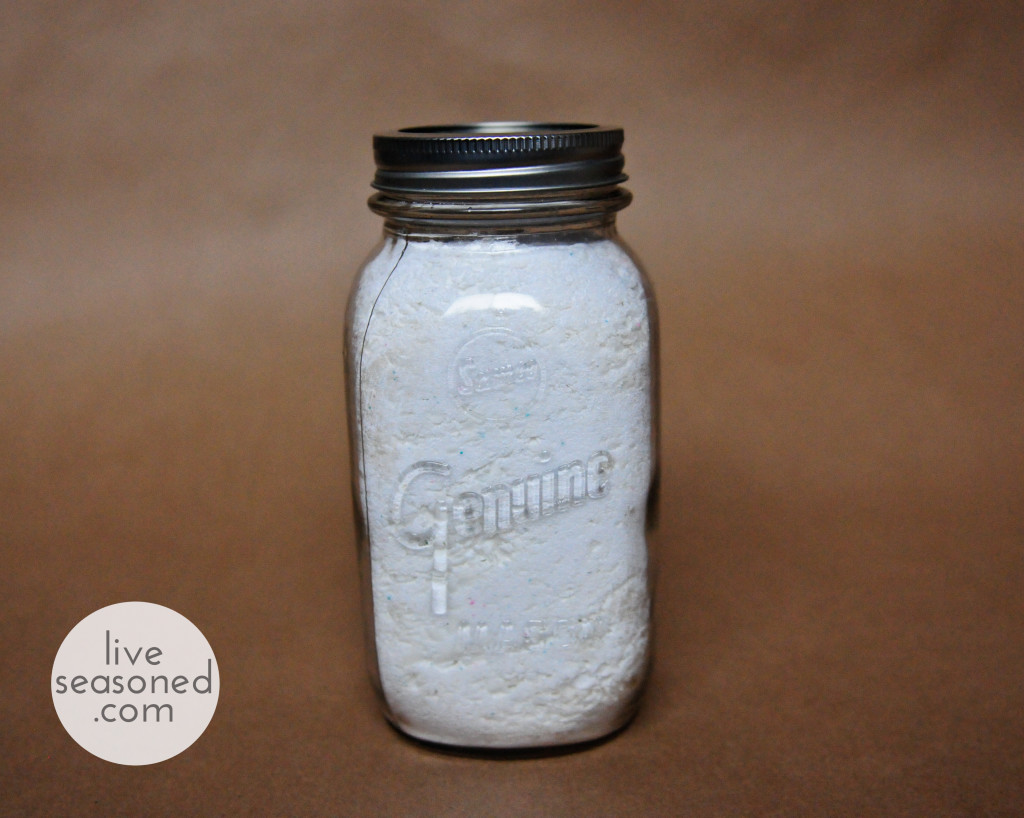
  • After stirring for a few minutes transfer the detergent to an airtight container.  I keep mine in a Mason jar.
  • Before adding your clothes, put one scoop (roughly 2 tablespoons) of powdered detergent into the washer and turn on the hot water, after a minute or two add the clothes and adjust the temperature if necessary.* If you don’t have time for that step, no worries, just put the detergent in first so it starts dissolving in the water immediately.

liveseasoned_spring2014_detergent-4

So what do you think? Do you love spending money on Tide or do you think you’ll try this homemade option?  Powered detergent is classic so return to your roots people!  Really though, I think it’s great and I’ve been using this recipe for three years now.  Lemmmmmie know how it goes!

*Each batch makes enough for twenty loads.

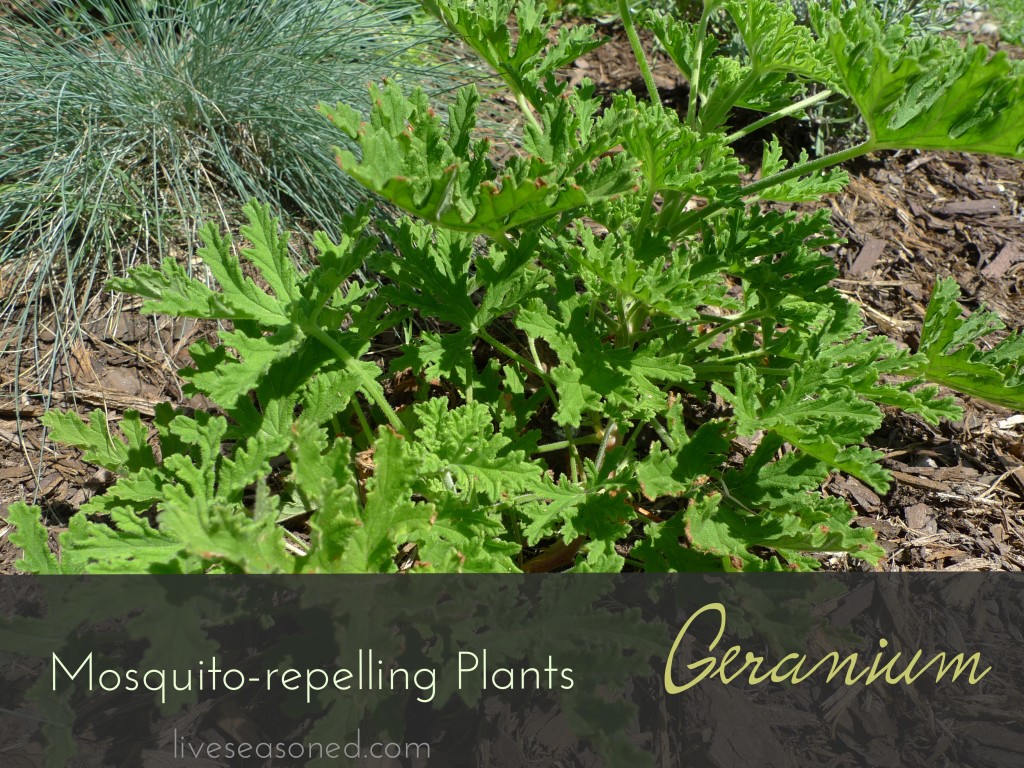
Mosquito-repelling Plants

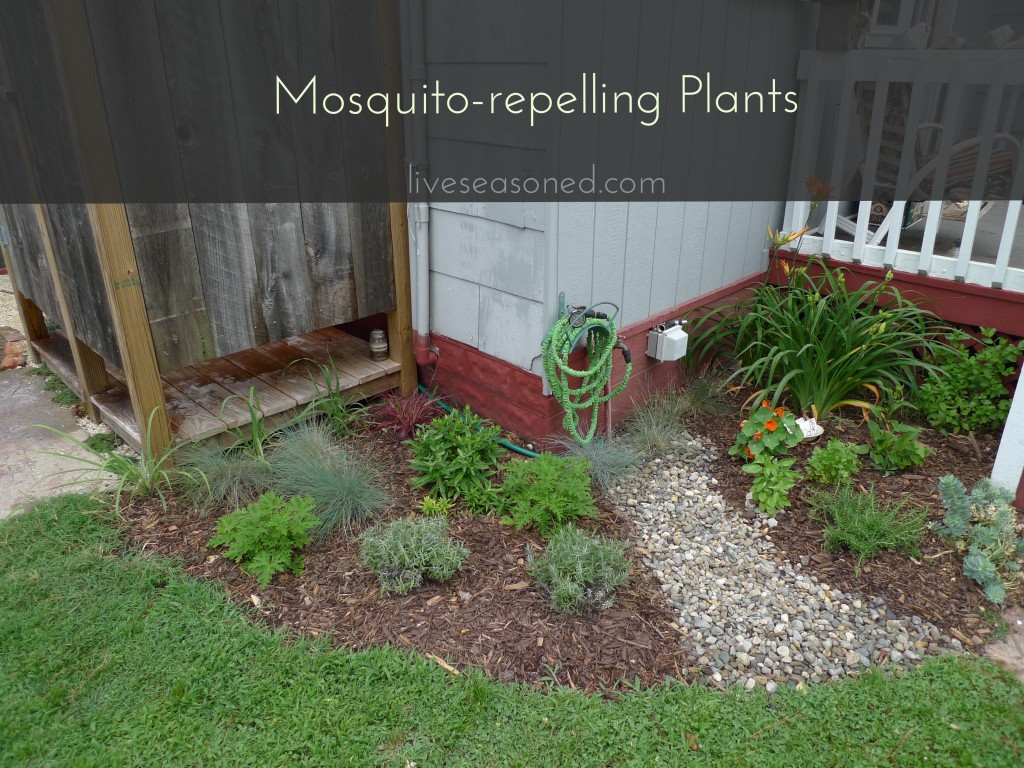
I know it seems a bit late in the season to do a planting post, but by now many gardens have reached their peak, and this is when I find myself wandering around neighborhoods looking at the yards and getting inspiration for next year. So, if you’re a planner like me, I thought you might like to hear about how we put the flower beds around the beach house’s outdoor shower to work for us.
liveseasoned_summer2014_mosquito3

The Eastern Shore area is known for its mosquitos. There have been years when we’ve visited Chincoteague and find ourselves running from the car to the front door and still having dozens of mosquitos on us! Or times when we’ve camped and can see the little insects perched on our tent waiting for their next meal. Needless to say, we were prepared for the mosquitos when we moved over to Saxis and ready to put up a fight in order to enjoy the outdoor shower.
liveseasoned_summer2014_mosquito

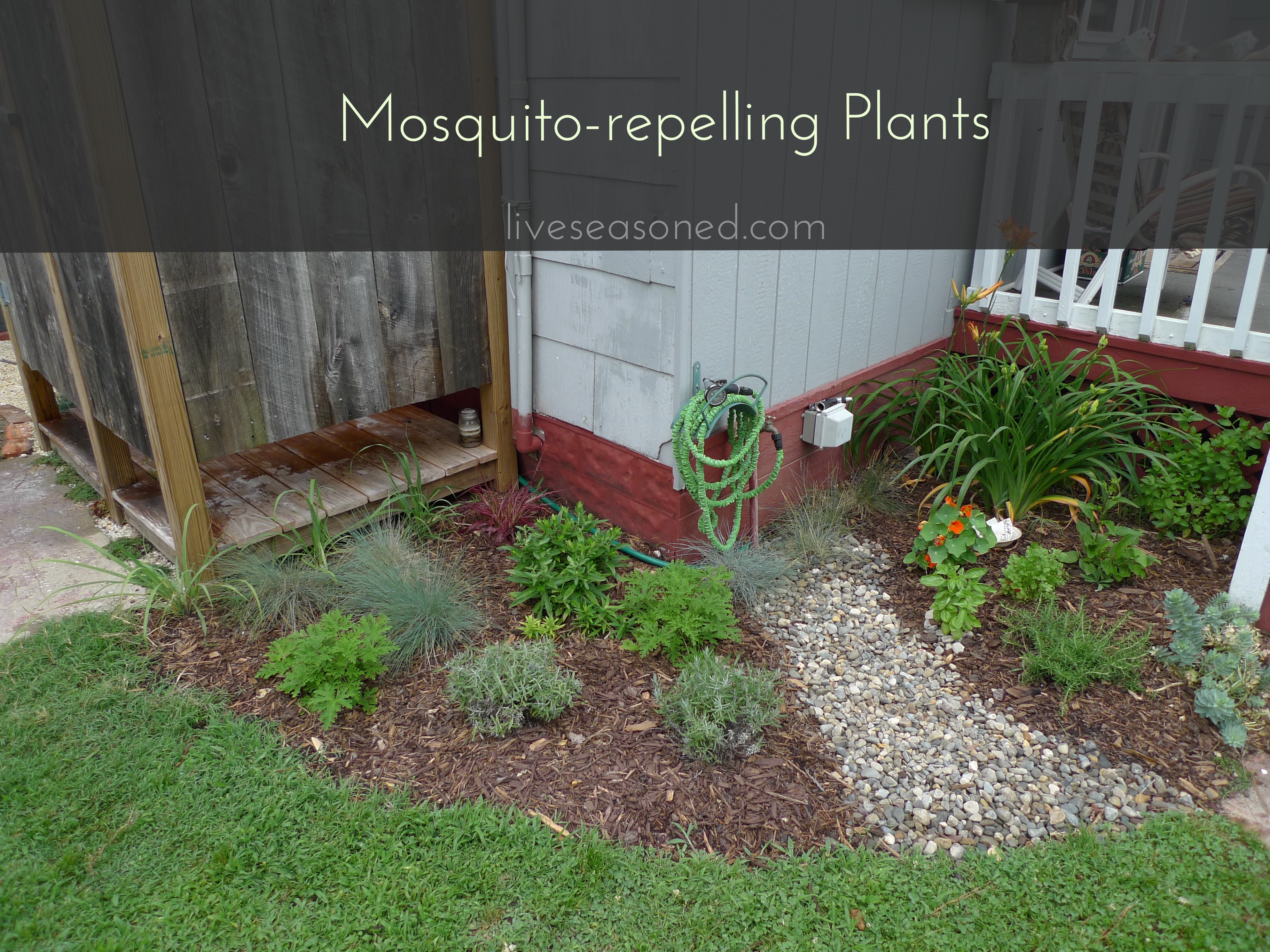
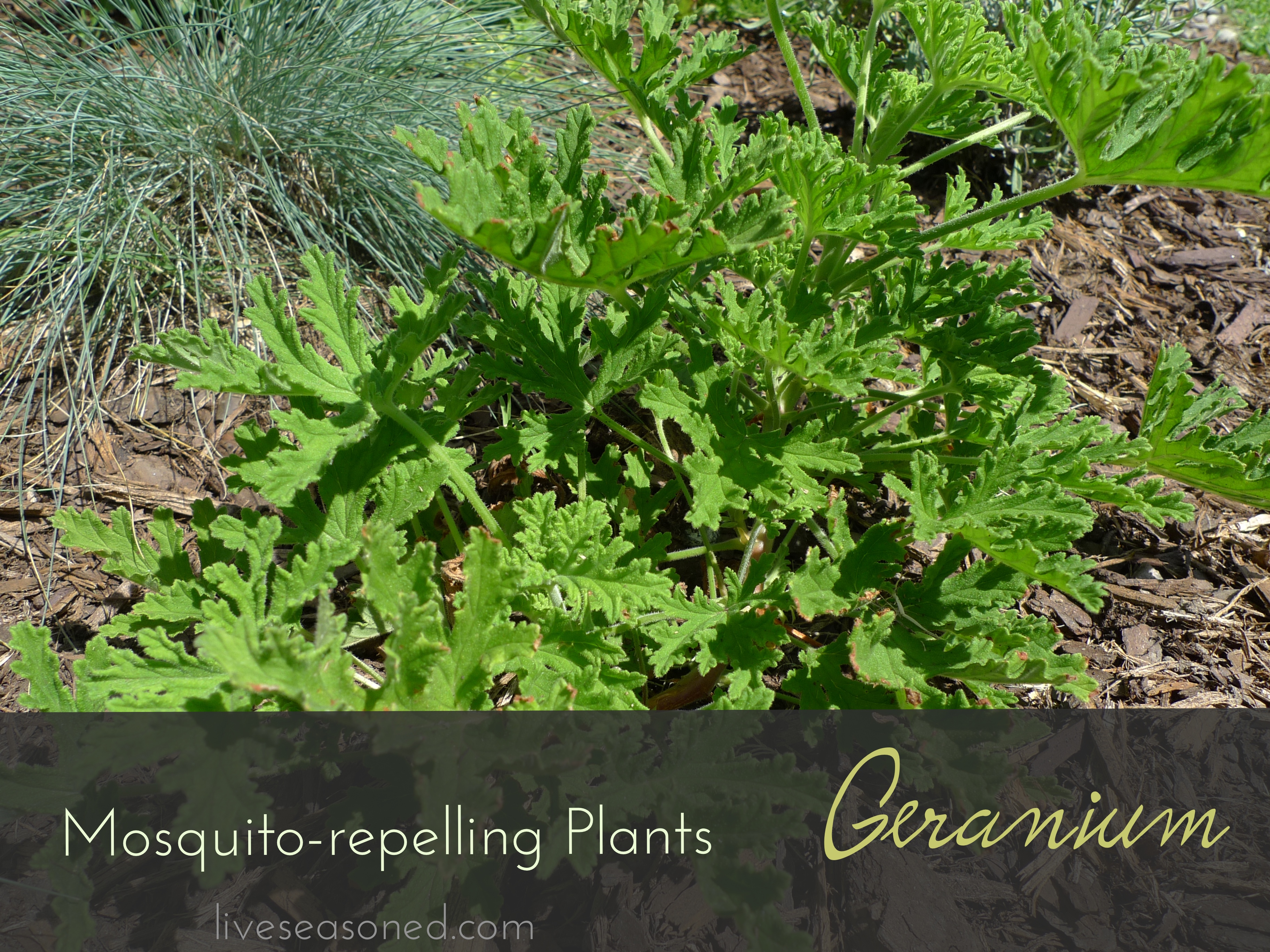
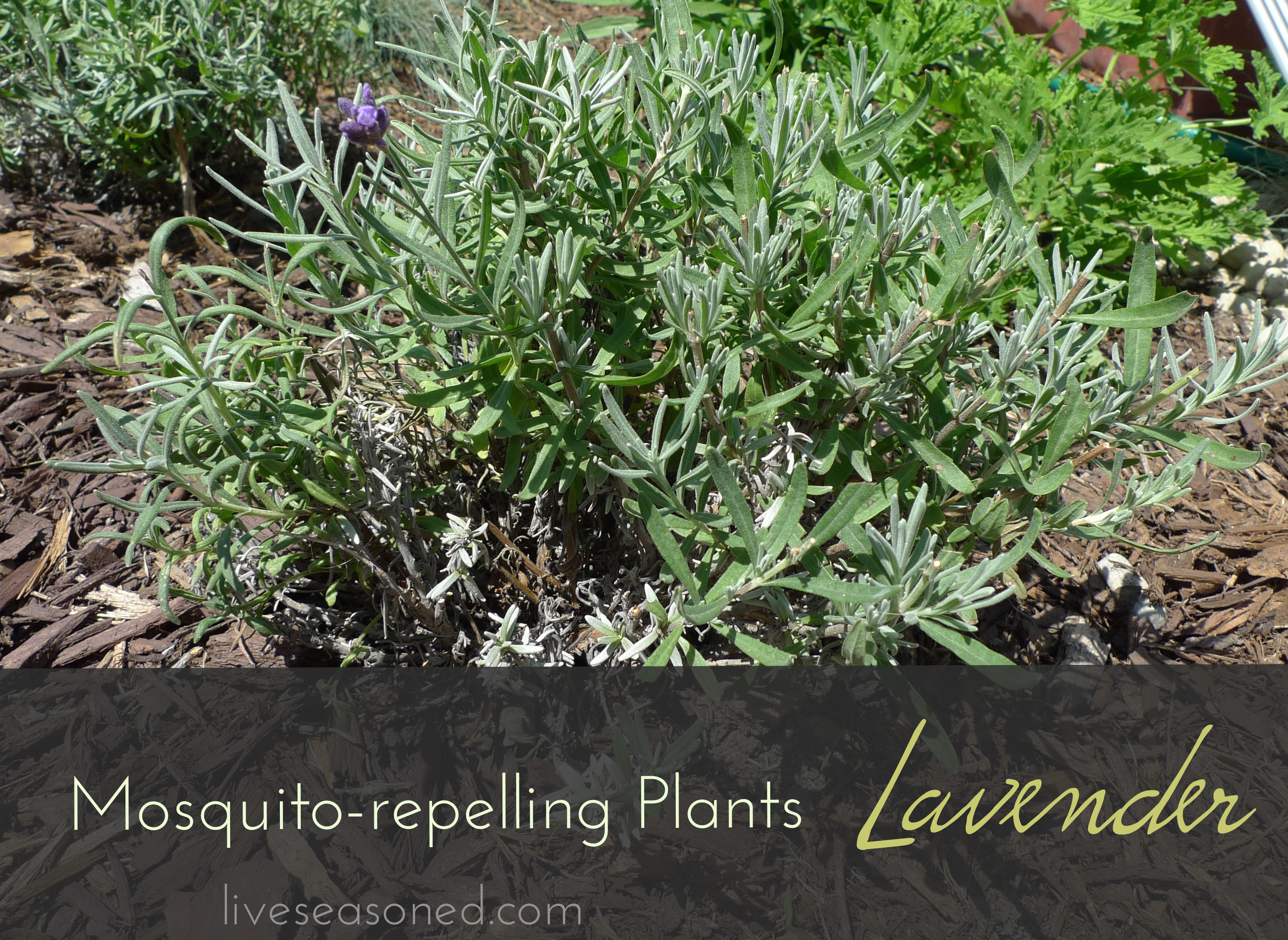
The shower is located at the back of the house, just around the corner from the back door that opens into the kitchen. We created one flower bed that fills the space from the back steps around the corner of the house to the shower. We also made this a garden area that transitions from herbs (for use in the kitchen, but working double-duty as mosquito deterrents) to our ornamental and aromatic mosquito garden. When it came to picking plants, we went with ones that would do well in this location, which was pretty easy since it’s a sunny spot right next to the hose, so water and light were not constraints. There are a lot of plants that repel mosquitoes, but we were particularly interested in the ones that do double duty, either as edible herbs or as fragrant flowers.
liveseasoned_summer2014_mosquito4

Fortunately for us, it seems like the constant spray of water from the shower head keeps them at bay while it’s on. But adding these plants helps to further deter mosquitos from the area which is nice as you’re walking to and from the shower and when you’re in the stall getting undressed and dressed without the water running.

Mosquito-repelling Plants

  • catmint
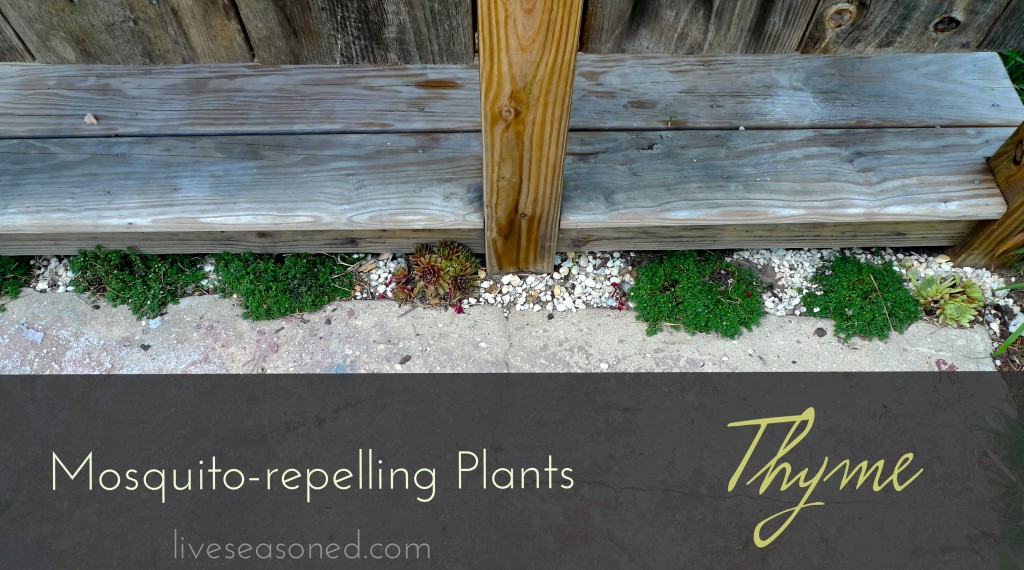
  • creeping thyme
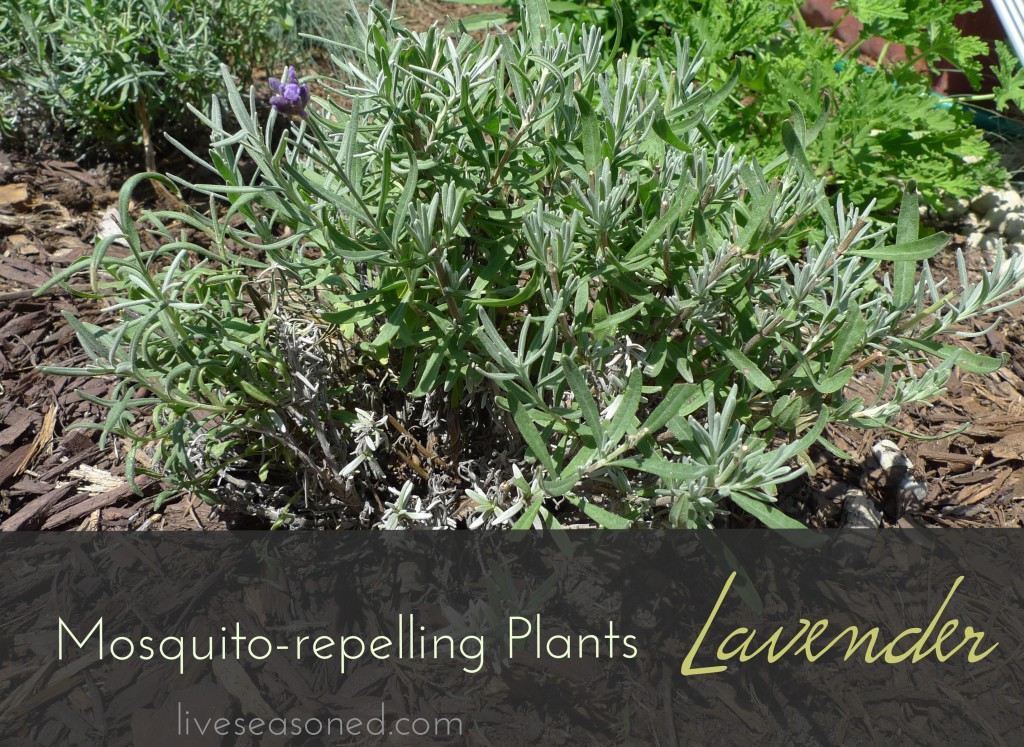
  • lavender
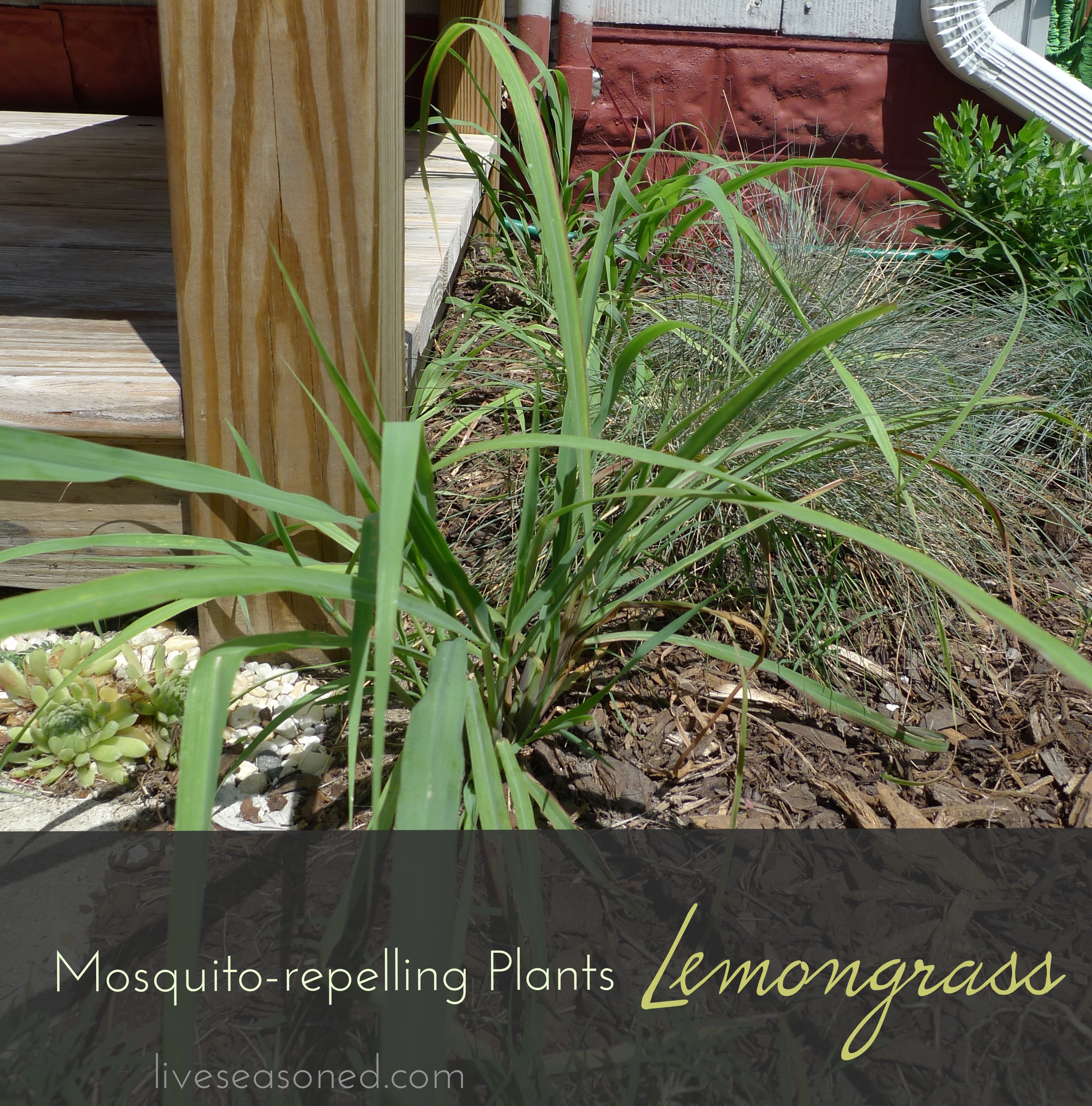
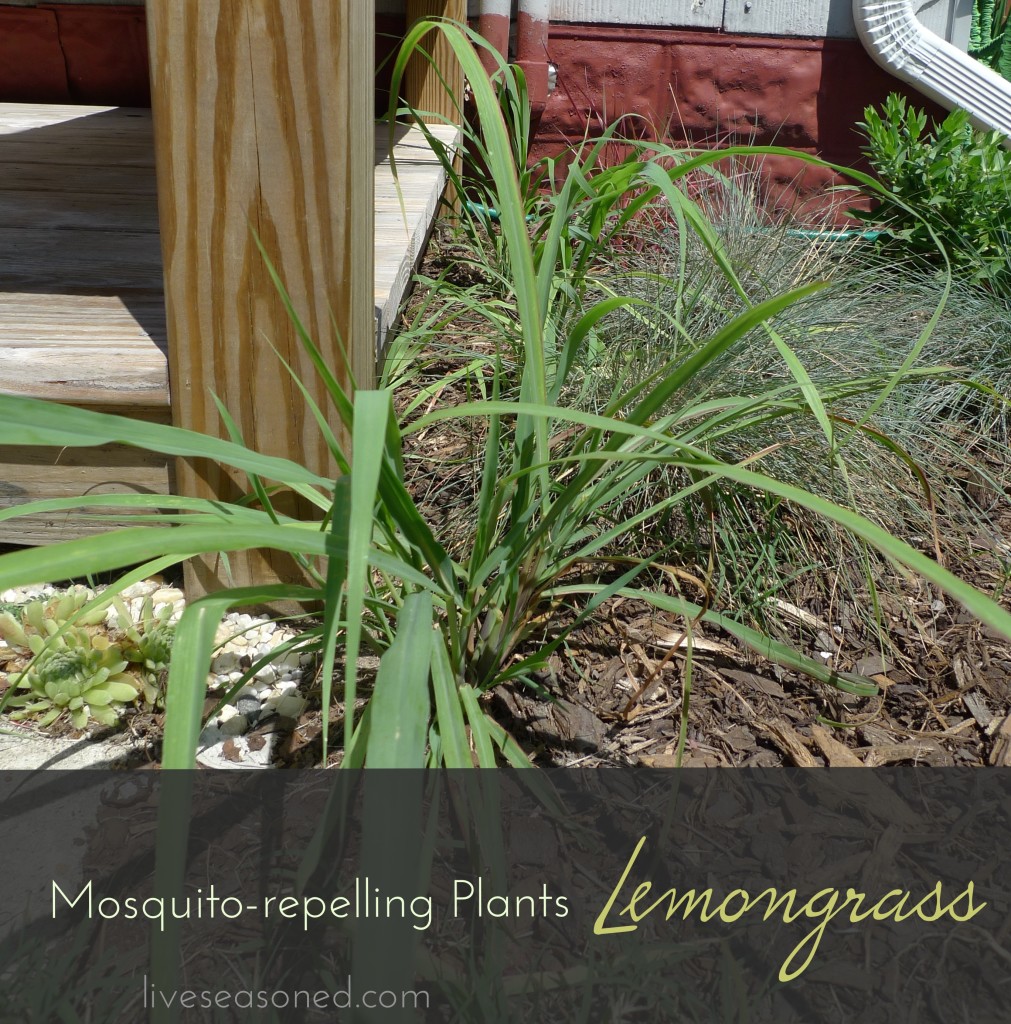
  • lemongrass
  • lemon-scented geranium (the citronella scented variety has been shown to be ineffective)
  • mint
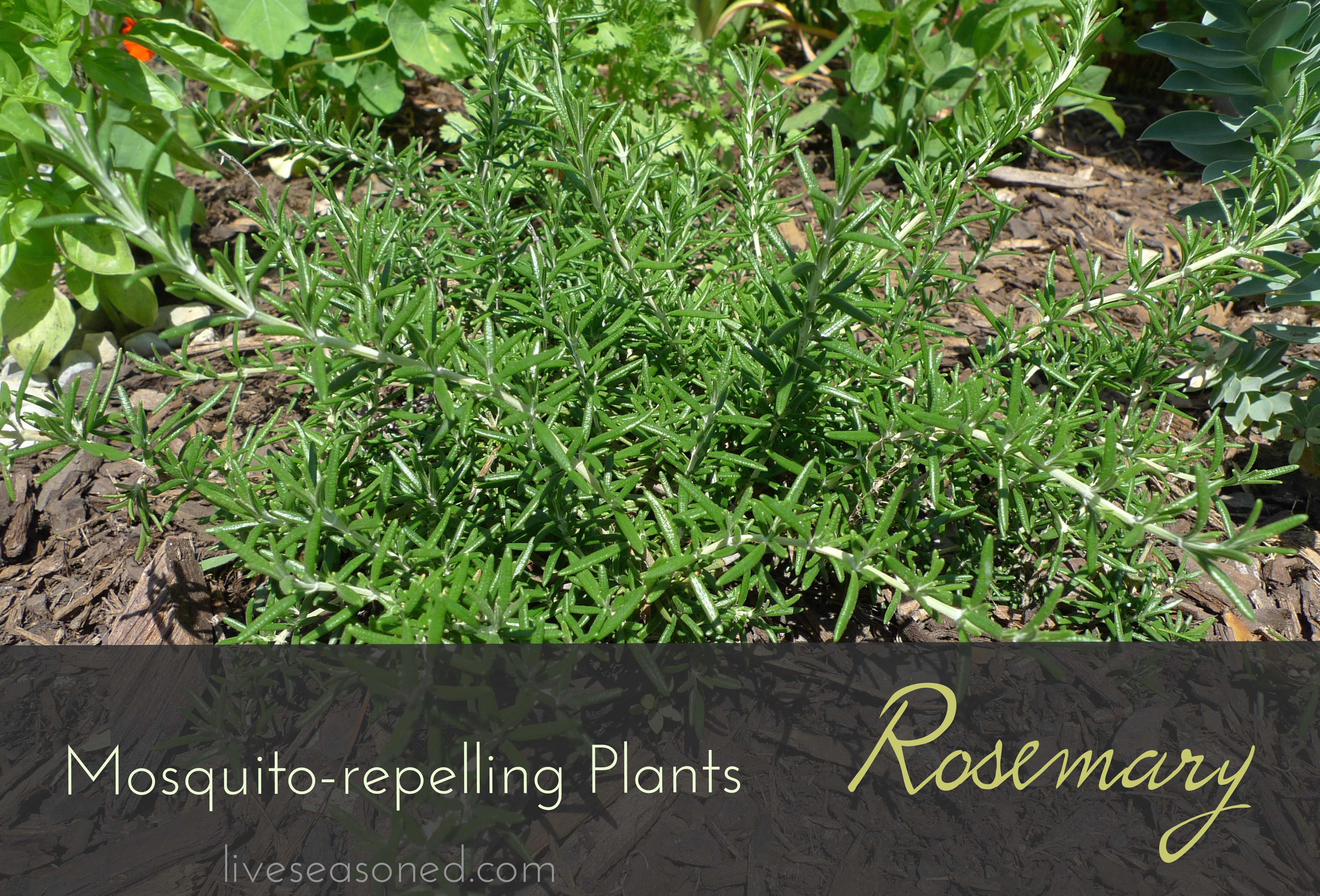
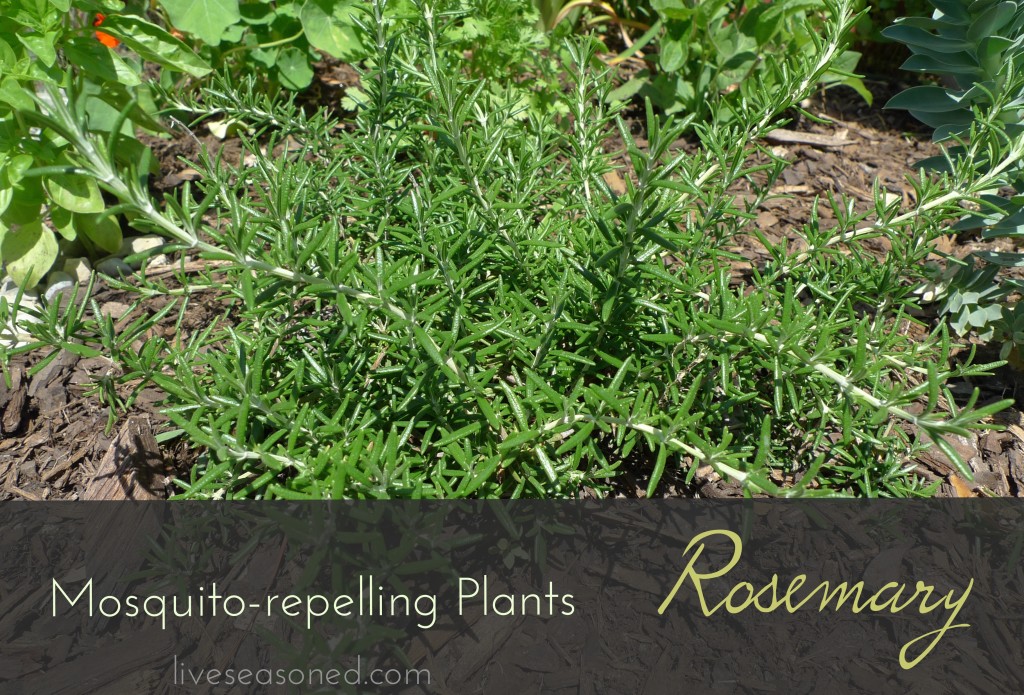
  • rosemary

liveseasoned_summer2014_mosquito6

How do these plants work their magic? They each have aromatic compounds, the same ones that make these plants appealing to us, that repel the mosquitos.

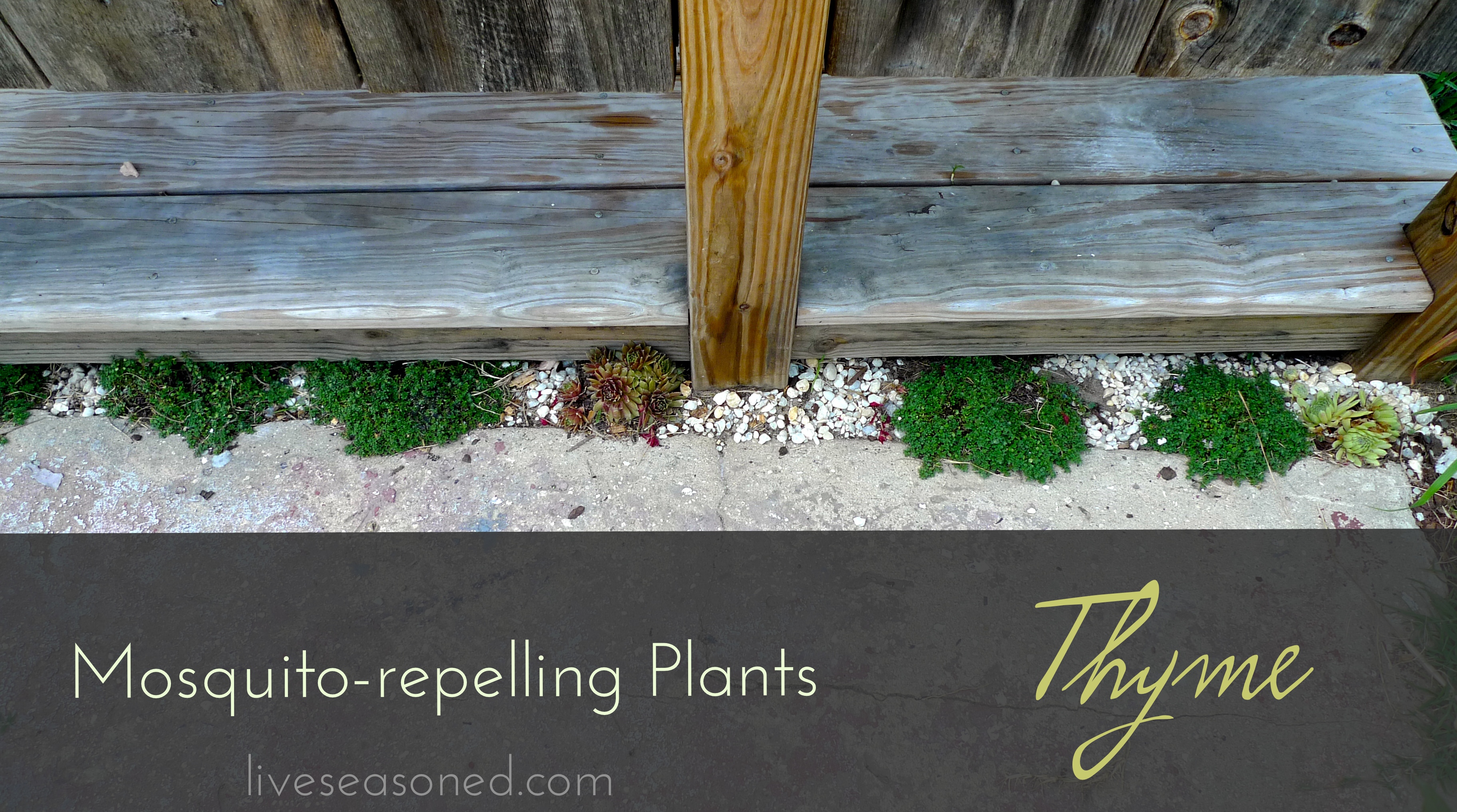
As a result, many of the plants on our list work best when their aromas are released, either by rubbing or crushing their leaves. We planted the rosemary, lemon-scented geranium, and lavender closest to the edge of the bed (leaving some room for them to expand). The idea being that people will brush these plants with their legs as they walk from the steps to the shower, releasing the plants’ aromas. The mint is in pots and in a particularly well-gaurded corner of the bed (trying to tame its wild growth). Their fragrance is released every day around happy hour when we’re out there picking leaves for mojitos. The creeping thyme is planted in the small space between the cement slab and the base of the shower; the perfect location for people to step on it and release its fragrance as they are getting into and out of the shower. The lemongrass is planted along one edge of the shower providing a simple natural screen on the side that is most public.
liveseasoned_summer2014_mosquito5

I also included catmint on our list, but didn’t plant this in the shower garden area. It’s a tall plant and didn’t fit in well with the design for this small corner, so we put it on the other side of the back porch. It’s a surprisingly useful plant, with compounds that are 10 times more effective than DEET at repelling mosquitos! With results like that, I had to at least mention it in this post.
liveseasoned_summer2014_mosquito9

And, of course, if mosquitos are a problem in your yard, one of the best things you can do is to make sure you empty any standing, untreated fresh water. For example, all of those road ruts from your off-roading escapades and the holes you made looking for that buried treasure? Fill them in. Be a leader, not a breeder.


mosquito_poster

Mosquito poster from Wikimedia commons.

Air Plants in the Shower

Last week Sarah gave us instructions and inspiration for a great air plant display using reclaimed berry boxes. Before reading this post, her post is a great place to start for an overview of the plants, how to care for them, and a reliable source for placing wholesale orders.

As soon as Sarah started talking tillandsia, I got so excited about the idea of putting some in the outdoor shower! It’s a great way to add something unexpected to the space while increasing our garden’s vertical reach. I know this seems like a unique project, but we’re hoping it’ll inspire some more creative uses for these versatile plants. What about adding some air plants to your porch posts, up the trunk of a tree, or to the supports on a swing set? As long as the location is getting some nice bright, but not direct, light and a regular misting from either the rain or a hose, then your plants should thrive.

Continue reading

Air Plant Display DIY

Ever think of hanging air plants in the shower? We did and we loved it!

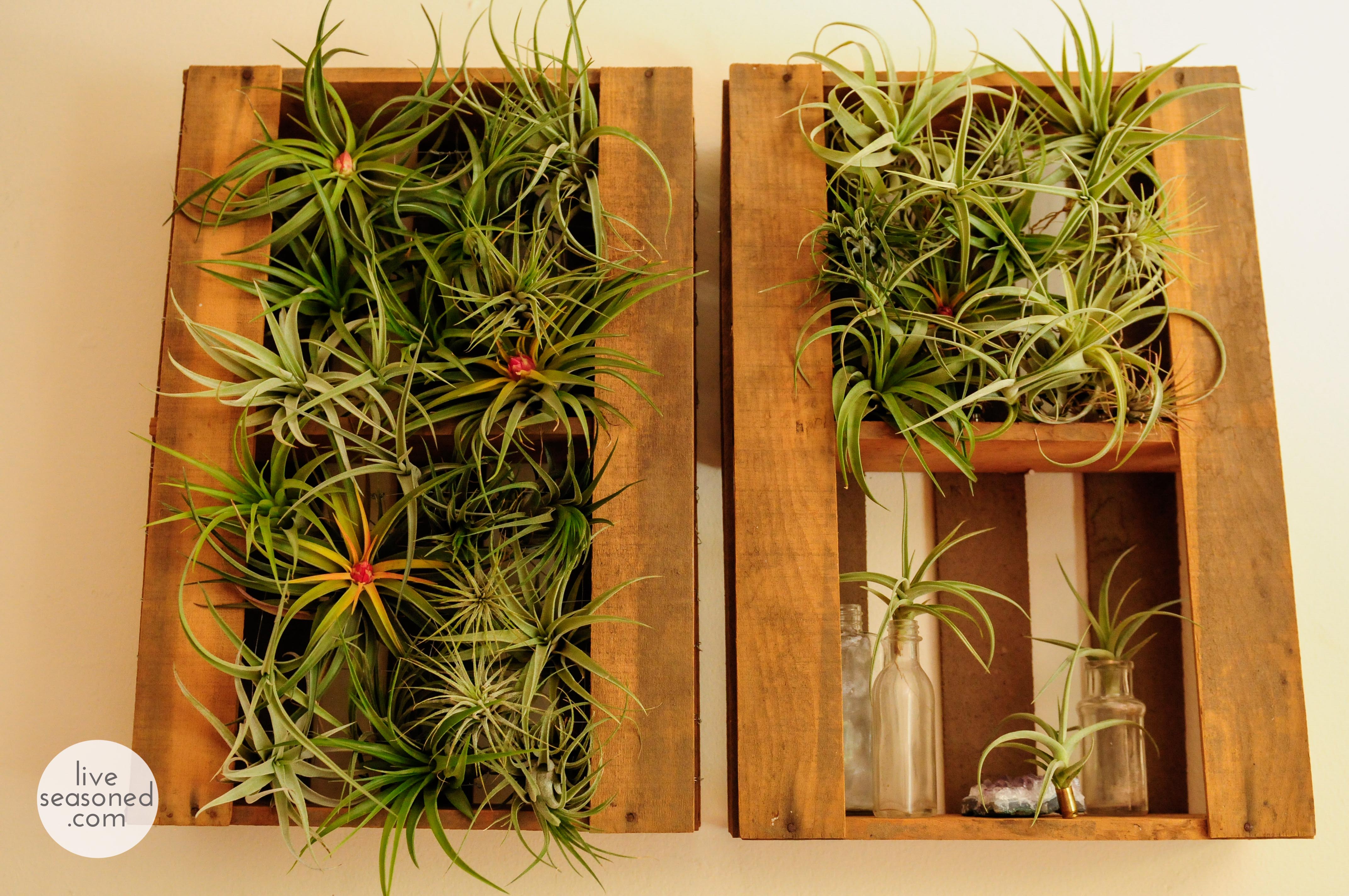
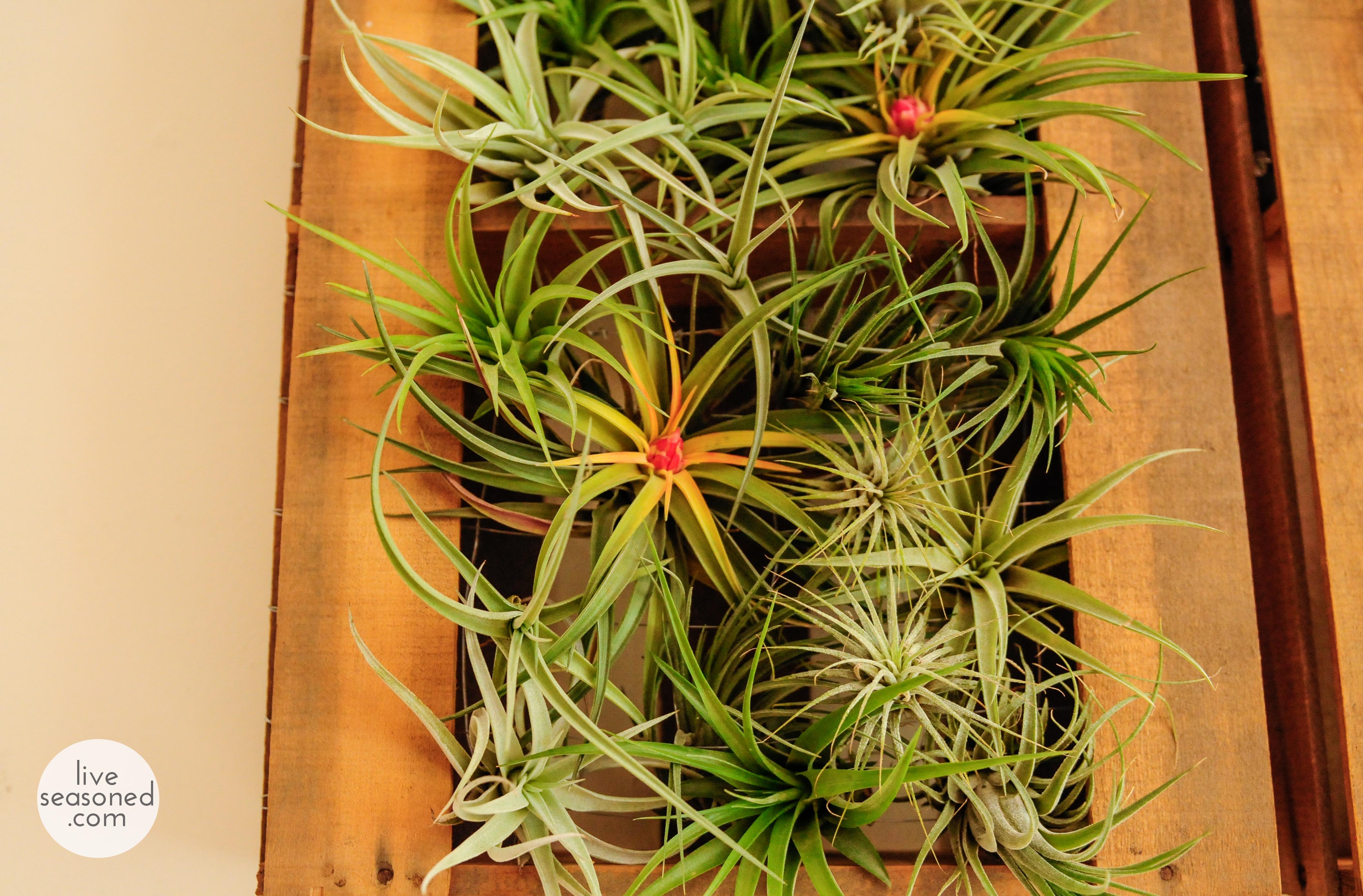
Hey Ya’ll! (I swear I’m developing a southern accent already)  If you recall, last Friday I shared some tillandsia (commonly known as air plants) and succulent display inspiration.  I’m truly obsessed with both.  Tillandsias and succulents are easy to maintain and display and both are easy to propagate as well – win, win, win.  For the past few years, I have pinned countless air plant displays with the hopes of making one myself.  Well, that day has come my friends.  That day is today.  Actually, it was yesterday, but the big unveil is today, it’s right now, so scroll on!

liveseasoned_summer14_airplants-6

liveseasoned_summer14_airplants-2

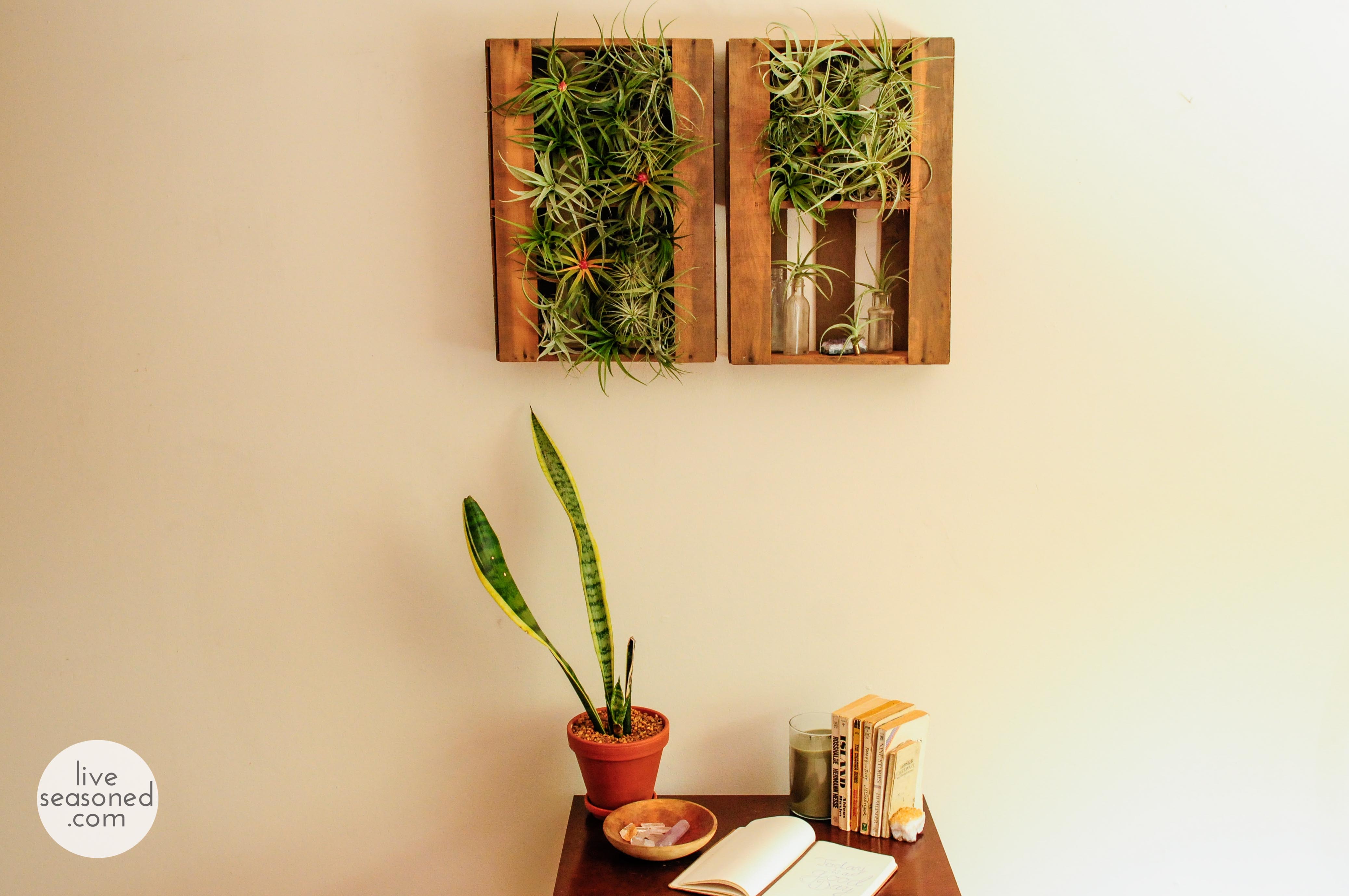
I really like the idea of displaying the tillandsias like artwork so I knew I needed some type of frame.  I picked up two antique berry boxes from my local flea market for 75 cents a piece.  The vendor told me they were about 35 years old.  They definitely had 35 years of dirt on them, which I didn’t wash off BTW.  I figured it added to the feel of the whole project, but who am I kidding? I was just too lazy and dry dirt is ok with me, wet dirt is when things get messy, right?  I bought my air plants from this wholesale vendor.  The site isn’t flashy and I wasn’t really sure what I was getting since there aren’t photos for each individual item, but I was blown away by my package of plants.  It arrived severely dented (because it was so light), but not a single plant was damaged or dead and I ordered sixty plants!  Yes, I spent $84 on air plants, but the most expensive kind was only $2.20!  Now I have a whole little colony of air plants. They’re my children. Don’t come too close.  After spreading them out on my kitchen table and looking at them for days (that is not an exaggeration) I finally came up with this easy display idea.  While I had enough plants to fill up the berry boxes, I also wanted a display shelf for crystals and treasures and thus my design:

liveseasoned_summer14_airplants-7

Air Plant Display DIY Supplies:

  • air plants
  • 25 gauge wire
  • scissors
  • pile of clear (or really whatever color) thumbtacks
  • frame of choice (I used a berry box. You can use an empty photo frame, crate, pallet, random rusty frame you found in the woods (I did that also!) or whatever you have on hand)


liveseasoned_summer14_airplants-8

Air Plant Display DIY Instructions:

  • Depending on what type of frame you are using, your DIY instructions may differ.  Use this as a guideline and if you have any questions just drop me a line.  Because everyone’s frames will be a little bit different, I’ll show you two basic ways of setting up your display. Here we go: The first option is to wrap the wire around the frame edges (in my case the frame is a crate, but it’s the same basic structure) to create a wire grid.  Thread the wire (length depends on your frame width) through and behind the frame, bring it around in front of the perimeter and tightly twist it around itself (the length of wire that will run horizontally across the frame). Repeat by threading the length of the wire through and behind the frame, bring it around the front of frame and this time run it in a straight line across the frame. Repeat on the other side by wrapping it around the outside and back of the frame and pulling it through the frame opening two times and finishing it off by twisting it around the straight horizontal wire.  Cut the excess with scissors.  Repeat this process down the entire length of the frame.  Leave 1-2 inches in between each row.
  • After you have completed the horizontal rows, it’s time for the vertical columns. Cut a piece of wire 3 inches longer than the inside of your frame.  Twist the wire onto the top rung of the horizontal wire “ladder” and thread the wire behind the rungs.  Twist the wire onto the bottom rung as well.  Repeat across the entire frame leaving 1-2 inches between each vertical column.
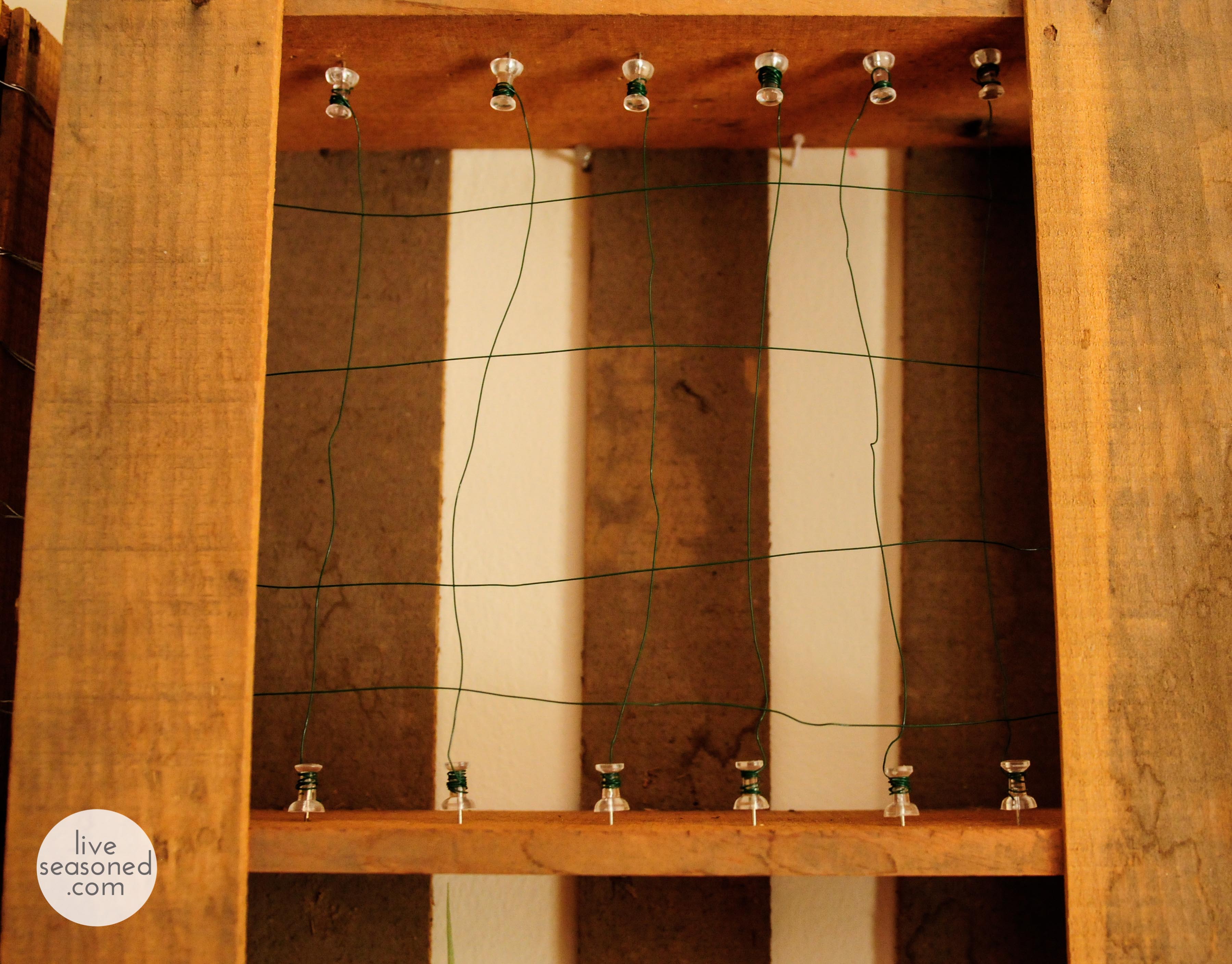
  • Now you are ready to add the tillandsias, but first let me briefly explain the thumbtack method.  If you are using a wooden crate or pallet, this method is nice because it completely hides all the wiring.  Simply create a wire grid like previously mentioned, but instead of wrapping the wire around the frame, wrap it snuggly around a thumbtack and stick it in place inside the edge of the crate.  Continue the process starting with horizontal rows and moving on to vertical columns until a grid is formed.
  • Placing the tillandsias is quite easy, but it must be done with care.  Simply push the bulb of the plant through a wire square and thread a couple leaves behind and then through adjacent squares.  Two or three leaves should do it.  Start with the largest plants and don’t put them too close together.  Tillandsias need good air circulation to survive.  As you add plants, you can thread them into place by using larger tillanndisa plants’ leaves.  As you can see, some of the plants aren’t threaded through the squares rather they are held in place by other plants.
  • Remember you’ll have to mist or submerge your plants every so often to water them.  I plan on taking my frames off of the wall, misting my plants, waiting until they dry (they dry pretty quickly) and hanging them back up.

*If you want to hide the wrapped wire, try wrapping your entire frame in hemp, jute or yarn.

**If chicken wire is available to you (I didn’t buy it because I didn’t want 20 yards for a .3 yard project) you can easily attach it to the center of your frame by wire wrapping or the thumbtack method instead of creating a grid with 25 gauge wire.


Air Plant Care:

  • Air plants prefer bright, but filtered light. Don’t place them in direct sunlight.
  • They thrive in 45-95 degree weather (7-35°C).
  • In dry climates (air conditioning especially) mist your plants 3-4 times a week, mist less frequently in humid climates.  You can also water your plants by soaking them in room temperature water (don’t submerge the flowers) for 10 minutes at a time ONCE every two weeks.
  • Allow your plants enough circulation to dry within 4 hours of watering.  To check for dryness, look at the leaf bases in the central part of the plant.  If the plant remains wet for too long, rot may develop.
  • Water in the morning or afternoon so that they dry by evening time.  Tillandsias are nocturnal and respire at night, which means they take in carbon dioxide at night. If they’re covered with water they cannot take in carbon dioxide.

As you can see, there are endless ways to display these little gems.  Since you don’t have to worry about soil you can get really creative.  I love the little Peru Inca Gold in the shell casing.  Don’t you?  In case you were wondering, the plants with the pink buds are a Xerograhica x Brachycaulos hybrid and they were only $2.20 a piece! Also, the potted plants from left to right are Harrisii ($1.65), Ionantha Guatemala ($.61), and Kolbii Large ($.94).  I also purchased 10 Brachycaulos ($1.38), which is the lone plant in the wire grid  and lastly, six Velutina ($1.83), which kind of look like a bigger version of the Harrisii.  I would recommend doing a quick google search of each plant before you buy them to get a better understanding or at least a general idea of what you’ll receive.  Like I said, I was ecstatic with my package and I’m dying for an excuse to buy more.  Christmas come quick!


Arrow Embroidery Tutorial & DIY

Don’t shoot! I know this post is a little later than normal, but that’s because I was working on an original arrow embroidery DIY for you cats.  I think we can all agree that arrows are both adorable and hip.  They deserve to be embroidered on cabin pillows, baby onesies, inspirational banners and just about everywhere else.  Whenever I see arrows, I think summer camp, forest adventures and cabin get-aways.  Who doesn’t want to think of those things? That’s why I created this arrow embroidery tutorial.

liveseasoned_spring2014_arrowstitch6

I’m not fibbing when I say arrows are easy to embroider.  Each arrow is made up of a couple different stitches all of which are outlined below.  The colors, style and feel of each arrow is up to you!  I encourage you to sketch out a few arrows to define the style you’re going for and then start stitching.  If you really want a summer camp vibe, take your arrow embroidery supplies to the woods!
Continue reading

Rosemary Body Scrubs

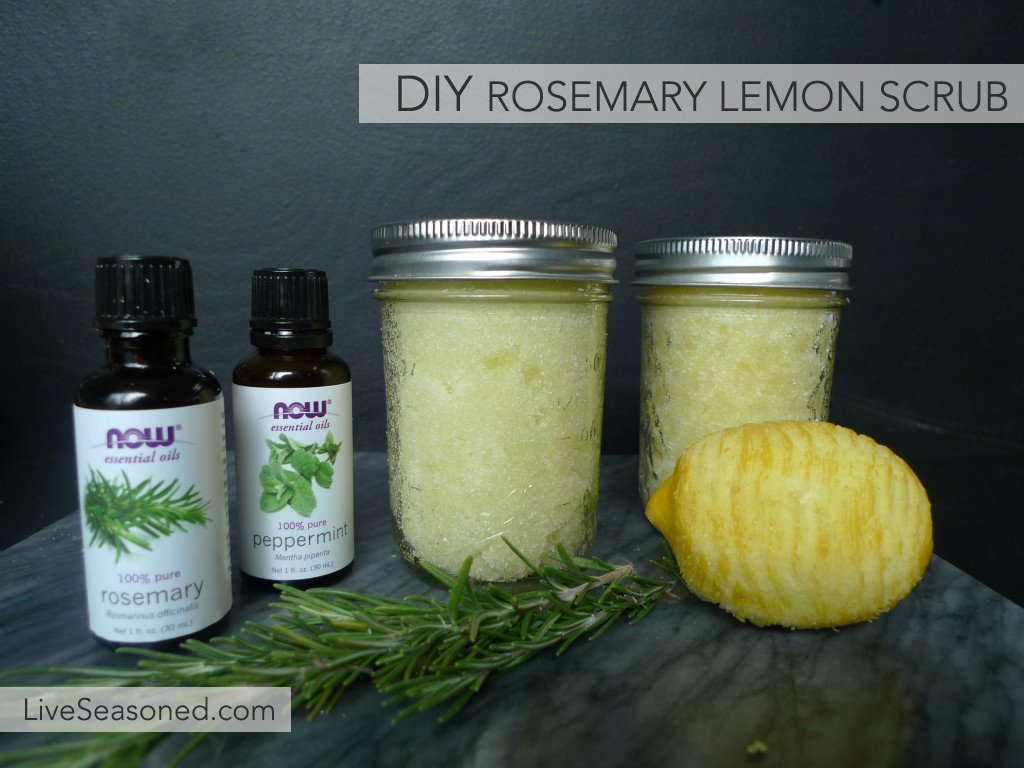
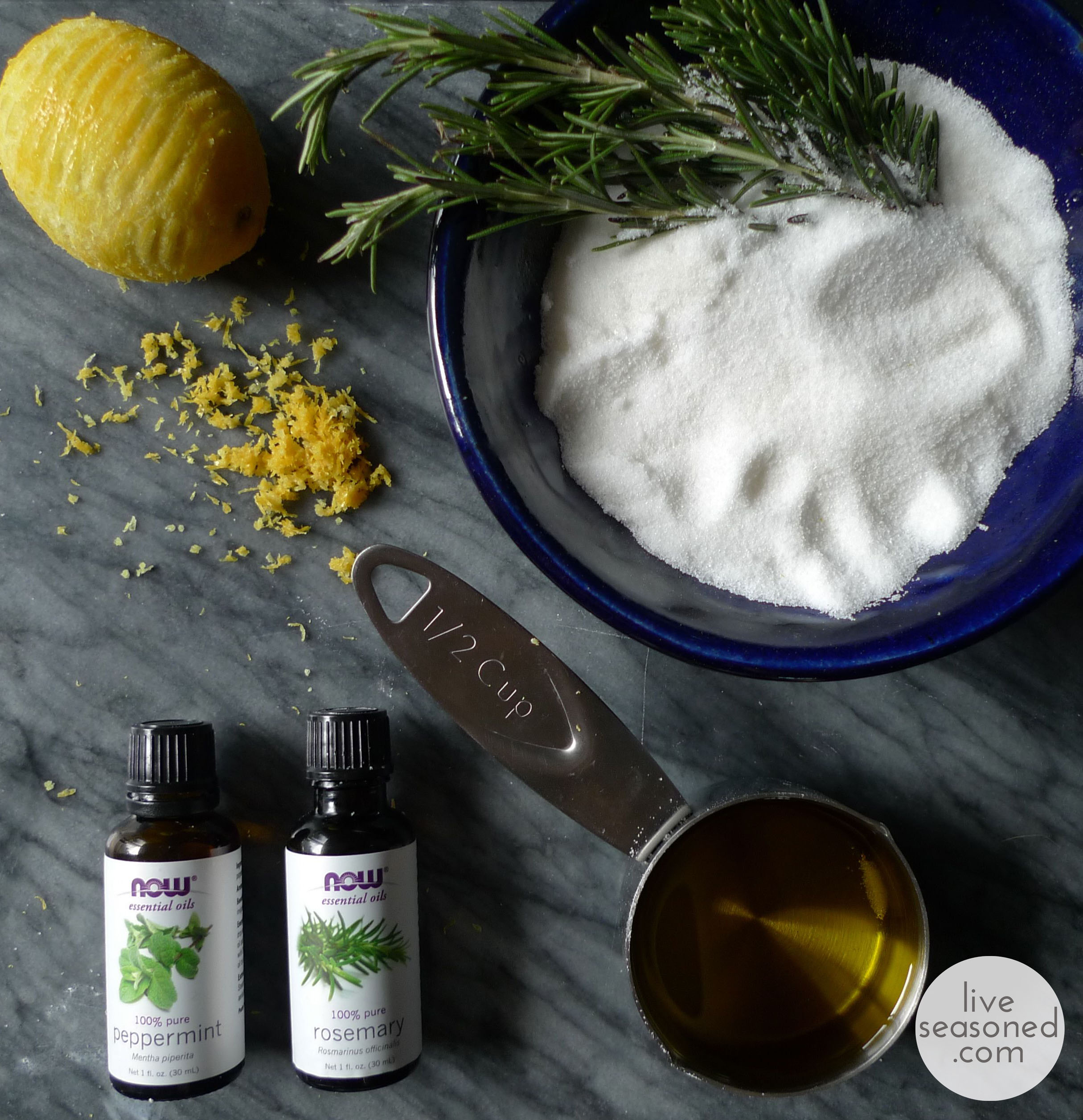
Rosemary is our ingredient of the season. Today we’re using the same rosemary essential oil that we used to make those invigorating room sprays. Want the recipe for a perfect evening? Take a shower with these scrubs, pore yourself a Rosemary SAGE Fizz, and roast a plate of rosemary tomatoesliveseasoned_spring2014_rosemaryscrub7-1024x768 copy

We are always down for making our own body care products. Sure, it requires time and sometimes a bit of experimentation, but it’s almost always worth it. Why? It feels good to know the short list of ingredients we use are nontoxic. It’s often cheaper than products from the pharmacy. The options for personalization are endless! And finally, when I’m in the kitchen mixing up a big batch of this or that, I love that Calder refers to them as potions. Silly, but fun.

liveseasoned_spring2014_rosemaryscrub4_wm Continue reading

Map Stitching Tutorial

There is no better way to remember a special trip than to have it hanging on the wall.  That is why I have gotten into the habit of stitching my trips onto paper maps.  That way I can be reminded of and inspired by past trips as I walk through my home.  Is it weird that I rarely take selfies while traveling or ever for that matter?  When you walk into my apartment, you won’t see me smiling in front of waterfalls or on tops of mountains, nope, none of that. Cheers to you if that’s your style, but I’m just a little too camera shy and usually I’m the one taking all the pictures.  It does not even cross my mind to ask someone else to take my picture in front of amazing landscapes.  Sometimes I think I would like to work on that, but then a trip comes and goes without a selfie thought and here I am stitching maps in my free time.

liveseasoned_spring2014_maps-1

Stitched maps make great gifts for your road trip buddies too.  It is also a cool way to tell someone you are taking them on a trip.  Imagine opening up a framed stitched map of Europe and having your sister yell, “Surprise! Pack your bags!”  Or whatever else really amazing sisters say when they are taking you to Europe.  [Katie here : now I’m hoping a stitched map shows up in the mail today! ;)] Grab your chosen map and let’s get started.

Continue reading