Simple Twig Wreath

liveseasoned_fall14_twigwreath-5

Happy Fall! This foraged twig wreath screams autumn and the best part about it is it encourages you to go outside and prance around in the woods.  You’ll need to gather a bunch of twigs and sticks, which is really easy at this time of year.  The forest should be full of dry kindling waiting to be collected.  I wanted to create a natural looking decoration that was quick and easy, but also cheap.  This wreath ended up costing me nothing but time (most of which I spent looking for my glue gun) since I already owned the other materials.  I made a pretty big wreath because I wanted it to be the center of attention on my tiny shed wall.  First things first, think about where you’d like to hang your wreath and measure or eye it up so that you have a general idea of how big you’d like your finished product to be.

Supplies:

  • thick cardboard
  • pen
  • scissors
  • tape
  • twine
  • glue gun
  • big ol’ pile of twigs

Steps:

  • Step 1: Draw a donut onto some scrap cardboard (I traced a random jar, but it doesn’t have to be perfect) and cut it out.  My cardboard seemed flimsy so I cut two identical donuts and taped them together with masking tape.
  • Step 2: Dispense a line of glue on one side of your donut. Press the twine into it and wrap it neatly around the donut.  Continue dispensing glue (on what will be the back side of your donut) and wrapping twine until you cover the entire donut.  Cut a length of twine (mine was about 4 inches) and tie it in a loop around your donut so you can hang it up later.
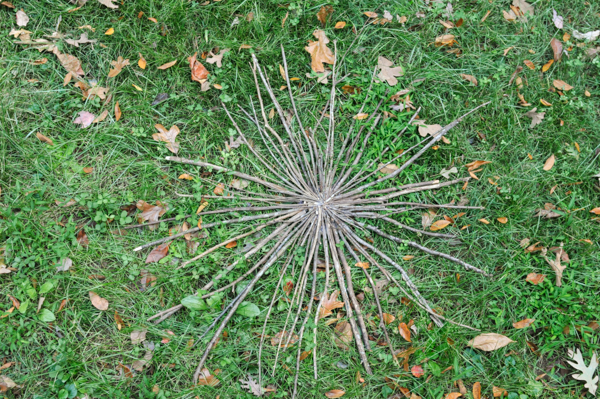
  • Step 3: Now it’s time to place the twigs.  This is where you can let your creativity come through.  Do you want a wreath of all tiny twigs? Bigger sticks? Bark or no bark? That’s all up to you.  I wanted something that looked really rustic so I strived for lots of variation in both size and color.  Start by placing the 12 o’clock and three o’clock sticks, but don’t glue them down yet.  Choose sticks to fill in the space between 12 and 3.  Once you have a quarter of your wreath laid out, you can begin hot gluing the sticks to the donut.  Don’t rush this process, glue each stick individually and pay attention to how they are arranged in the center of the donut. You will want the center to resemble a star when you’re finished.
  • Step 4: After you have filled in 12 o’clock to 3 o’clock section, place the 6 o’clock stick on the donut and repeat the process.  Continue until your entire donut is covered and your wreath is complete.
  • Because my wreath is so large, I wanted to create an additional layer of smaller twigs to add some depth.  I did this by repeating steps 1-3 and simple gluing my smaller wreath onto the larger one.

I had  a great time creating this project because there really is no way you can screw it up. It was a stress free craft project, which kind of equates to meditation for me.  I hate sitting idle, but sometimes I don’t feel like concentrating too hard on a project.  It’s also perfect for kiddos.  They can search for twigs and lay them out to their liking while a parent glues them to the donut.  Another reason I’m keen on this twig wreath, it gives me something to photograph in all seasons.  Have you ever taken the same photo over and over during each season?  It’s nice to have a single object that remains unchanged yet altered by whatever is going on in the shot (rain, sleet, snow).  I’m excited to see how this simple craft holds up this year and how pretty it will look with a dusting of snow 🙂


A Bewitching Window!

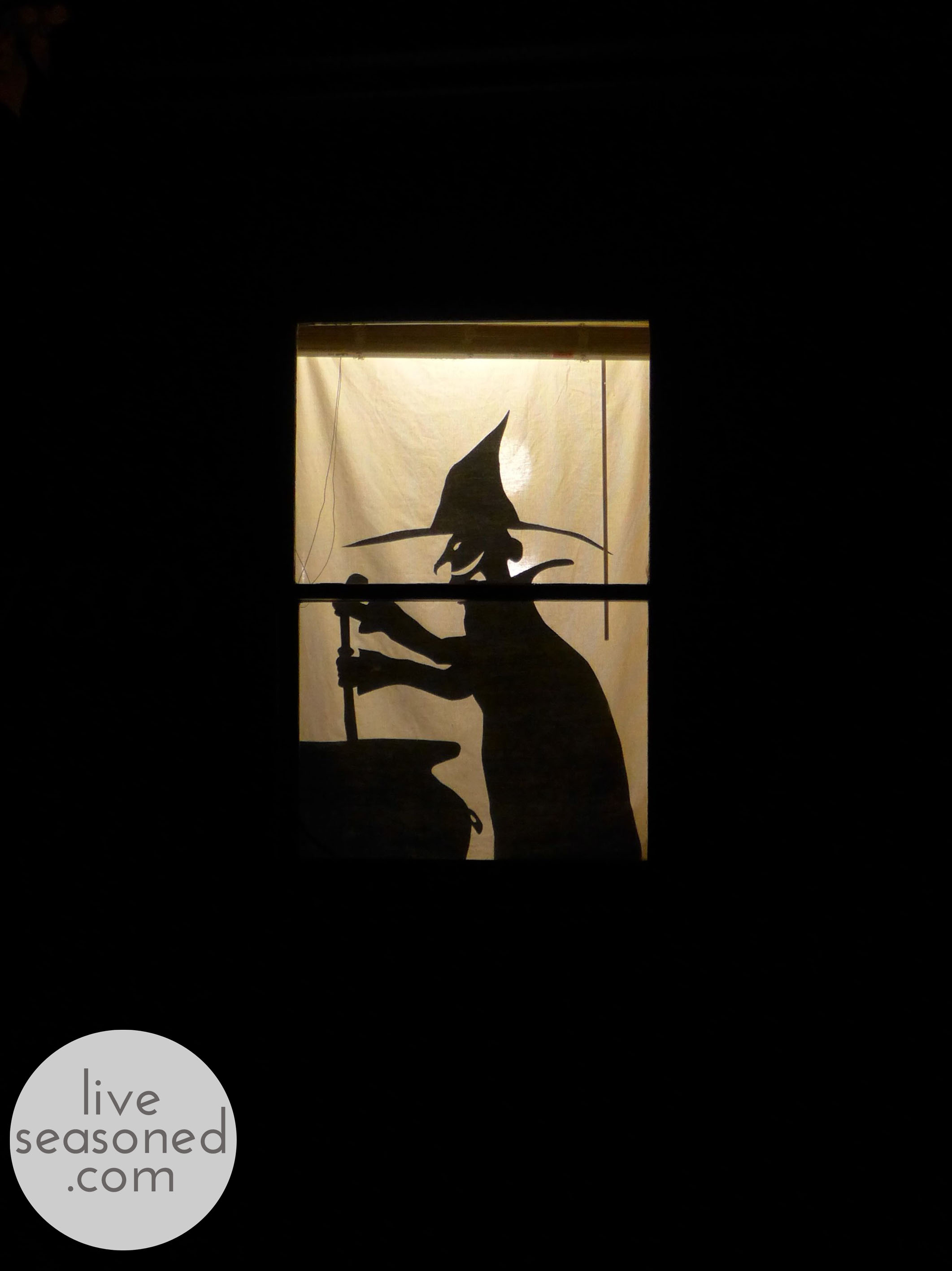
Other than decorating our mantel, my Halloween preparations have been totally stalled, but with Halloween so close I really wanted to do something at the front of our house. We have a small porch area and a single window that faces the sidewalk. I was extra motivated to make this happen because we’re also close to the mailbox cluster, so a lot of neighbors pass by, and I wanted them to see something fun. I haven’t made any progress on the ghosts I mentioned, but while walking the Halloween isles I came up with an idea for the window : create a fabric panel with a witch silhouette! 


I know that they sell window silhouettes, and some look like they’re great (a full-window design with a translucent background), but others are just the silhouette, so if you don’t have translucent shades or a curtain, the silhouette won’t have as much of an impact because peepers will be distracted by everything else in your window (know what I mean?). Plus, I thought it would be a creative challenge, and if it worked I would be able to re-use it for years!

I’m going to share my general how-to and materials, but not a specific pattern. This is such a simple project that you should be able to easily tailor it to your window and decoration theme (bats! ghosts! ghouls!).

liveseasoned_fall2014_halloweenwitch1_wm

Materials & Tools

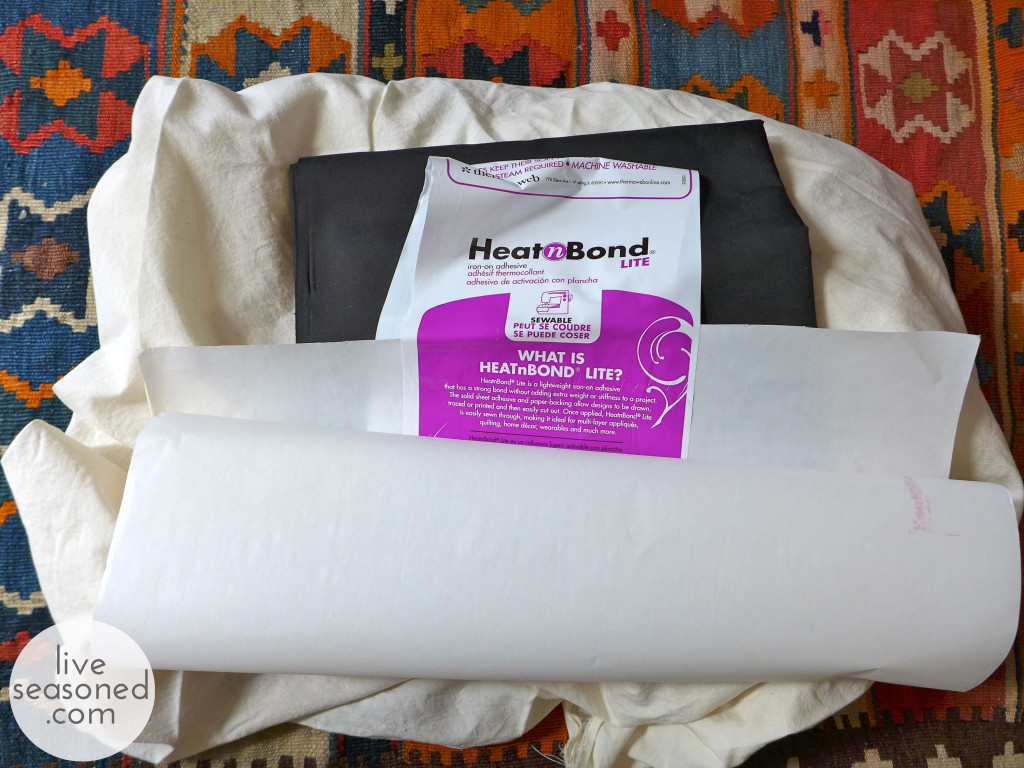
  • thin white or creme colored fabric measured an inch wider and at least two to three inches longer than your window. It will be enough to cover your window with a half inch seam along the two sides and bottom and a to sew a wider “hem” in the top for a tension rod.
  • black fabric large enough for your design
  • Heat’n’Bond large enough for your design. I accidentally bought the thin version that you can sew through, but you should buy the thicker stuff that doesn’t require sewing (note, I still didn’t sew mine, but I’m worried that it might not bond as well over the long run).
  • pencil
  • ruler (optional)
  • scissors
  • sewing machine and thread

liveseasoned_fall2014_halloweenwitch10_wm

How-to

  • pre-wash and iron all fabrics
  • Sew the seams around your white panel.
  • Iron the Heat’n’Bond to one side of your black fabric (it comes with instructions for iron temp and timing).
  • Draw your design on the paper of the Heat’n’Bond (This panel works when turned either way, so you don’t have to worry about your design coming out backwards – you just flip the curtain, but if you include words, then one side of your window will always read them backwards).
  • Cut out your design – cutting through the Heat’n’Bond paper and your black fabric.
  • Remove the paper backing from the Heat’n’Bond, place your silhouettes on your white panel. Iron the silhouettes following the Heat’n’Bond instructions.
  • Hang your curtain and settle in for a spooky night!

Tips & Tricks

  • I Googled “witch silhouette” and found the image that I very closely followed for this project. If you’re looking for ideas just search for “halloween silhouette” and you’re sure to find something perfect.
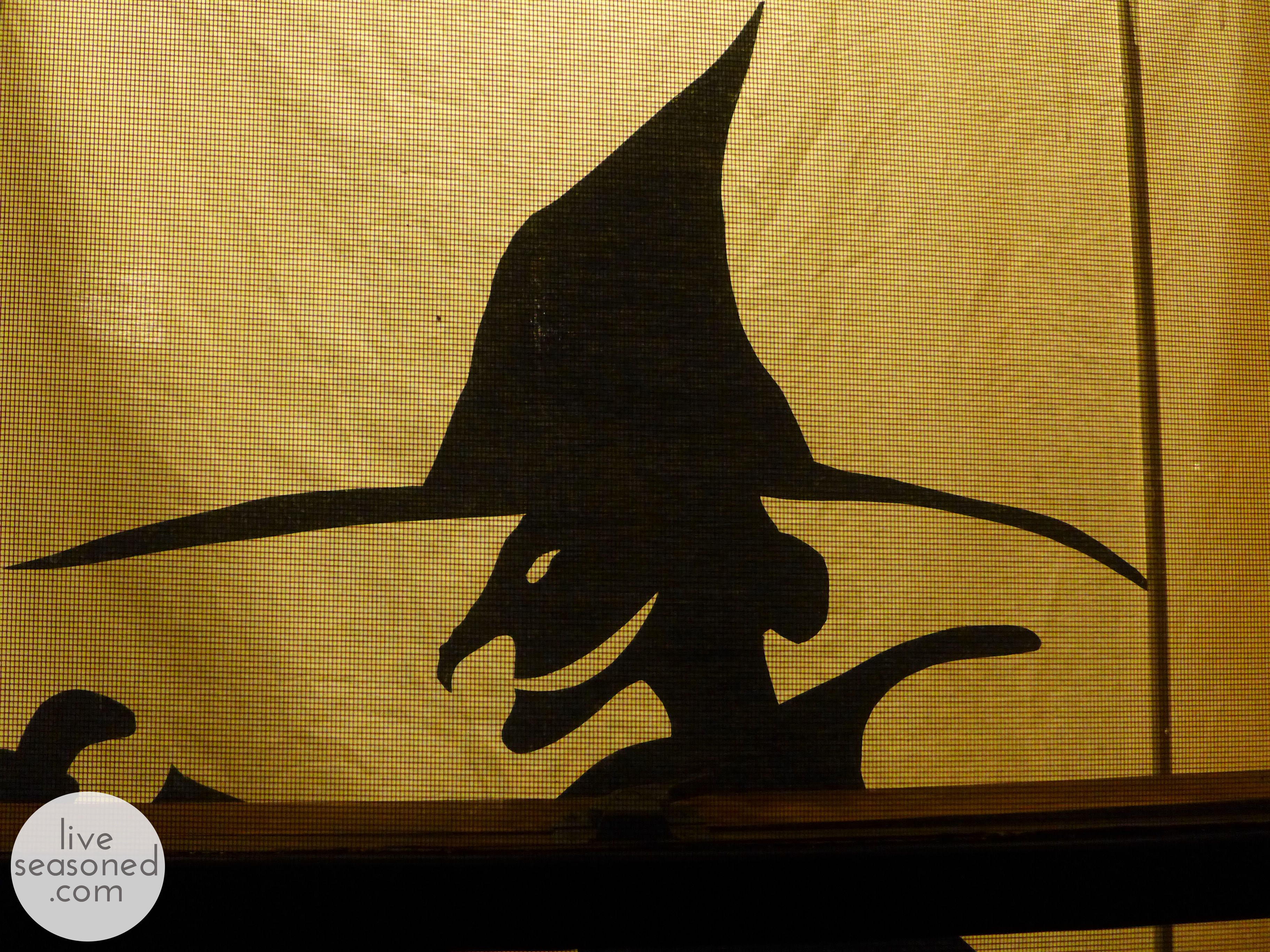
  • Once I had my image, I free-handed the drawing. To help with this process, I began by putting references points on the paper (for example, points where I wanted the top and brim of the hat to be, others for the hands and face, etc.). You can see them in the image above to the left. I then stood back and looked at those points to make sure that I liked the proportion and placement of my witch.
  • With those points in place I sketched a witch. I did this relatively quickly (5-10 minutes max), I didn’t go back and erase lines, and I didn’t aim for perfection. I always believe that if you give people the impression of an image they can fill in the details and overlook slight imperfections (our brother will whole-heartedly disagree with me). For example, is the bump at the back of her head a bun (my intention) or a wonky ear? You decide, but either way, you may not have focused on it until I brought it to your attention.
  • Finally, as well as giving you a paper to draw on, having the Heat’n’Bond stiffens your fabric so it also makes cutting and placing your silhouette so easy!

For being a random idea, I really love how this project turned out! It looks great in our window during both day and night. We hung the side with the silhouette facing out. So during the day, we get to see a shadowy silhouette image inside the house as the sunlight shines through, while everyone outside still sees the witch (I don’t think their view would be as good during the day if we hung it the other way around). You’ll get the same shadowy effect at night if there’s a street or porch light outside of your window. And one last hanging tip – Alex loves looking out of this window during the day, so I just use a couple of binder clips to secure the bottom of the panel to the top; it’s folded in half and we can see out of the bottom half of the window.

liveseasoned_fall2014_halloweenwitch11_wm

**Costume update: C and I felt the costume pressure when we realized that the little guy has no less than 3 costume parties to attend! So we had a brainstorming session tonight and came up with some fun ideas!

Little A’s New Winter Hat

Two months ago I shared some of the projects sitting in my knitting basket. Since then there’s been a bit of progress made on almost everything in that post. The socks have doubled in length. I’ve repaired a few of the moth-eaten hats (going to share some of that soon!). I gave you a detailed update about the sweater and am working on a second post in that series. Today, I’m sharing the pattern for Alex’s little hat, which doesn’t look anything like it did in the previous post. All in all not bad work considering those long winter knitting and TV evenings are just getting started!

liveseasoned_fall2014_littleahat5_wm

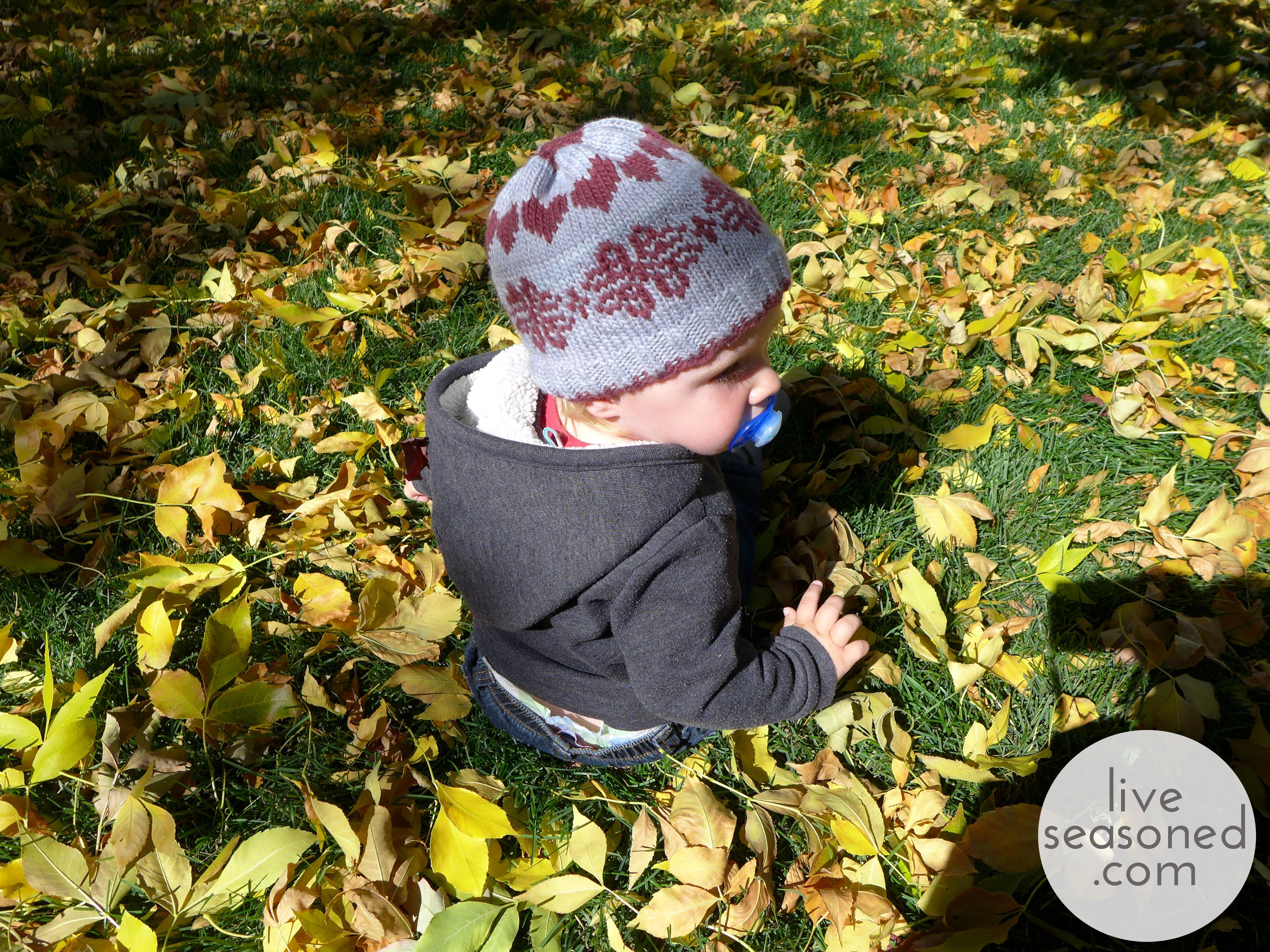
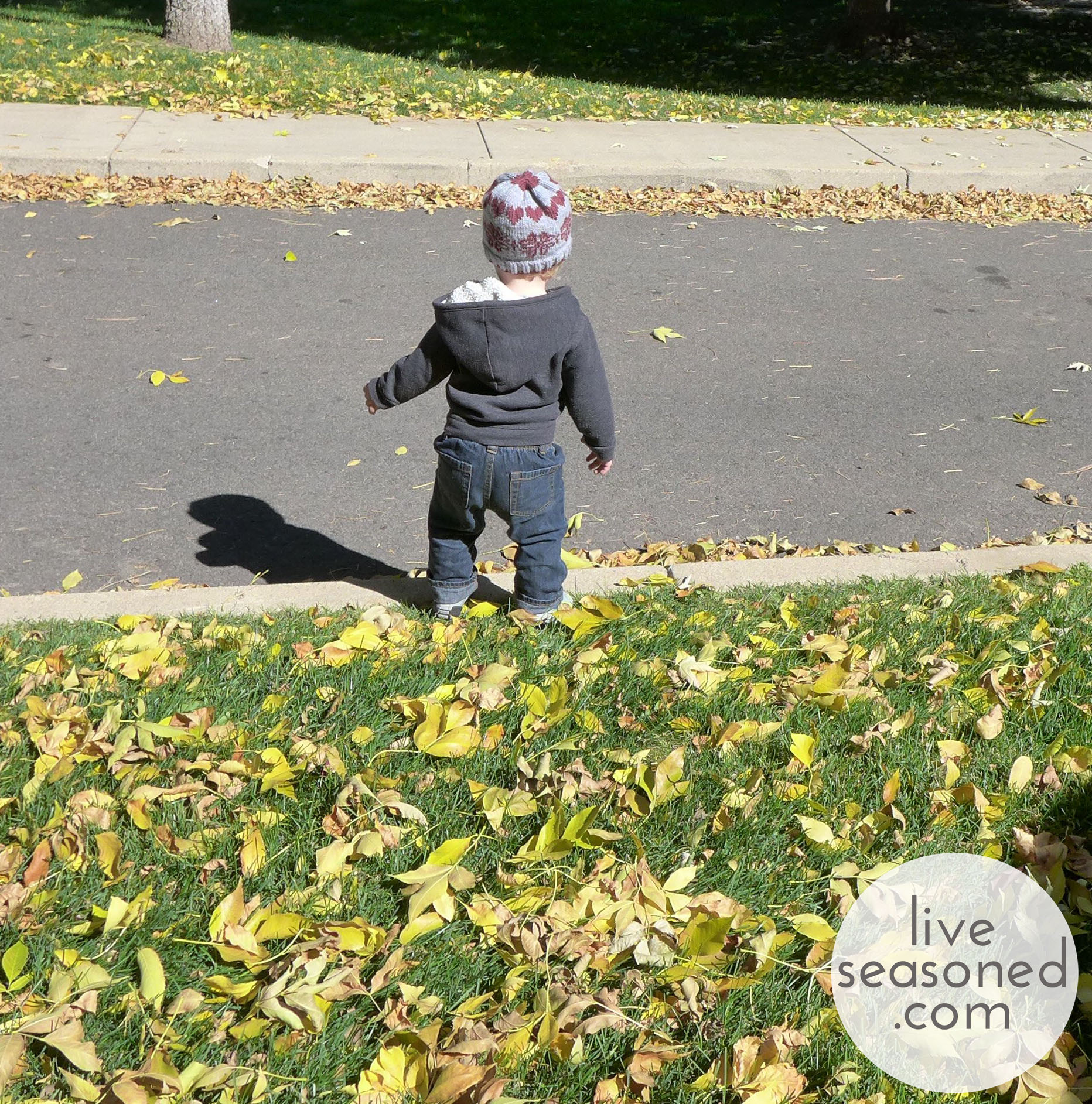
I tried Alex’s hat on his big head before the last post, and thought it was a bit snug, but didn’t want to admit it to myself. Trying it on him again last week, which involved wrestling that little 18 month old to the ground for a tickle-fest, confirmed my worries that he would quickly outgrow it. Over the weekend I finally ripped out the original hat and started again. A small sacrifice for that little cutie.

liveseasoned_fall2014_littleahat6_wm

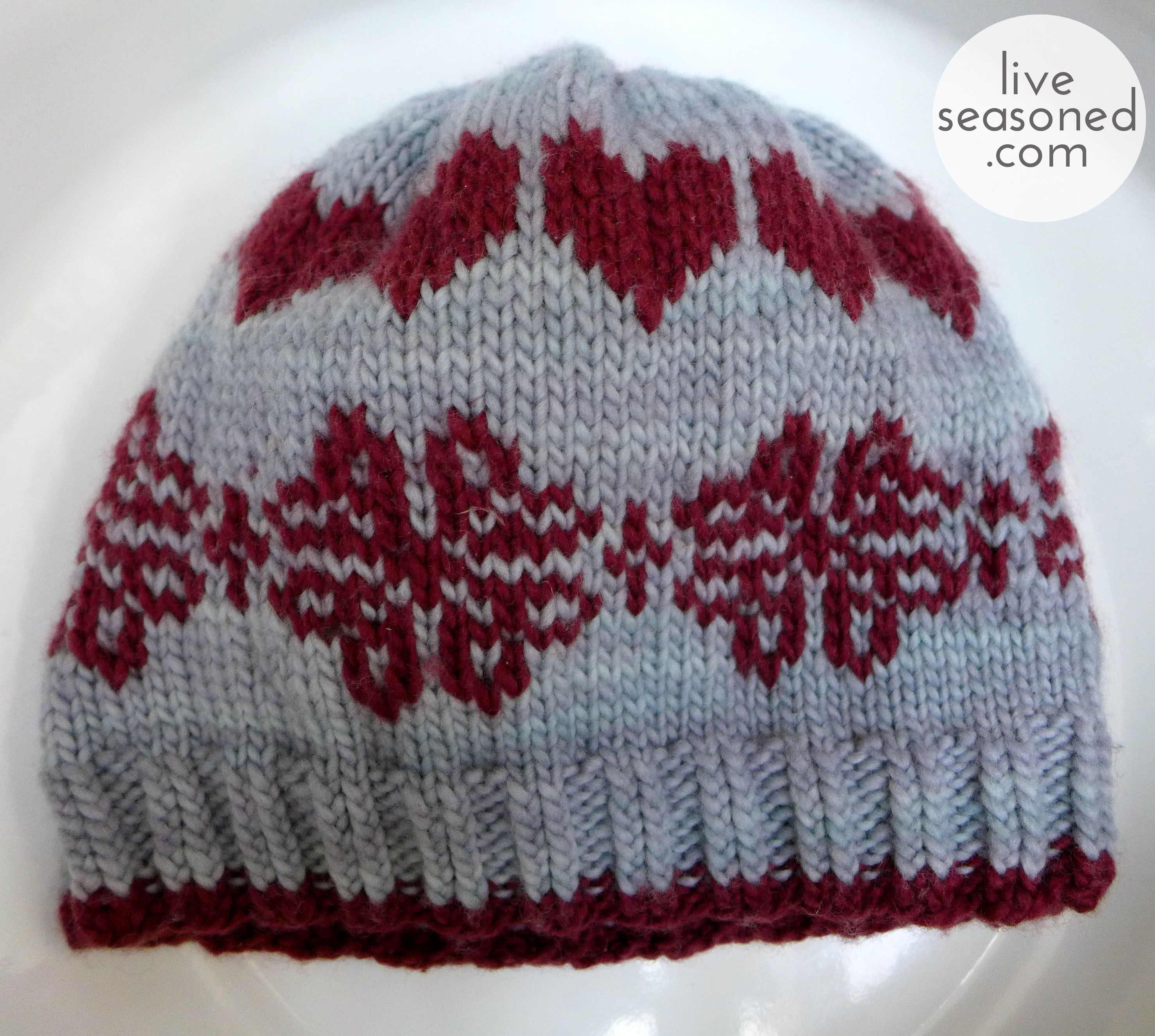
In the process I scrapped the tire track pattern for something that was more detailed, would cover the whole hat, and that included at least one traditional motif.  This hat is knit from the bottom up, and I developed the patterns as I went, completing one row of color before thinking about what to do next. A quick Google image search for “fair isle knitting” turned up this sample (shown below) and I decided to use the bottom snowflake for the lowest band on Alex’s hat. I knew I wanted to incorporate a heart somewhere (because how many more years do I have to knit hearts into his clothes), so why not a whole band of hearts? Then I finished the top with a red circle to keep the color repeats going.

Fair-Isle-Knitting-Design-Idea

I’m sharing the pattern here for the exact hat that I knit. I haven’t put any work into up- or downsizing this pattern, but I do think that it would be a fun experiment to knit it with bright chunky yarn and big needles to create an adult-sized hat (just a different version of the simple fair isle hat I knit for our sister Kristin a few Christmases ago).

liveseasoned_fall2014_littleahat1_wm

Pattern

Yarn : Malabrigo worsted in two colors, I will refer to the color that you use for the patterns as the contrast color

Needles : US 7, 4.5 mm

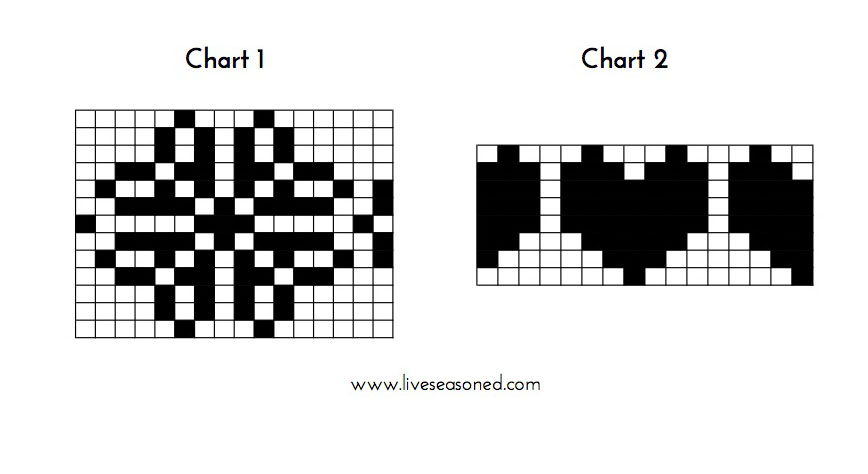
Pattern Chart : Charts are  below, but you can also download a PDF of the charts by clicking here.

  • Using your contrast color cast on 96 stitches. Use your preferred stretchy cast-on method (I like the long-tail method).
  • Row 1: Begin a K2 P2 rib using the contrast color.
  • Rows 2-9: Switch to your primary color and continue the K2 P2 ribbing for 8 more rounds.
  • Rows 10-15 : Using the primary color, knit in stockinette for 5 rounds (knit all stitches).
  • Rows 16-29 : Snowflake pattern. Repeat Chart 1 six times around each row (you should read the chart from right to left and bottom to top, with the dark squares representing stitches knit with the contrast yarn).
  • Rows 30-35 : Using the primary color, knit in stockinette for 5 rounds.
  • Rows  36-43 : Heart pattern. Repeat Chart 2 six times around each row.
  • Rows 44-51 : Using the primary color, knit in stockinette.
  • Row 52 : Decrease row. *K2 K2tog*, repeat ** for the entire row. 72 stitches remaining.
  • Row 53 : Knit all stitches.
  • Row 54 : Switch to the contrast color. Knit all stitches.
  • Row 55 : Decrease row. *K1 K2tog*, repeat ** for the entire row. 48 stitches remaining.
  • Row 56 : Knit all stitches.
  • Rows 57 & 58 : Decrease rows. *K2tog*, repeat ** for both rows. 12 stitches remain.
  • Finish off the hat by cutting your working yarn, weaving it through the active loops, tightening and weaving in all ends.

charts2
 All in all it’s a super simple hat that will keep any Colorado kid’s head warm with its double layering of yarn from the fair isle knitting. I love it, but I think if I were to knit another one, I might add more little color flourishes between the rows of pattern. Who knows. I do know that I still have yarn left on both of these balls – possibly enough to knit a baby hat for Little A’s little bro!


My Big Sweater Project

liveseasoned_summer2014_sweaterproject1_wmb

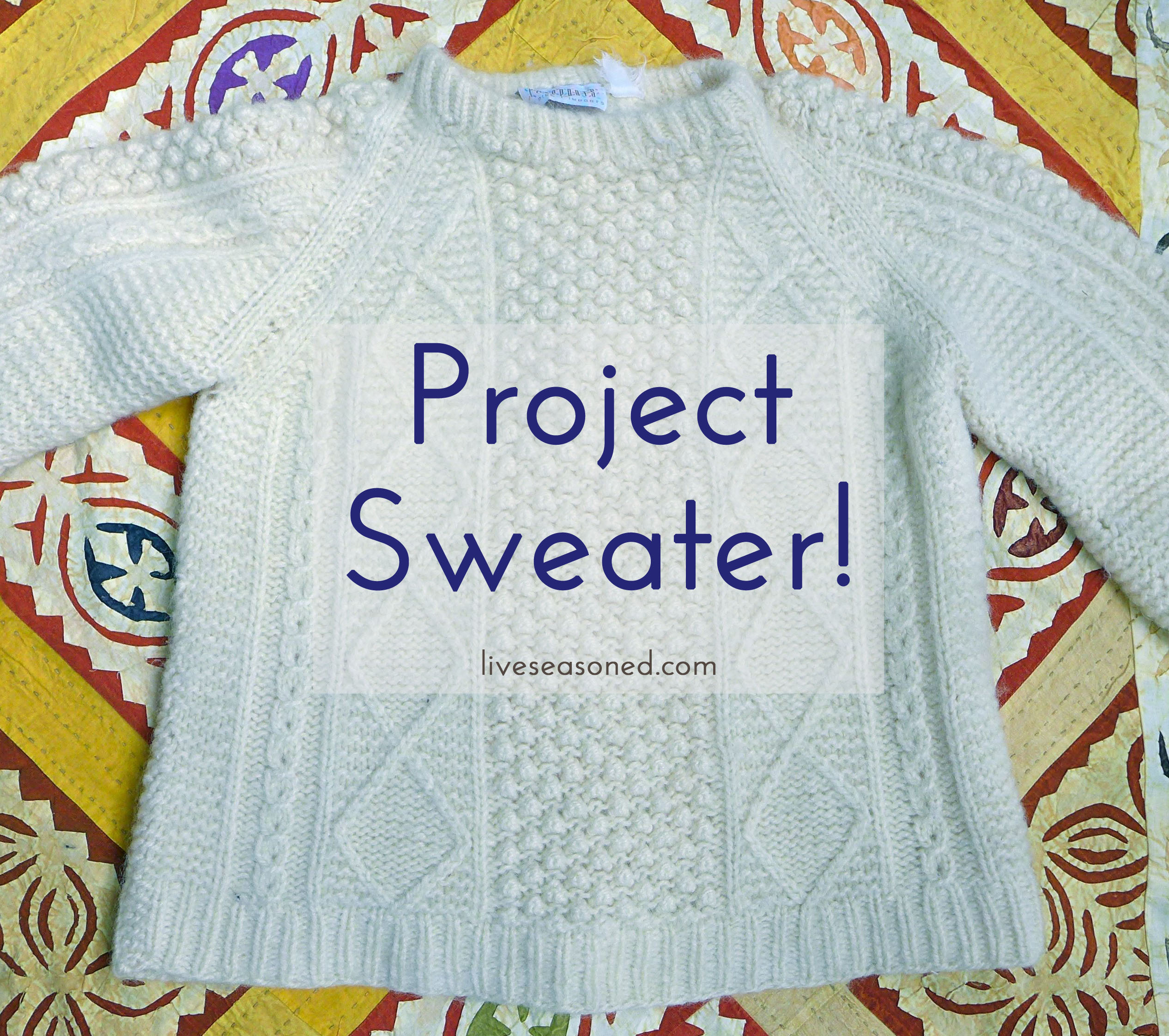
As I mentioned in this post, I have a growing uncontrollable pile of knitting projects going on. One of those is this sweater project. This is a friend’s sweater that she’s worn and loved for many years (I don’t remember how many, but she bought it at Pier One when they still imported and sold clothes!).

I’m not sure if you can tell in these photos, but the sweater is well-worn and has been slightly felted. She asked me to re-knit the sweater and add some length (about 4 inches or so). Rather than work on the whole project behind the scenes and share the finished sweater, I thought it would be fun to turn this into a series and share the process. Today I’m going to talk about my first two steps, which I try to conquer at the same time: 1. choosing the appropriate yarn and 2. working out the stitch pattern.

liveseasoned_summer2014_sweaterproject6_wm

The Stitch Pattern

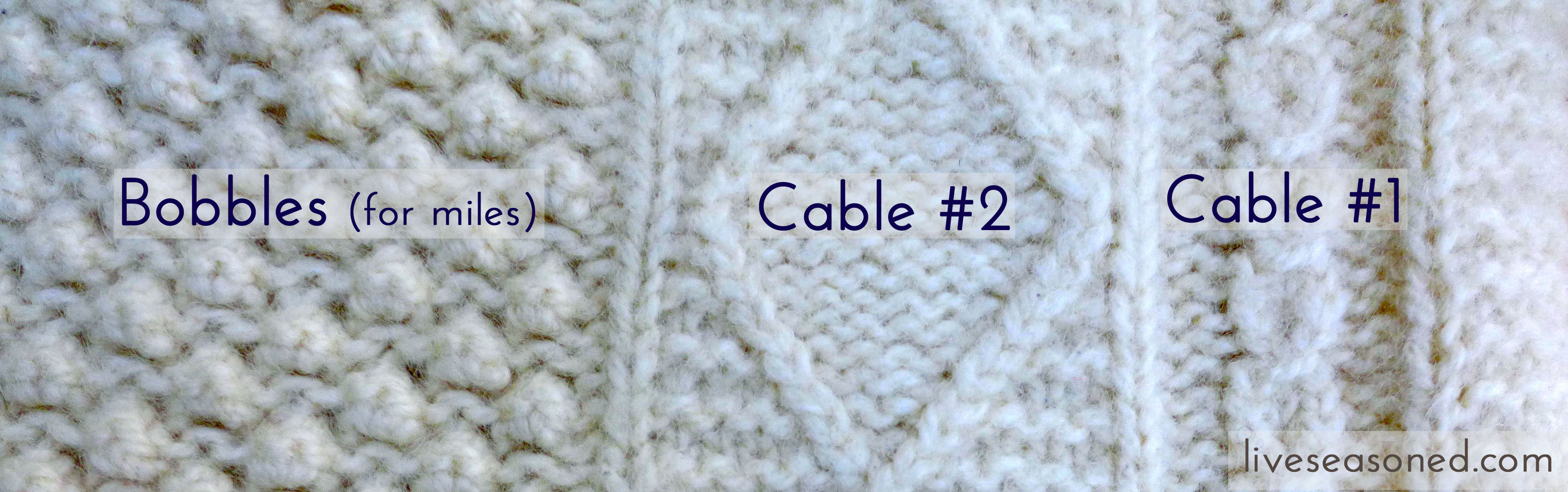
I start by just looking at the sweater and identifying simple stitches and bigger blocks. If you look at the first picture in this post, you’ll see that the areas on the sides of the sweater and the underside of the arms are garter stitch (the most basic knitting stitch). The cuffs and sweater bottom are knit 1 purl 1 ribbing. The bigger blocks are identified in the photo above: Cable #1, Cable #2, and the bobbles. The next trick is figuring out exactly (or approximately) how those blocks of stitches are made.

Cable #1. I work from right to left because that’s how the rows are knit. Cable #1 is relatively simple to figure out because it’s so small, worked across just 3 stitches. The area where it narrows is typically a point where the cabling actually occurs (where we would change the order of one or more stitches moving them in front of or behind others). In this case, that doesn’t happen, and at the same time you will make the small eyehole that’s in the cable! It was a fun puzzle to work this one out, but I’ll save the exact pattern for a future post. 

Cable #2. If you’ve ever knit a simple cable pattern before, Cable #2 should look relatively easy. There are two stockinette stitches that are forming the diamonds: moving out from the middle to the sides and then back in again. Inside the diamonds is a stockinette stitch and outside the diamonds is garter stitch. 

Bobbles! The bobbles were definitely the hardest stitch to work out (as you’ll see below in Swatch #1). I was able to figure out the cable stitches within a few attempts, but the bobbles took a lot longer. I began by looking at a few stitch guides online and knitting the bobble patterns. It took a long while to find a bobble that wasn’t too big or too small and with a spacing between bobbles that matched the original sweater. 

Choosing the Yarn

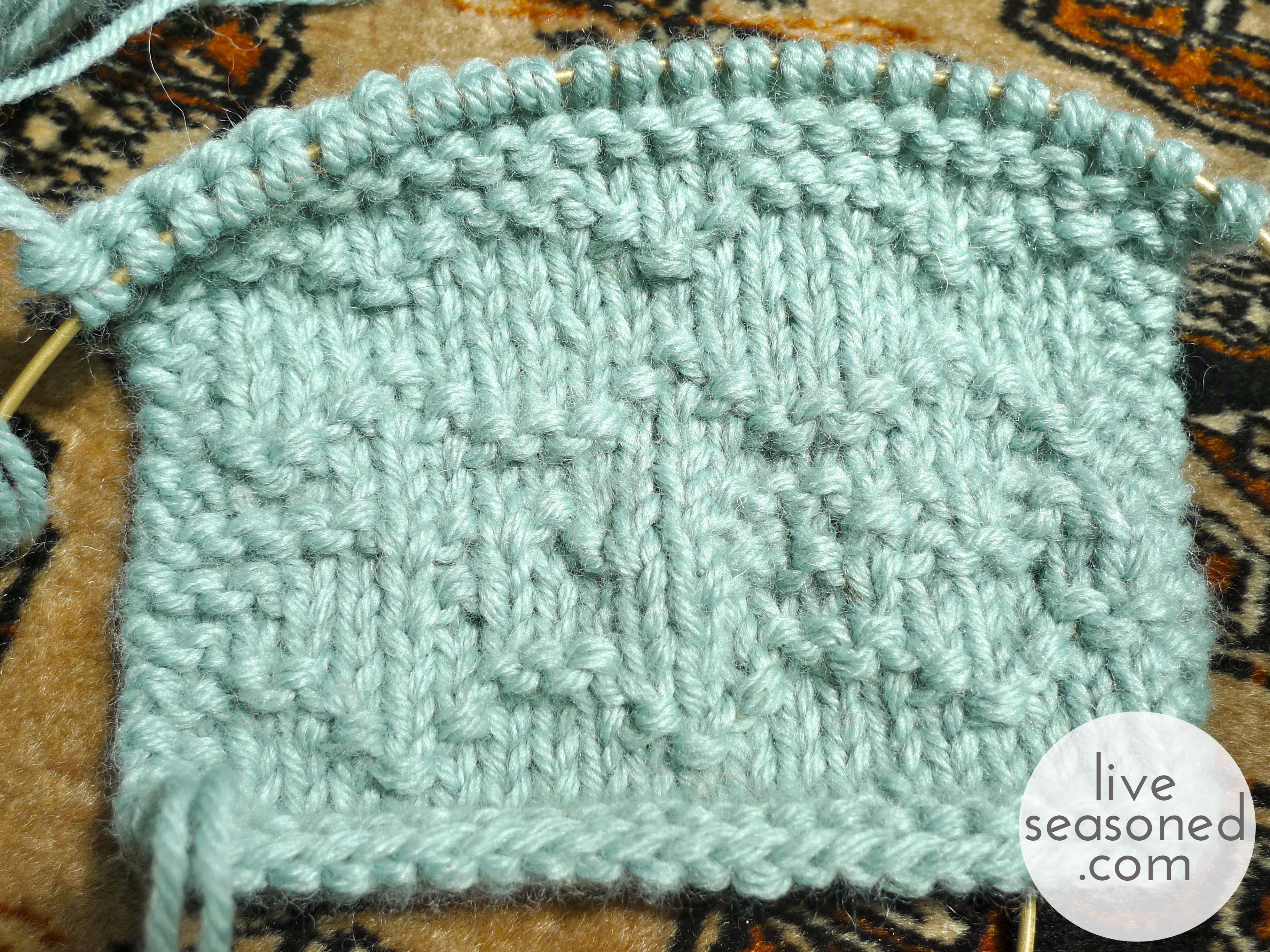
The easiest way to narrow your choices is decide what type of fiber you want. In this case we wanted to go with a wool again, then comes narrowing in on weight. I knew that this sweater was knit with a bulkier yarn, but the lines between yarn weights can be fuzzy. I started with a yarn that I used before and loved, Cascade Eco. Eco is a softer wool, and the Ecru color was a fairly good color match. As you can see, it’s considered a bulky wool on the Cascade site, but it’s really on the thinner side of bulky. The second yarn I tested was Knit Picks Bare Wool of the Andes. A slightly thicker bulky weight yarn and again a good (even better) color match but not as soft to the touch.

liveseasoned_summer2014_sweaterproject2_wm

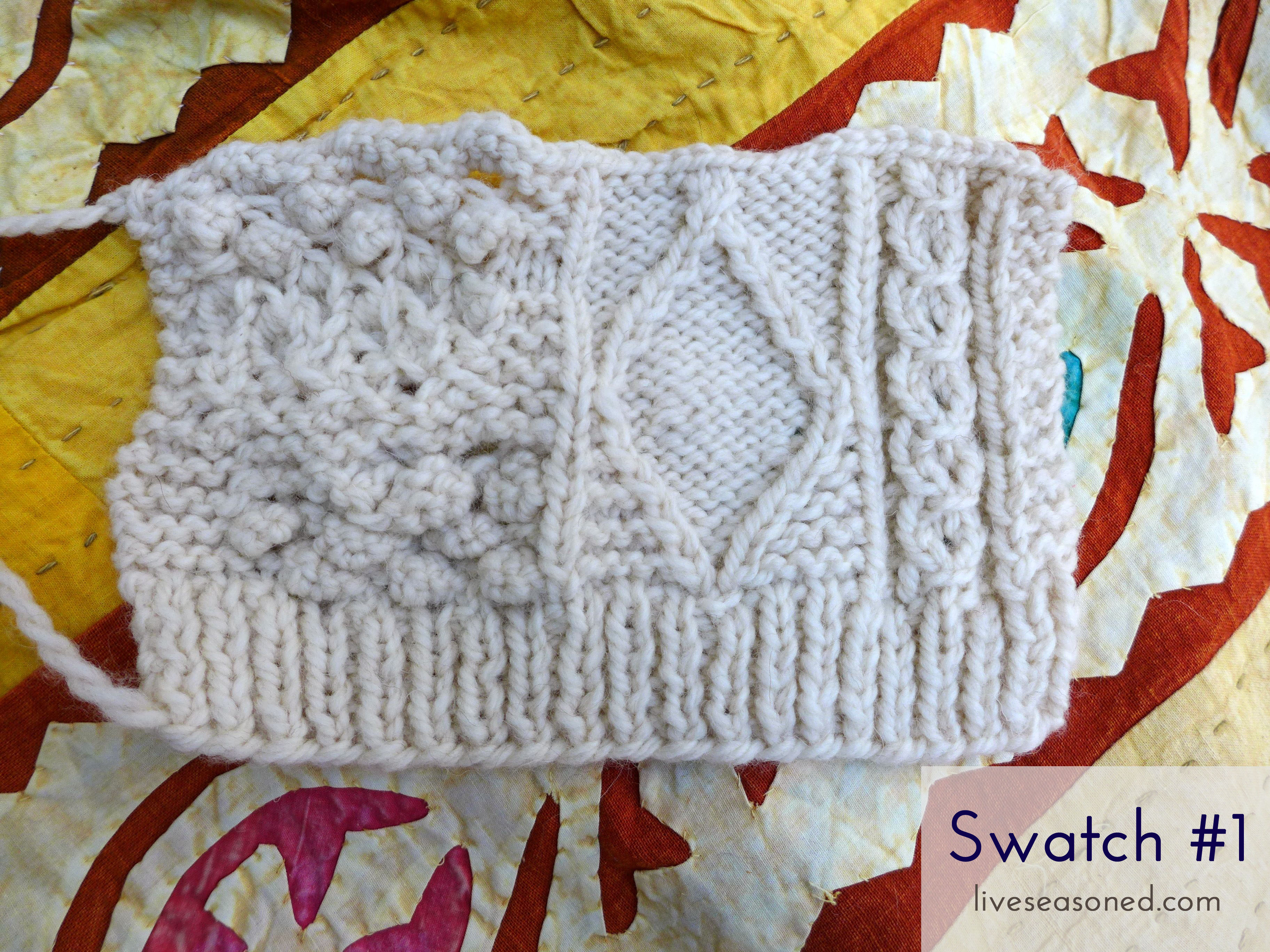
Swatch #1

Yarn: Cascade Eco ~~~ Needles: US9

This is the swatch where I worked out most of my stitch confusion, particularly the bobbles as you can see in the left panel. As mentioned above, the cables were easy, but the bobbles are a mess. I finally worked things out in the last few rows at the top of the swatch. You can also see that I made a mistake in Cable #2, using stockinette rather than garter on the top half of the diamonds. It’s good to see where you make those absent-minded mistakes in the swatches, so that you know where to be extra careful while knitting the sweater.

liveseasoned_summer2014_sweaterproject3_wm

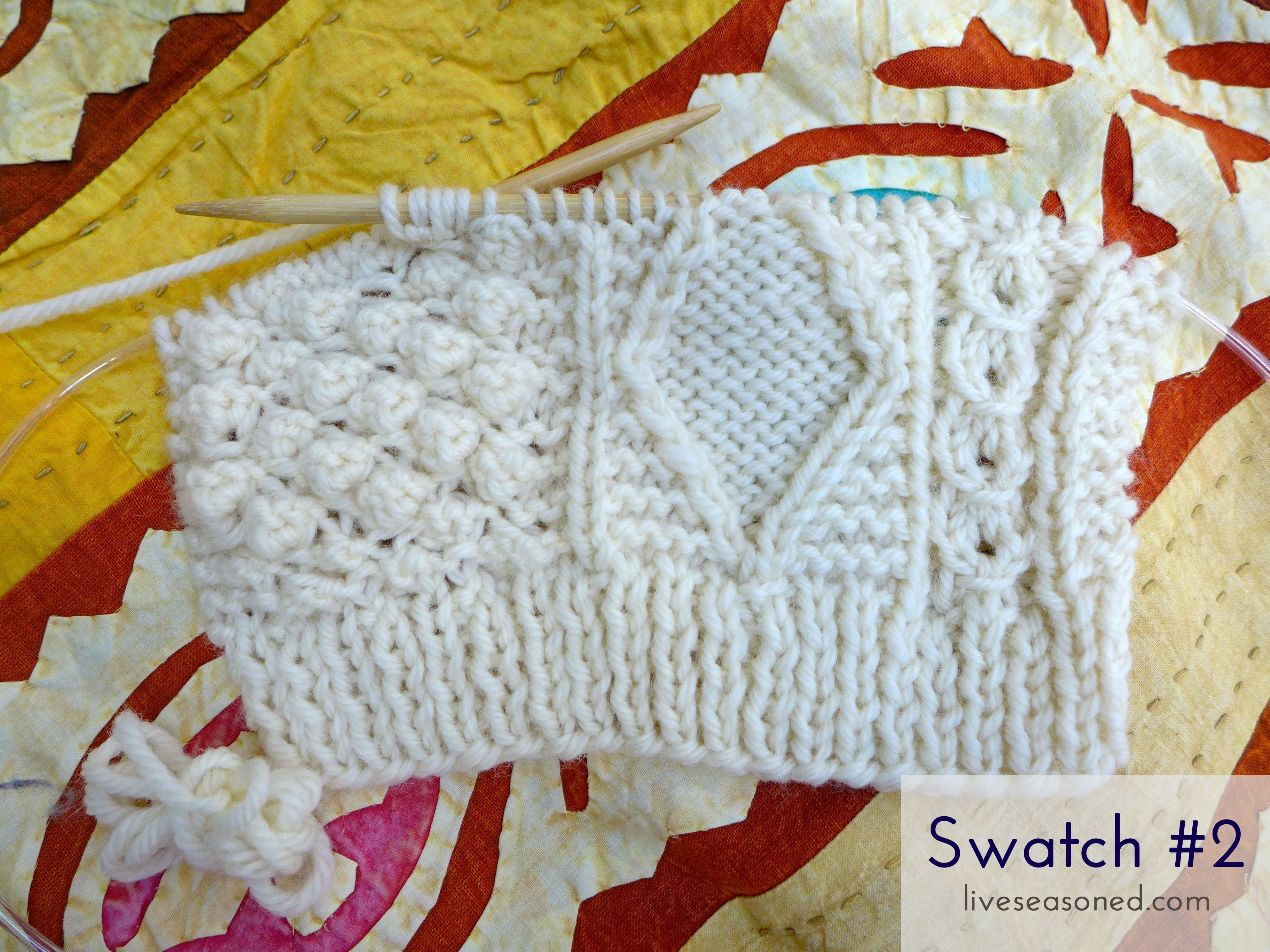
Swatch #2

Yarn: Knit Picks Wool of the Andes ~~~ Needles: US10.5

With the stitches worked out, this swatch was more about testing the second yarn and double-checking my notes to confirm the patterns.

liveseasoned_summer2014_sweaterproject4_wm

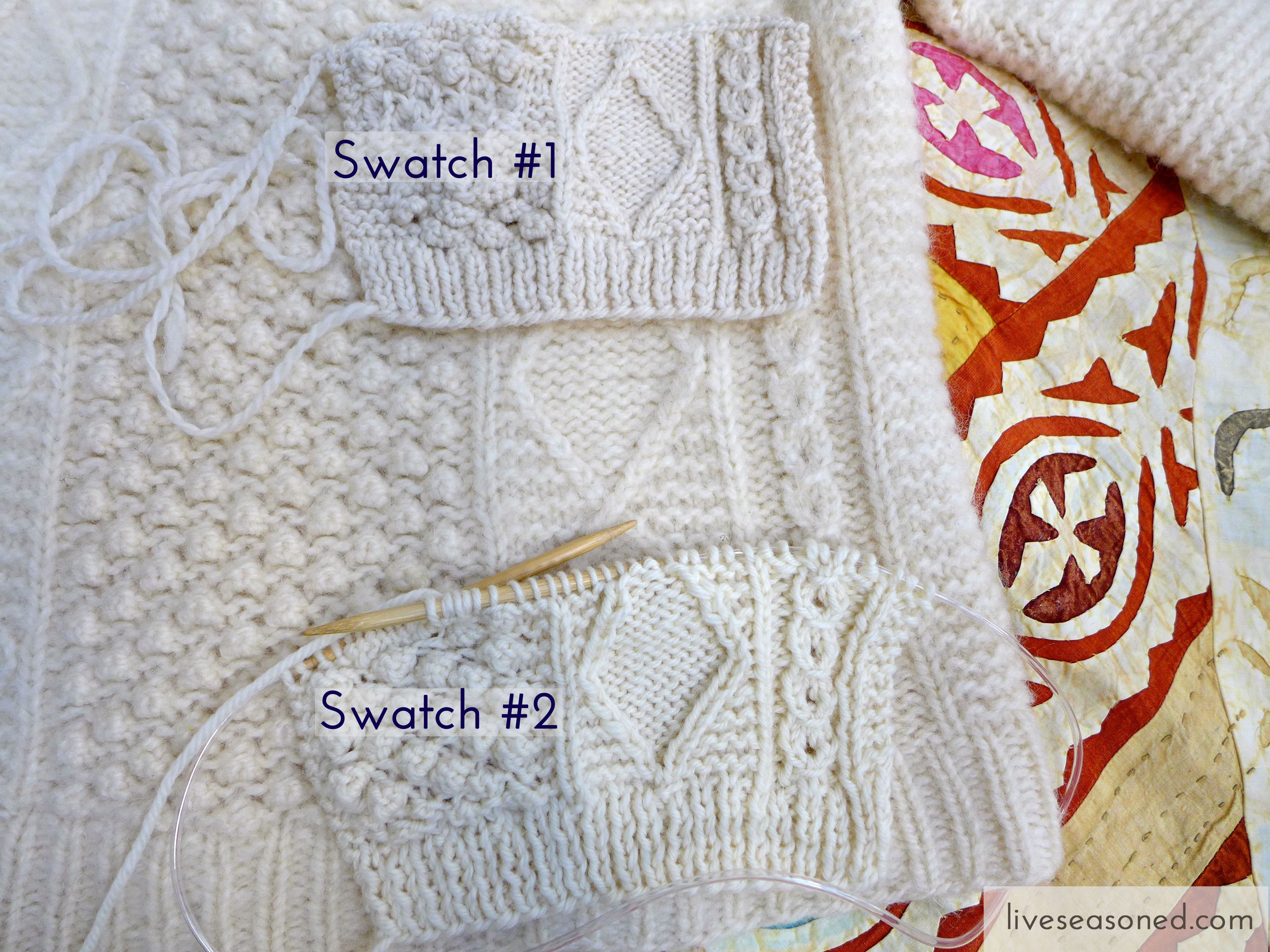
Putting both swatches on the sweater, a few things are apparent. The gauge (the size of the swatch over a standard number of stitches or pattern) of the first swatch is definitely too small for this sweater. The gauge for the second swatch is slightly better, but still looks to be on the small side, but the stitch patterns look like a perfect match!

What’s next?

It’s time to test the second yarn in a few more ways. First, before ruling out a swatch that is close to the final object, I’ll block it (more on this in the next post). If it seems slightly too small after blocking, then I’ll move up a needle size and see how that works. There’s a risk that it could make the knitting look too loose, but in this case the original sweater looks to have a more loose weave so that might be the ticket.

Upcycled Tiny Vases

Hey party people! Labor day is this weekend and even if you don’t have a barbecue to host or attend, it’s a nice, long weekend that is meant for chillaxin’ and treatin’ yourself.  (Did you know chillax was added to the dictionary? My high school self is punching the air with excitement right now)  If you are hosting a party, you should think about making these spectacular little upcycled hanging glow vases to add to your decor. While you are crafting aforementioned vases, you should sip on these fruity mocktails and decide which one you’ll be concocting this weekend!

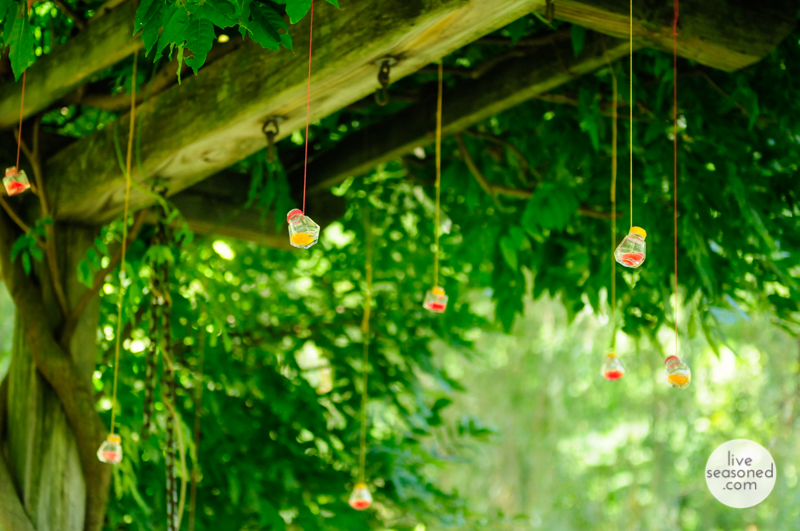
liveseasoned_summer14_hangingvases-5-3


My sister Kristin and I sprinkled them about our land to decorate for a camping festival that we hosted this past weekend (more on that to come).  They looked adorable during the day and mesmerizing at night!  These vases were one of the few decorations that really worked well both day and night.  Our enormous dreamcatchers were completely lost at night (they had no light-up features) and our sweet dance floor was plain ol’ grass and sky during the daytime, but these tiny vases looked great at all hours!

If you have some spare time, string and a few small vessels, then this craft is for you.  There is no glue or taped involved, so whatever you choose to use as a vase can be reused again in the future.  We had a large quantity of salt and pepper shakers left over from Katie’s wedding, which is why Kristin (our middle sister) thought up this project.  We saved the tops so that we can easily dismantle and sterilize these shakers if we ever need to use them in the future.

Supplies:

  • String, hemp or embroidery thread
  • small vessels (we used salt and pepper shakers)
  • scissors
  • glow sticks (optional)
  • flowers (optional)

The How:

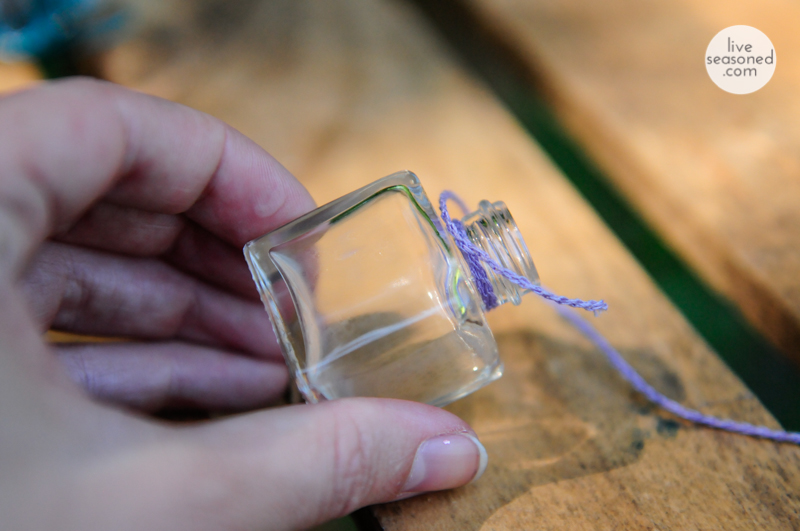
  • Cut off a length of string at least 2 feet long.  (The length really depends on where you want to hang the vases. Overestimate if you aren’t sure-I didn’t measure any of my strings) Wrap the string around the top of the vessel and leave a quarter inch tail.

liveseasoned_summer14_hangingvases-5-2

  • Hold the tail vertically across the rim so that you can wrap more string around the bottle and over the tail, which will secure the tail and string in place.
  • Continue wrapping the string around the rim of the vessel until you’re satisfied with how it looks.

liveseasoned_summer14_hangingvases-1

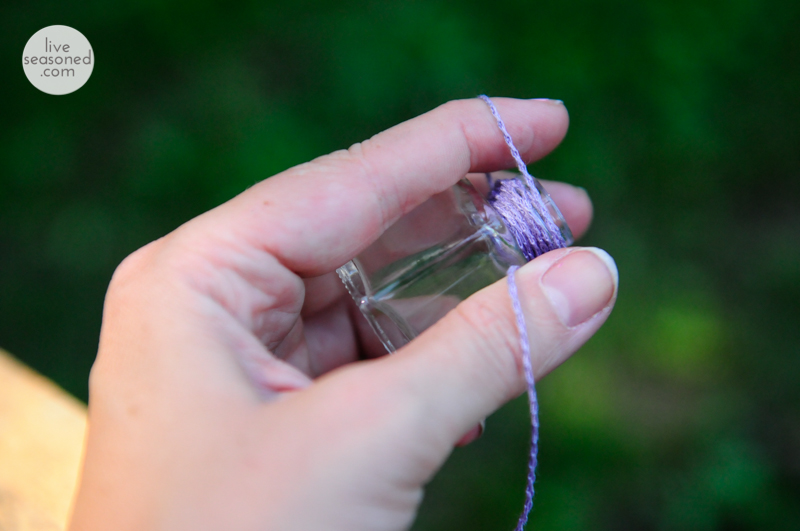
  • Place your pointer finger over the wrapped rim and wrap the string over your finger and then loop the string through to create a knot. Repeat two more times.  You should have a long tail leftover so that you can hang your vase.
  • After you hang your vases you can fill them with water and a tiny bloom.  Before dusk, cut a glow stick in half and empty the liquid into the vessels to create tiny glowing orbs. (Be extra careful when cutting open glow sticks.  They contain chemicals, not deadly dangerous chemicals, but chemicals nonetheless. If youngsters are going to be around, please skip the glow stick vases.  They look so super cool that kids will not be able to resist them and we wouldn’t want anyone to ingest the hydrogen peroxide or phenyl oxalate este).
  • Rinse and repeat as often as you’d like.  To be honest, empty vases look pretty as well!

Since I’m being honest, (does it irk you when people say that? shouldn’t you always be honest? I catch myself saying it quite often..) I have to admit this is my favorite craft of the summer.  I can’t take credit for it though, it was all Kristin, our middle sister and {hopefully} future-blog-contributor.  The tiny vases are just *so* cute and the way they glow is really magical.  Party guests were complimenting them all weekend!  It’s pretty neat how something so ordinary becomes so extraordinary when it’s swiped from the table and hung from a branch.  If you don’t feel like crafting these little glow vases, why not bake these galactic brownies?

*Glow vase photo by theflyry and empty vase photo by saleem.


Dry Shampoo to the Rescue!

It’s no surprise that Sarah and I like to make our own cosmetic and household potions whenever possible. We’ve tried our hands at deodorant, body scrubs, and laundry detergent. We like to know exactly what’s going into them, but we also really enjoy personalizing the potions to our tastes, and we often find that homemade is cheaper than store bought.

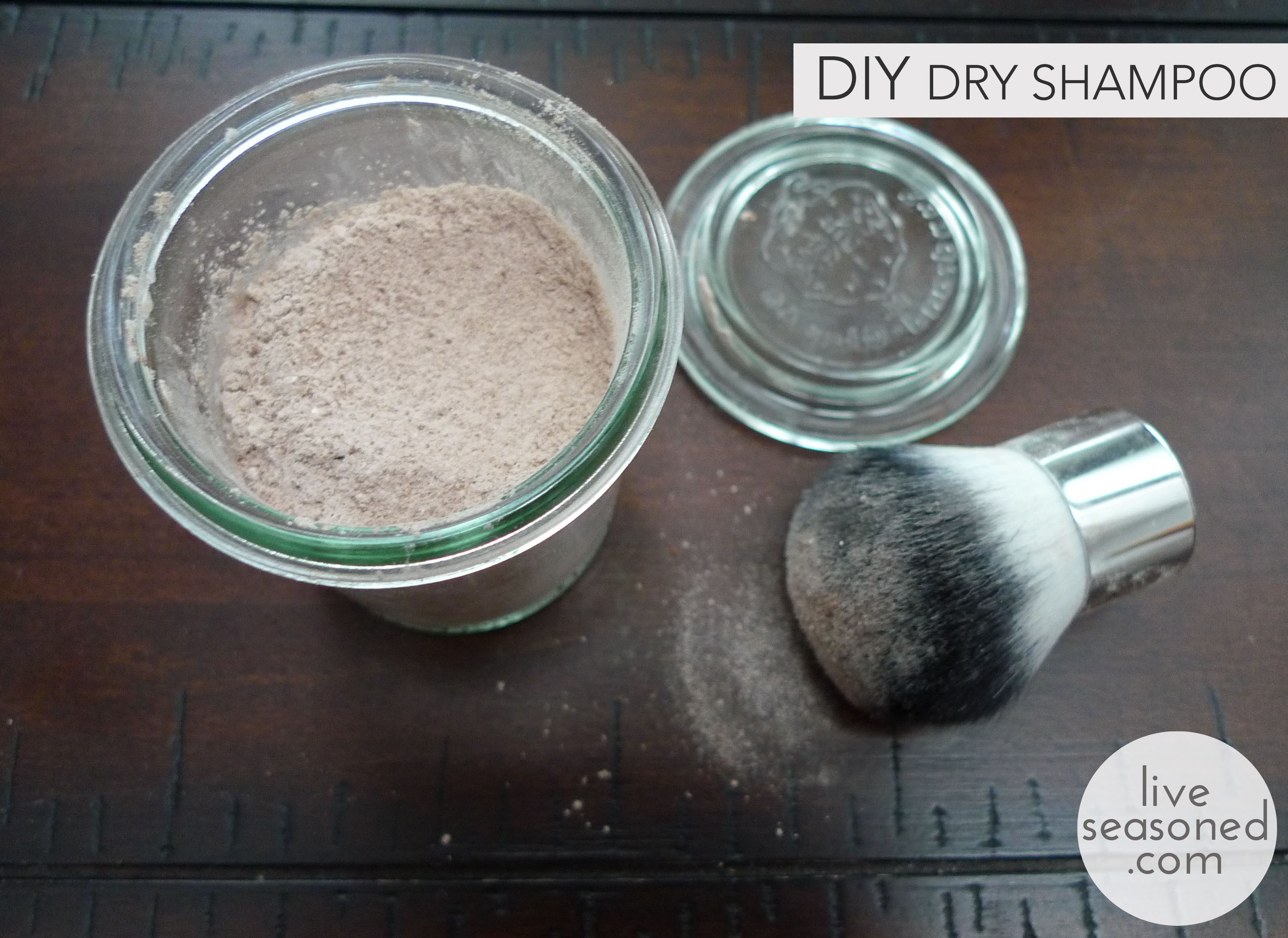
liveseasoned_summer2014_dryshampoo6_wm copy

Today we’re sharing yet another cosmetic potion: dry shampoo. I didn’t start using dry shampoo until after Alex was born (it really is every new mom’s best friend), but truthfully, I probably should have started using it sooner! I’m not a big fan of showering; I think it just strips my body of the good oils, drying out my skin and hair. I usually take a shower every three days or so, and in between you can start to see my hair gets greasy – that’s where dry shampoo saves the day. It soaks up those excess oils and gives my thin, limp hair a bit of body! The potion I’ve settled on is a mash-up of the different recipes I’ve seen out there, simplifying and using measurements that seem to fit my hair.

Continue reading

Clean Up Your Act: Laundry Detergent DIY

liveseasoned_spring2014_detergent_tutorial

There’s a whole load (har har) of benefits that go along with making your own laundry detergent, but the biggest one for me is cost.  Don’t get me wrong, I love knowing exactly what’s swirling around in my machine and feeling comfort in knowing there’s not a whole host of perfumes and chemicals on my cottons, but the cost difference of store bought and homemade detergent is significant.

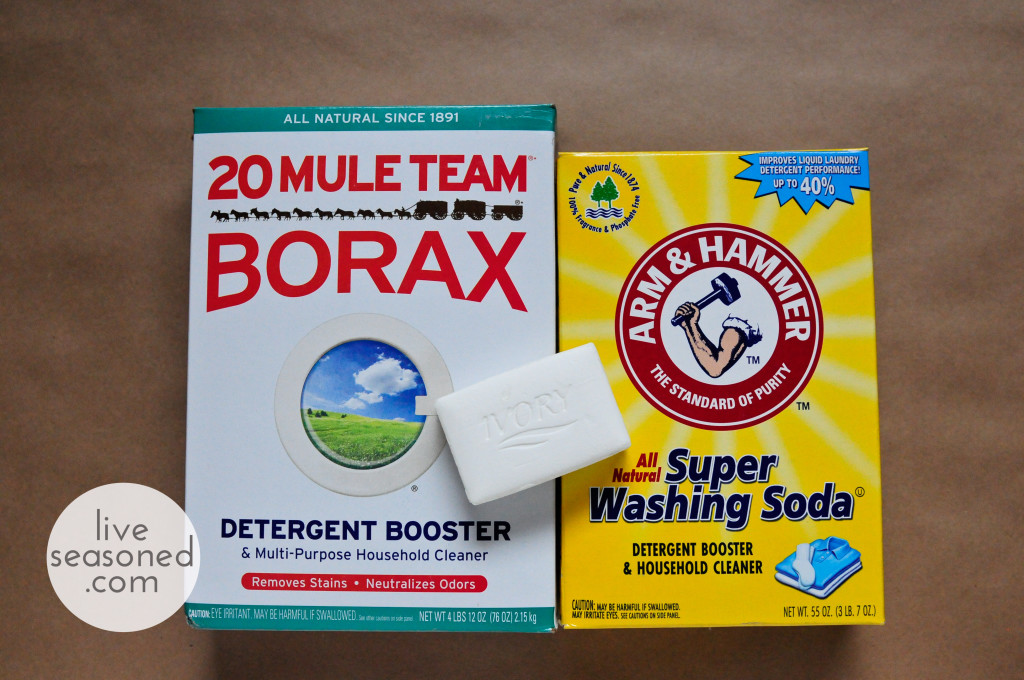
It only costs $.07 a load compared to the cheapest Tide option, which is almost double at $.12 a load.  Also, once you buy the 76oz box of Borax, 55oz box of Washing Soda and 10 pack of Ivory Soap for a grand total of $12.00, you won’t have to worry about laundry detergent for a looooooong time, like an entire year. True story.

While my main motivation for DIY detergent is to save money, I take comfort in knowing I’m not bringing (potentially cancer-causing) carcinogens into my home and rubbing them all over my largest organ and depositing them into the water supply. I’m also saving lots of petroleum-based plastic jugs from entering landfills. DIY detergent is good for the environment, your skin, and your wallet.  I guess what I’m saying is, this recipe is a win, win, win.

liveseasoned_spring2014_detergent-1

Supplies and Equipment:

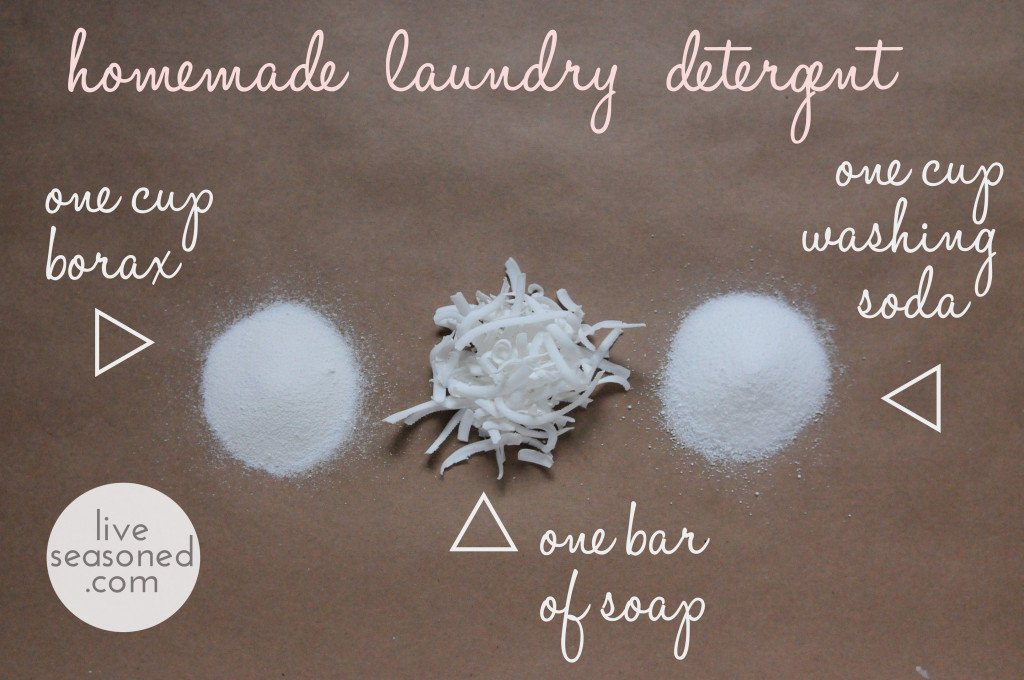
  • 1 c Borax
  • 1 c Washing Soda
  • 1 bar soap
  • Bowl
  • Grater
  • Spoon

Quick Tip:

  • You can find these ingredients at the grocery store near dryer sheets and dyes.
  • Wear a scarf over your face or pull your shirt up over your nose to keep from inhaling the fine powders.

liveseasoned_spring2014_detergent-3

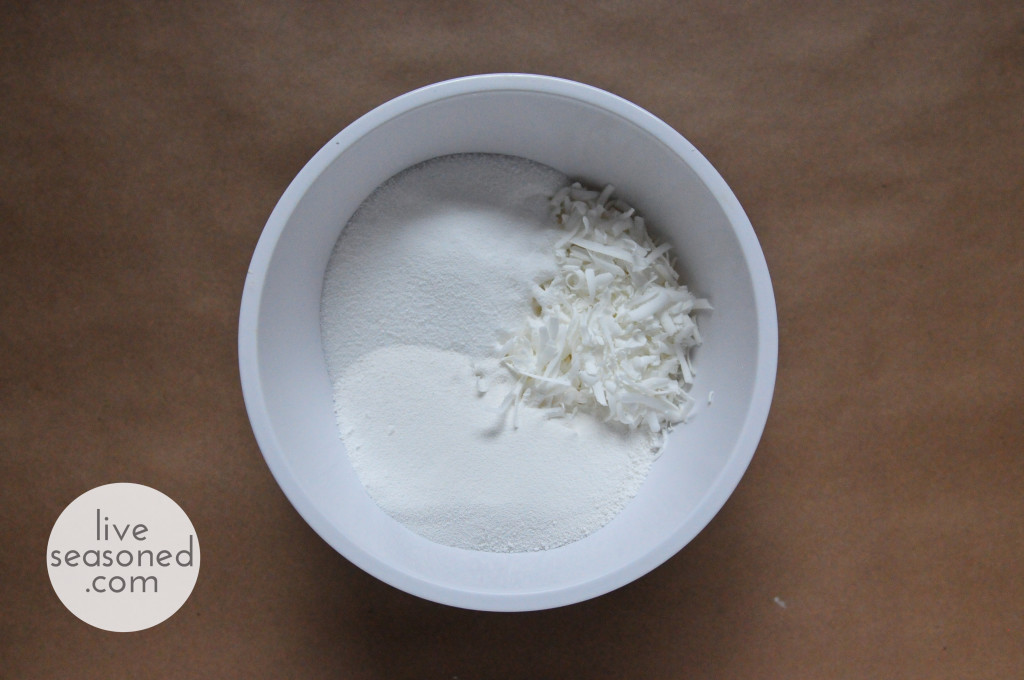
  • In a large bowl, grate one bar of soap then add the Borax and washing soda.  Chop the soap pieces into smaller bits with a spoon as you mix the ingredients together.
  • You can also add a few scoops of powdered detergent booster if you wish.  Sometimes I add Tri-Zyme (a biodegradable version of oxi-clean), but most times I forget and leave it out.
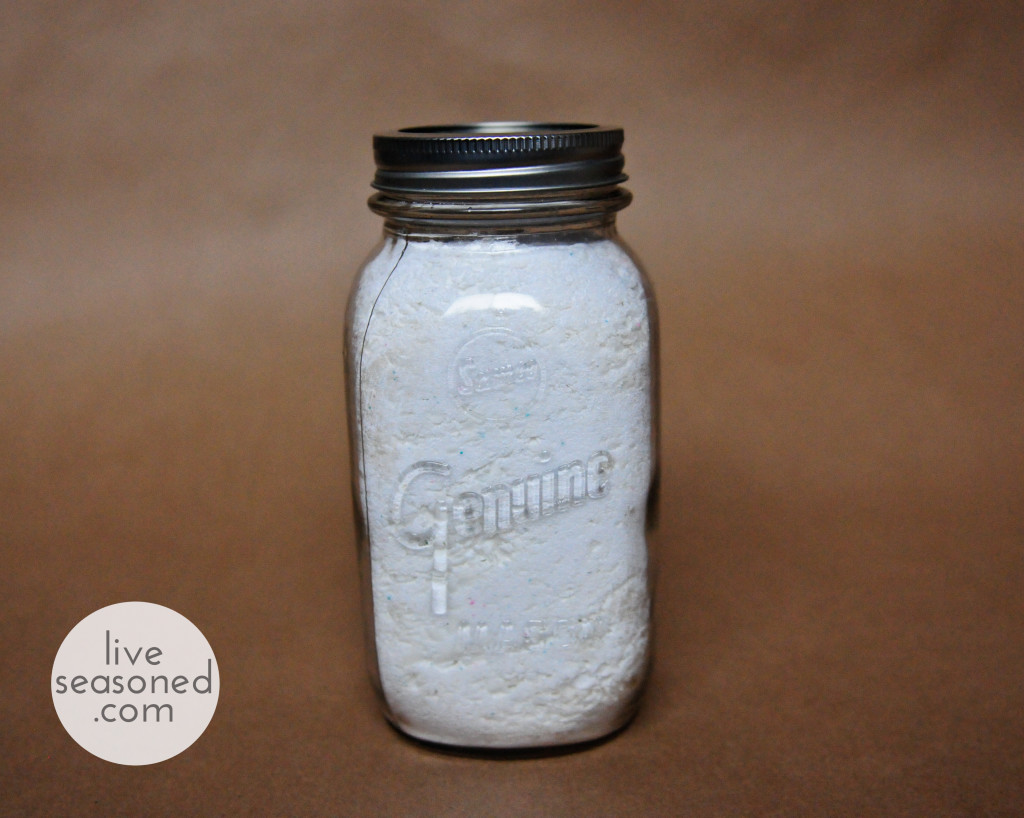
  • After stirring for a few minutes transfer the detergent to an airtight container.  I keep mine in a Mason jar.
  • Before adding your clothes, put one scoop (roughly 2 tablespoons) of powdered detergent into the washer and turn on the hot water, after a minute or two add the clothes and adjust the temperature if necessary.* If you don’t have time for that step, no worries, just put the detergent in first so it starts dissolving in the water immediately.

liveseasoned_spring2014_detergent-4

So what do you think? Do you love spending money on Tide or do you think you’ll try this homemade option?  Powered detergent is classic so return to your roots people!  Really though, I think it’s great and I’ve been using this recipe for three years now.  Lemmmmmie know how it goes!

*Each batch makes enough for twenty loads.

Knitting – WIPS

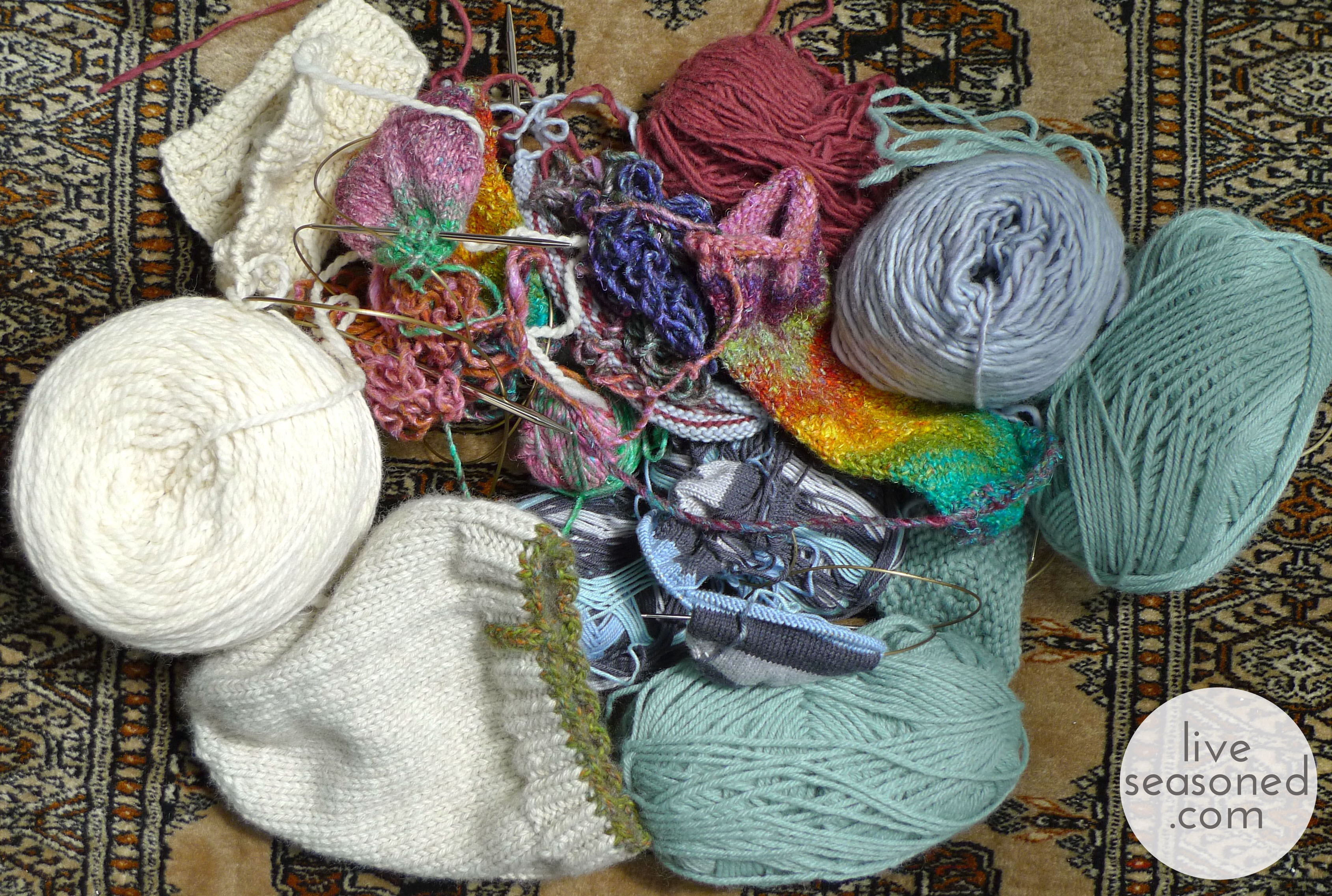
For me, July was all about moving, settling into our new home/city/state, re-teaching little A how to go to sleep in this new and strange place, and other fun life duties. But then we flipped the calendar to August, there were no more boxes to unpack, Alex became a wonderful and prompt 7:30pm sleeper, and my evenings were free, albeit chained to the house with the little guy upstairs, but free none-the-less. It’s given me the time to get crafty again, and, as always, I turned first to my knitting basket. I have boards of non-knitting crafts pinned, but those will have to wait until I get at least one or two of these projects finished!

liveseasoned_summer2014_wips3_wm

Anyway, I thought it would be fun to share a few works in progress, hopefully passing along some knitterly inspiration to you, because even though the days are hot, the evenings are perfect for working on small projects for the coming fall and winter. In the mix are a variety of projects and swatches, some from published sources others are experiments.

liveseasoned_summer2014_wips9_wm

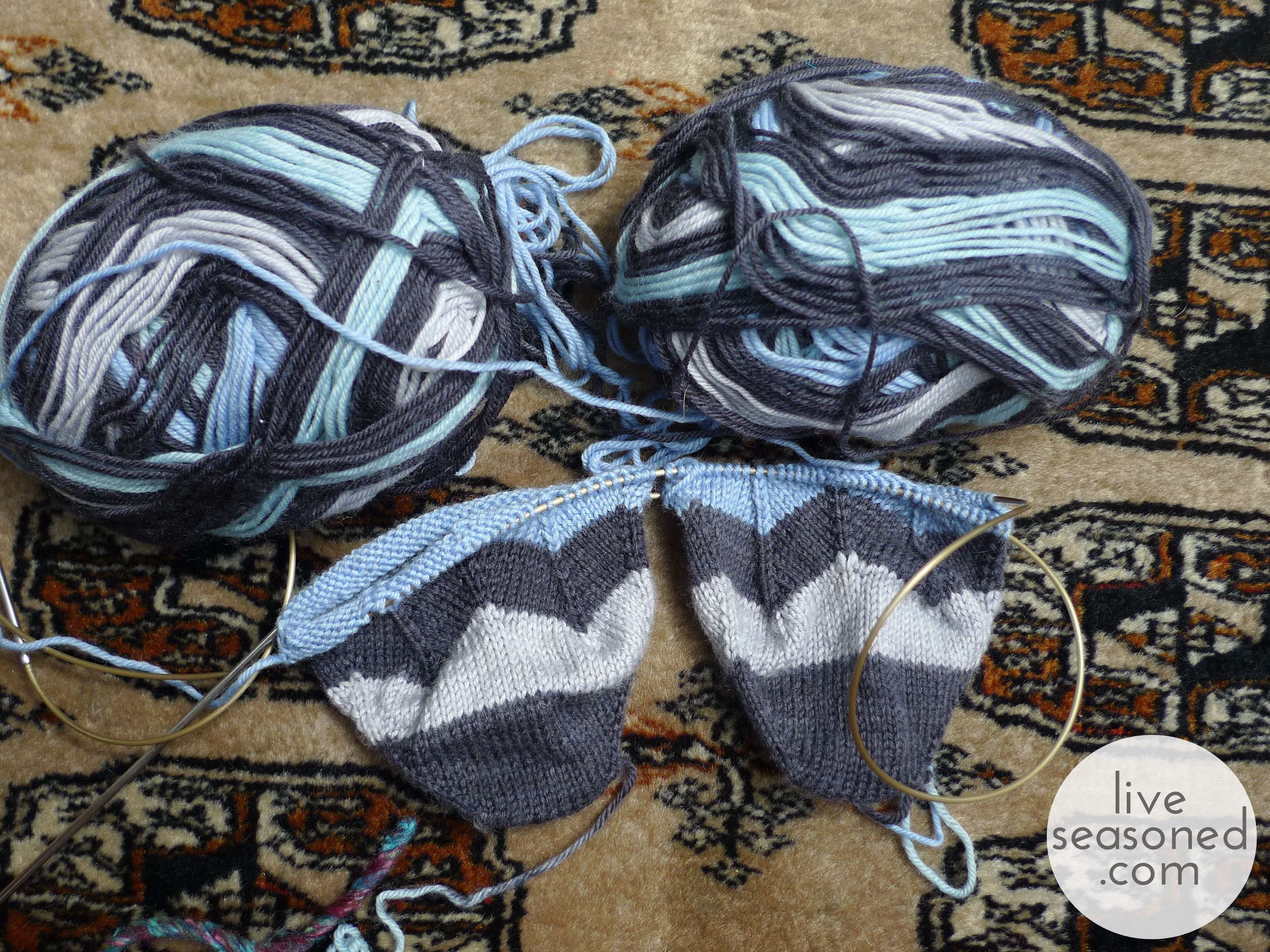
The socks. I always have some socks in progress, because as any wearer will tell you: they are so much better than store-bought socks! Hand-knit socks are the only ones that stay up when I’m wearing my Sorrels. Sorrel wearers know what I’m talking about, it seems like every other pair of socks is pushed off my feet within the first 10 yards of a hike through the snow.

Pattern : Jaywalkers (that link opens a PDF of the pattern)

Yarn : from Knitpicks, but it looks like they’ve discontinued the self-striping sock yarn.

liveseasoned_summer2014_wips6_wm

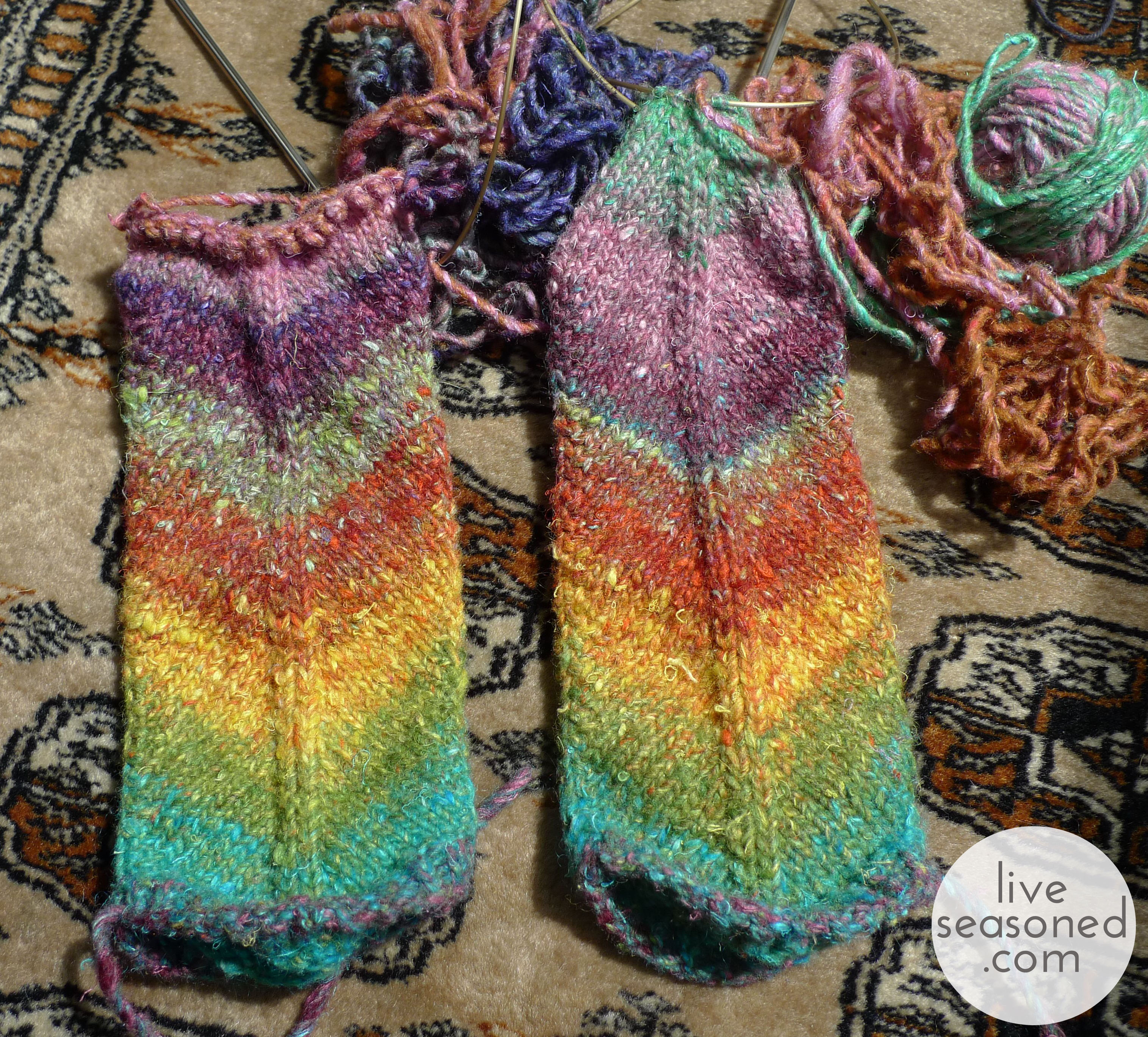
After my favorite mittens were completely (and utterly) destroyed by moths, I knew I had to make another pair. The first pair was made with Noro Kochoran yarn, which is mix of wool, silk, and angora, and the the mittens perfectly warm, soft, and durable. I picked another Noro yarn, but lost the label and am stumped as to what it’s called. It’s also knitting up beautifully, but as you can see at the top I’ve run into some color issues – the ball was cut and tied together at a different color sequence, so I’m trying to work with what I have to get a somewhat matching pair. Next will come the thumbs – you knit these mittens without thumbs and then go back, cut a hole where your thumb should be and knit the final piece!

Pattern : Elizabeth Zimmerman’s Mitered Mittens found in the Knitter’s Almanac

Yarn : Noro

liveseasoned_summer2014_wips4_wm

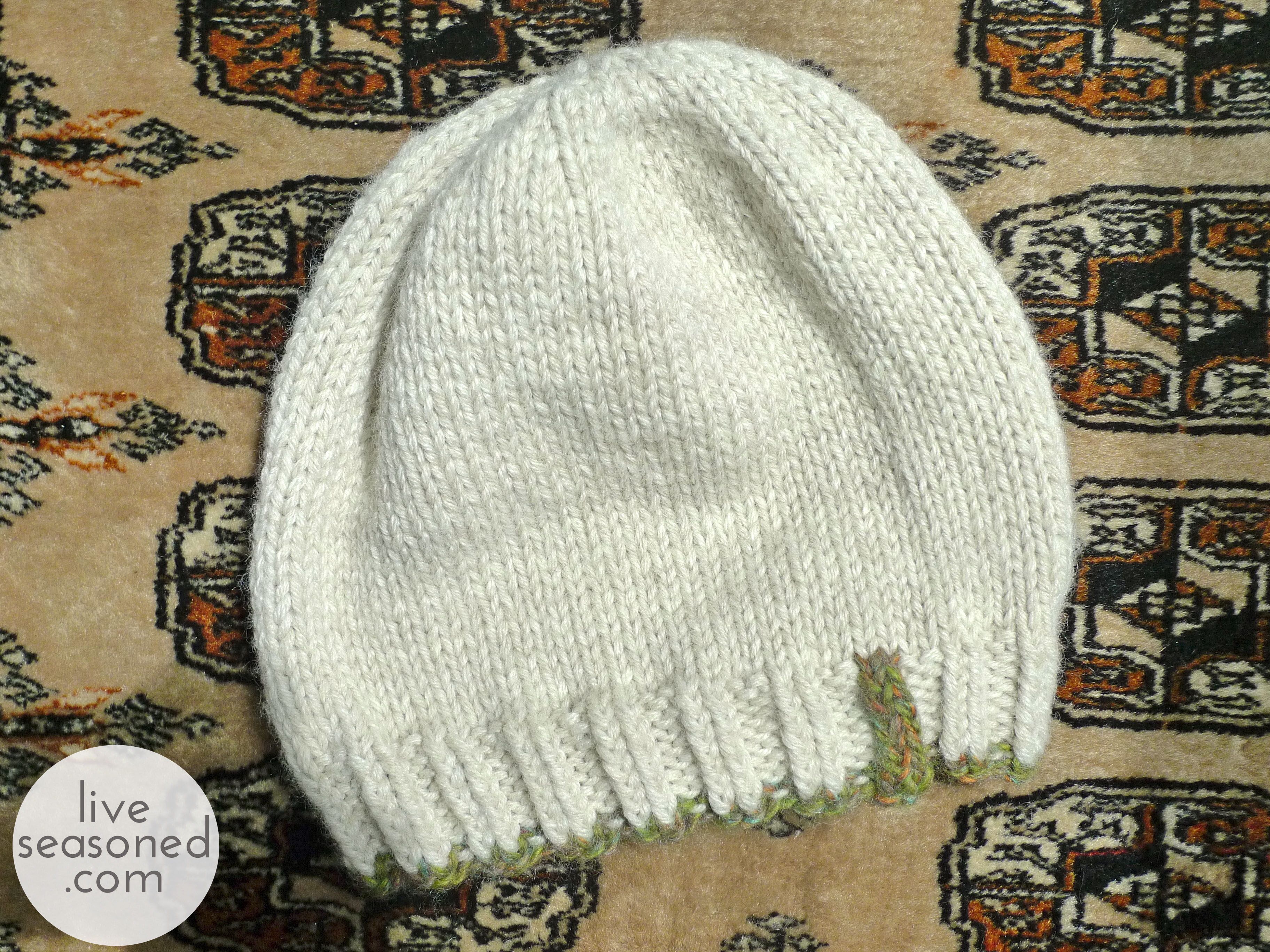
I wanted a quick and dirty hat. Something that was easy to knit, used some yarn from my stash, and would be the perfect thing for an evening around a campfire because we are yearning for a few good camping trips this fall.

Pattern : My own. Cast on 76 stitches, do some 2×2 rib, knit straight until it was long enough and then do some quick decreasing.

Yarn : Lionbrand Woolease and Amazing

liveseasoned_summer2014_wips5_wm

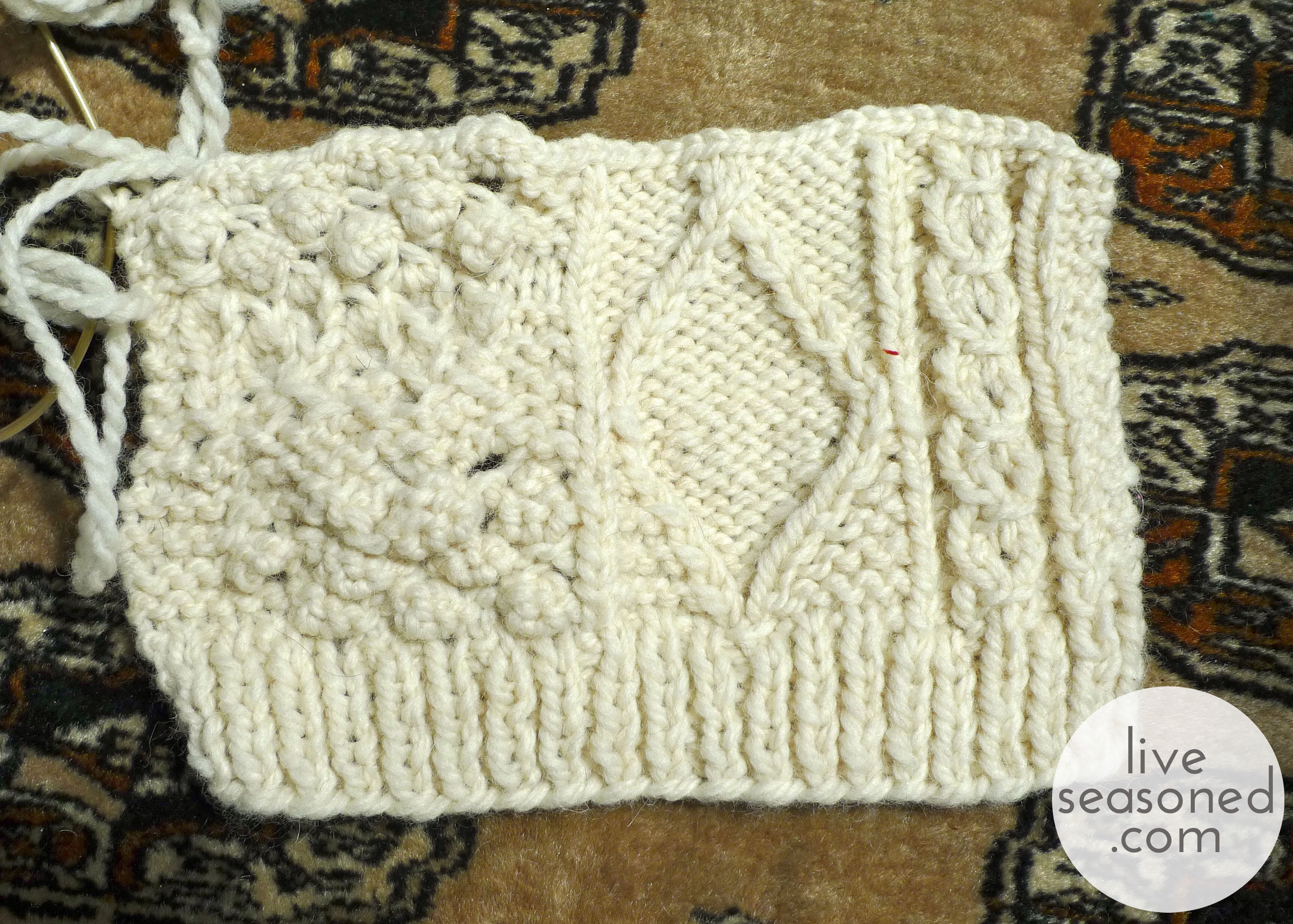
After the flat and plain knitting of the hat I craved some texture. The swatch above is a little experiment that I’m hoping to turn into a hat with a secret message! More on that soon.

Yarn : scraps from my basket

liveseasoned_summer2014_wips8_wm

I have another swatch that I think I’ve finally come to terms with. This is for a sweater that I’m re-knitting for a friend. They purchased the original years ago from Pier One (when it used to sell clothes) and they love it so much that they would like another one knit. I used the swatch above to work out the original cables and bobbles. The cables were fairly straightforward, but getting the right size and spacing for the bobbles was a chore. You can see those on the panel on the left. Now I just have to work out the gauge and we should be good to go. This is another one that I’m going to share in more detail as it progresses!

Pattern : copying an old sweater

Yarn : Cascade Ecological Wool

liveseasoned_summer2014_wips10_wm

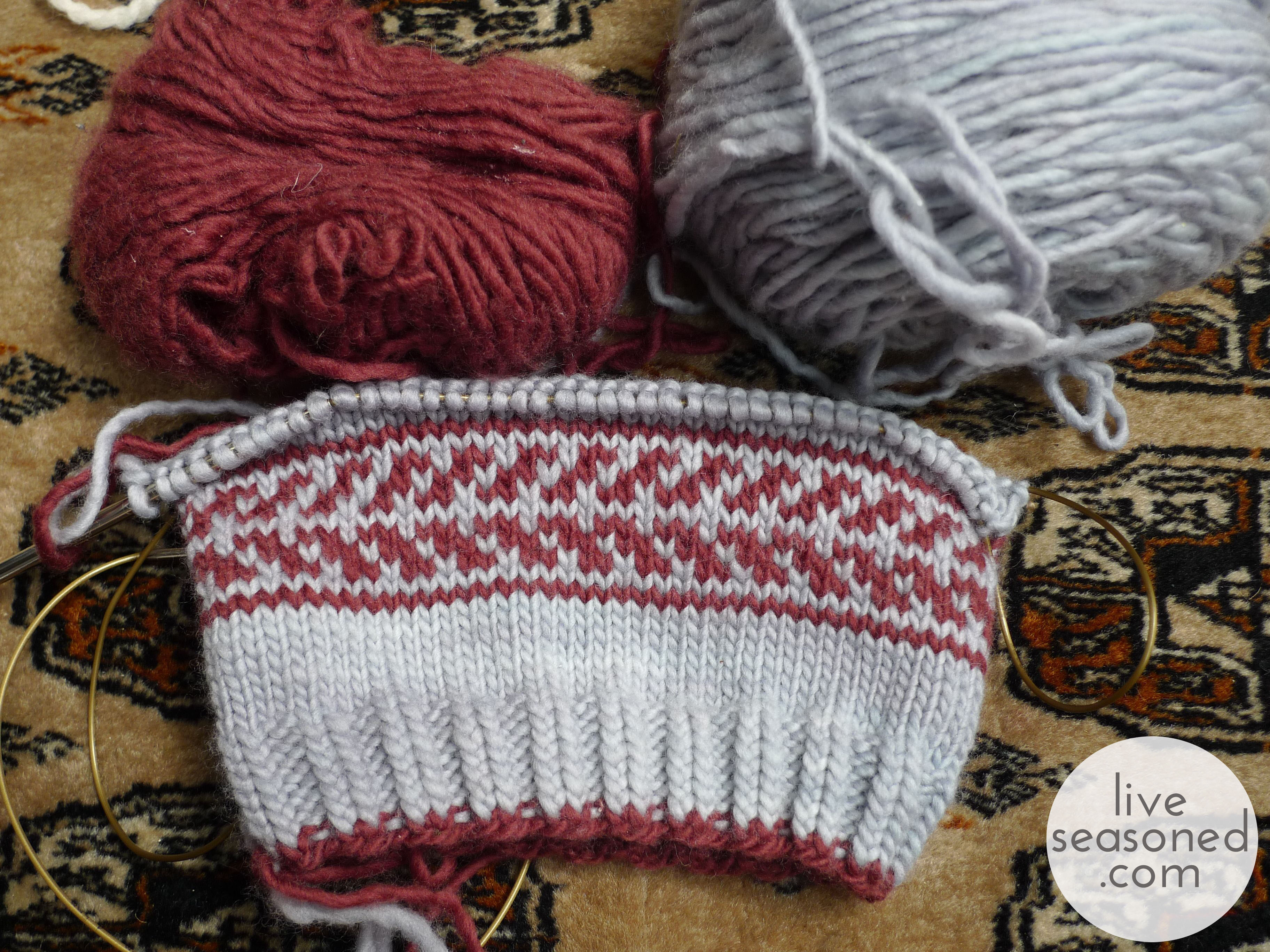
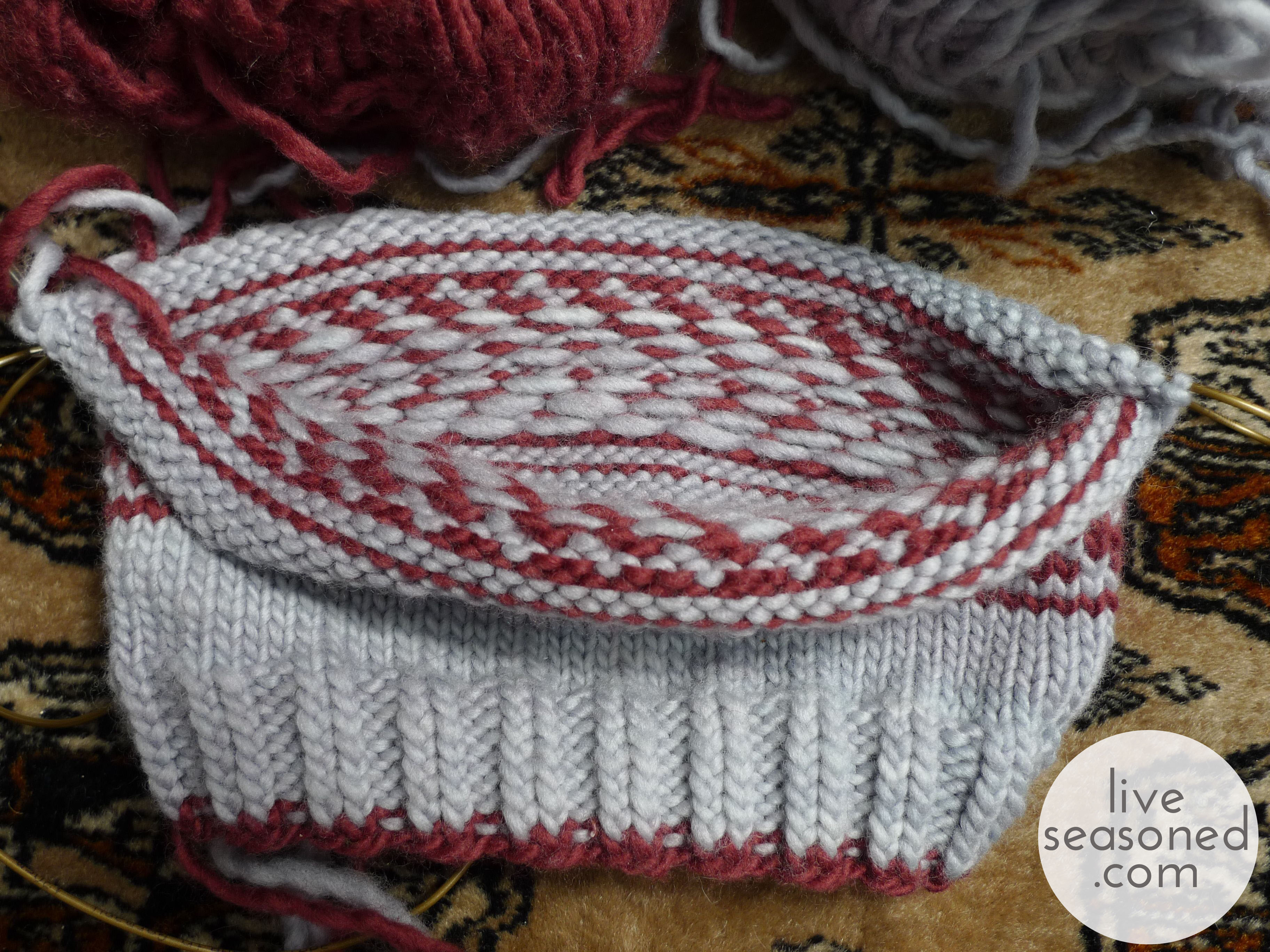
And this last one is a hat for little A. It’s been so much fun pulling out leftover balls of yarn that are too small for adult projects, but perfect for the little guy. Here I’m using some leftover yarn to make him a hat. It’s my own pattern, and really nothing special. [Sarah here: You’re nuts! I think it’s super special!!] Since Alex loves (LOVES) all things trucks, I thought I would use stranded color work to try to make a tire track around the hat. I don’t think the track is obvious, so I’ll have to work on that for the next hat, but it’s good enough to add a stripe of color!

Pattern : none, yet!

Yarn : Malabrigo Merino Worsted (so soft and perfect for little noggins)

And the nice thing about using stranded color work in a hat is that you get some extra warmth from the double-layer of yarn:

liveseasoned_summer2014_wips11_wm

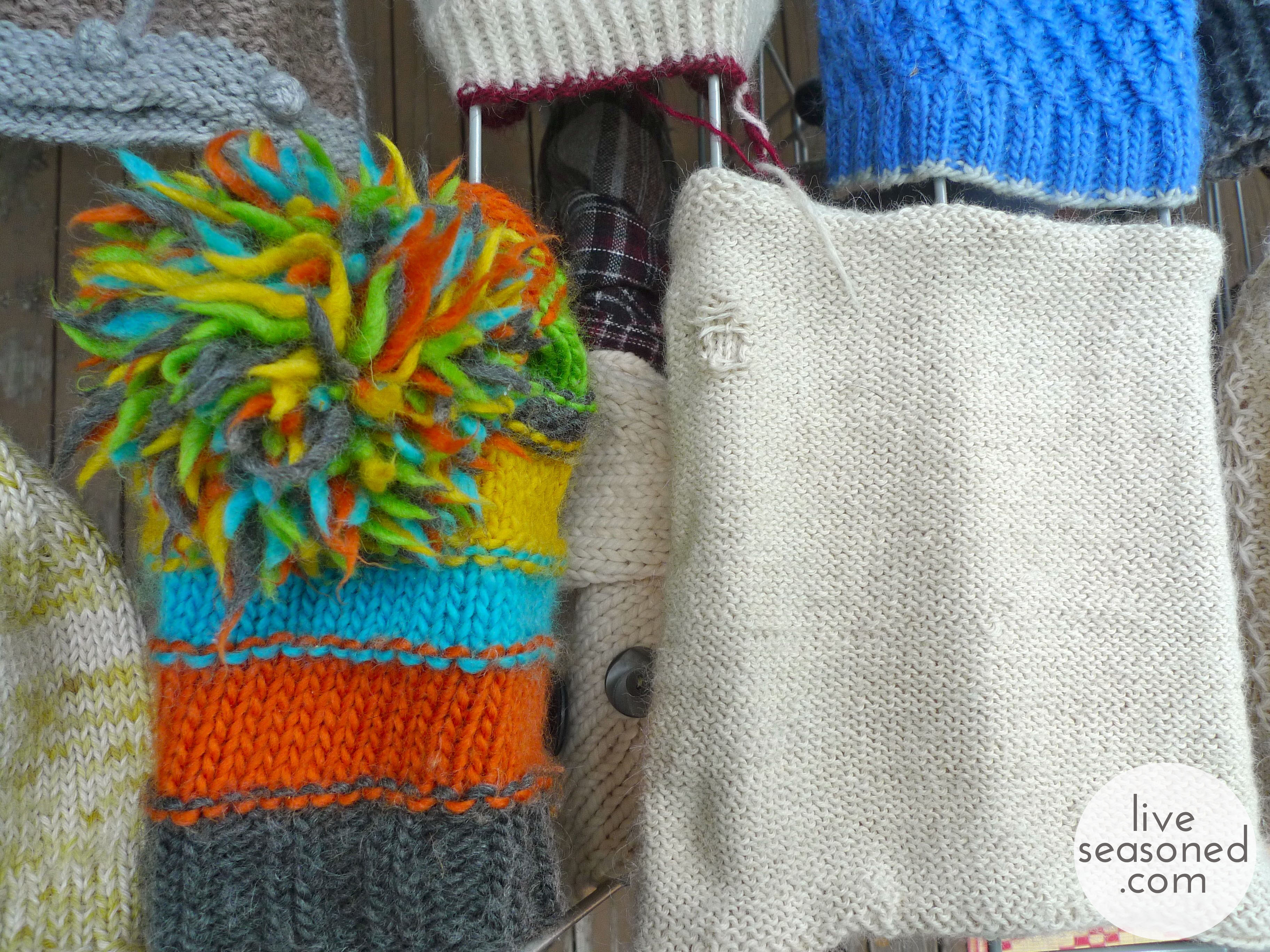
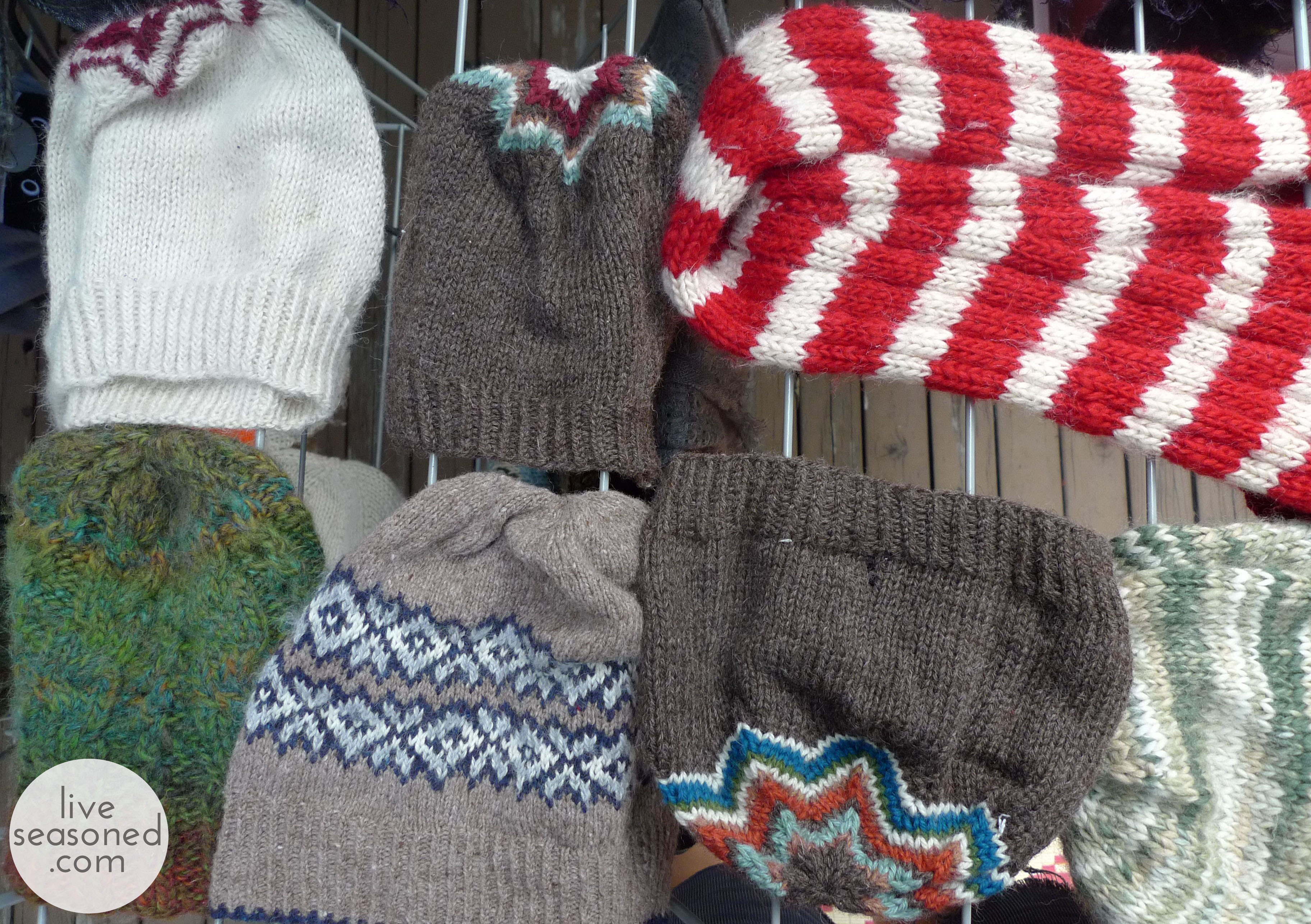
The embarrassing thing about all of this knitting? We have so many hats that we aren’t going to go cold anytime soon. I had to say that before I show you what else I’ve been up to. Summer (at least in Colorado) is the perfect time to wash your wools and get them ready for the season ahead. We have plenty of dry days, so I can wash the wools in the bathtub and then put them outside to dry and within 24 hours they are done! The humidity of the East Coast may not create the same results.

liveseasoned_summer2014_wips2_wm

As I wash, I’ve been looking for other moth damage. Some of it is years old, but this may actually be the year that I make those repairs. A few hats in these photos are duplicates that I’ve made as I try to work out a new pattern or idea… which will hopefully come to a blog near you!

liveseasoned_summer2014_wips1_wp

So tell us, what sorts of crafts have you been working on? Something out of season, like knitting. Or something perfectly in season, like digging that backyard bbq pit (that’s a craft, right?).

If you have any questions or want more details about any of the projects you see in the photos, just let us know.


Minty Fresh Deodorant

Mint is our ingredient of the season. We love to use it in drinks, both alcoholic and not, in salads, both savory and sweet, and in the shower!

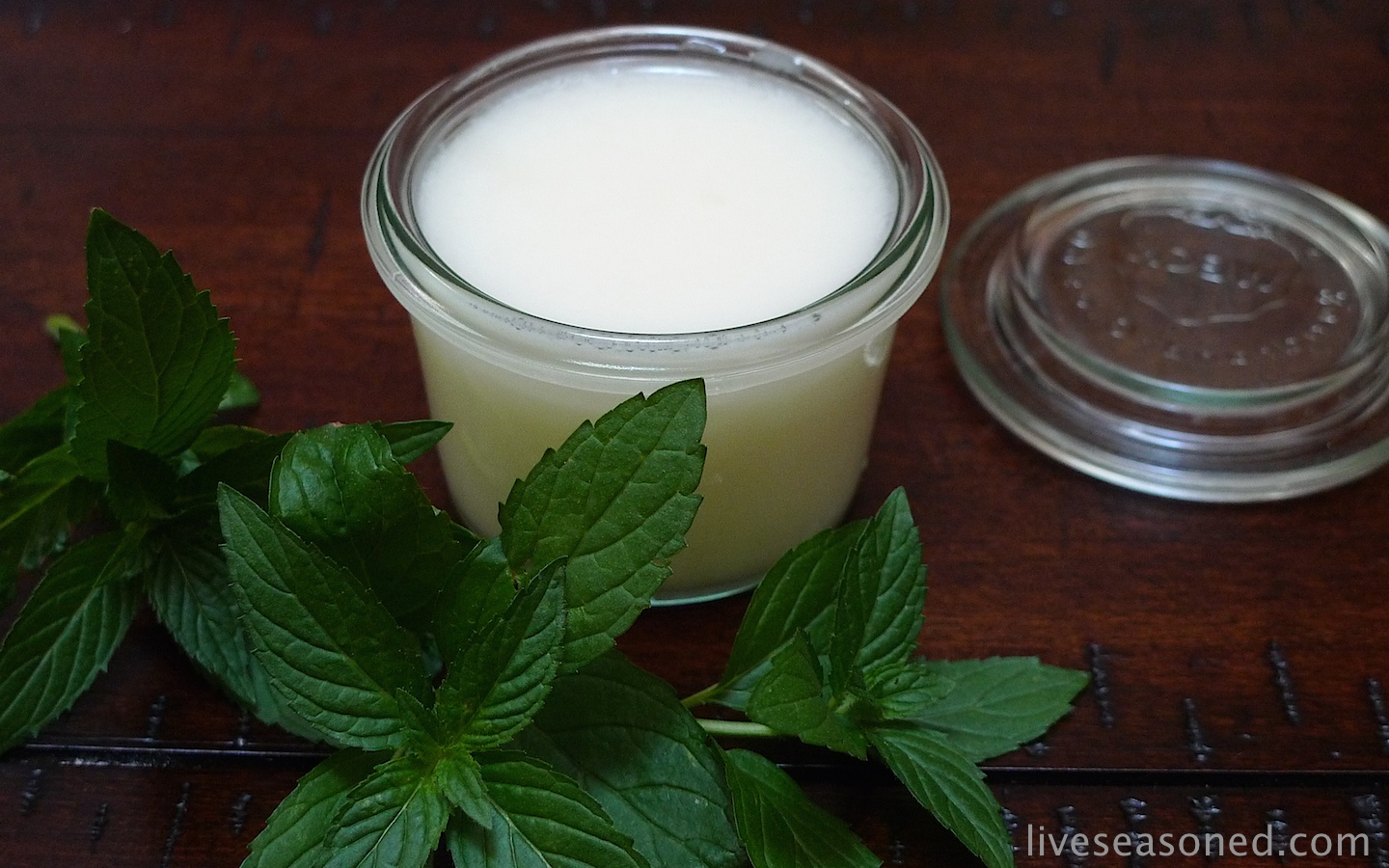
There couldn’t be a better time for this post. Why? Because it’s about deodorant, and I bet you’re getting your smell on by late afternoon this summer. And because this recipe requires coconut oil, which is sure to be in a liquid state on any given 80+ degree day, making mixing easy!

liveseasoned_summer2014_deodorant2

Now, to back this truck up, today we’re talking about making our own non-toxic, totally biodegradable deodorant that’s safe for your body and smells great too! I’ve been using this exact recipe for close to four years now and feel no need to go back to the store-bought stuff.  You may already have the ingredients in your house, but if you don’t, they are relatively cheap* and each have other uses in your house/kitchen. Finally, it’s always fun to mix up a potion, particularly one that you can personalize with your favorite scents!

Continue reading

Air Plants in the Shower

Last week Sarah gave us instructions and inspiration for a great air plant display using reclaimed berry boxes. Before reading this post, her post is a great place to start for an overview of the plants, how to care for them, and a reliable source for placing wholesale orders.

As soon as Sarah started talking tillandsia, I got so excited about the idea of putting some in the outdoor shower! It’s a great way to add something unexpected to the space while increasing our garden’s vertical reach. I know this seems like a unique project, but we’re hoping it’ll inspire some more creative uses for these versatile plants. What about adding some air plants to your porch posts, up the trunk of a tree, or to the supports on a swing set? As long as the location is getting some nice bright, but not direct, light and a regular misting from either the rain or a hose, then your plants should thrive.

Continue reading