Air Plant Display DIY

Ever think of hanging air plants in the shower? We did and we loved it!

Hey Ya’ll! (I swear I’m developing a southern accent already)  If you recall, last Friday I shared some tillandsia (commonly known as air plants) and succulent display inspiration.  I’m truly obsessed with both.  Tillandsias and succulents are easy to maintain and display and both are easy to propagate as well – win, win, win.  For the past few years, I have pinned countless air plant displays with the hopes of making one myself.  Well, that day has come my friends.  That day is today.  Actually, it was yesterday, but the big unveil is today, it’s right now, so scroll on!
liveseasoned_summer14_airplants-6

liveseasoned_summer14_airplants-2

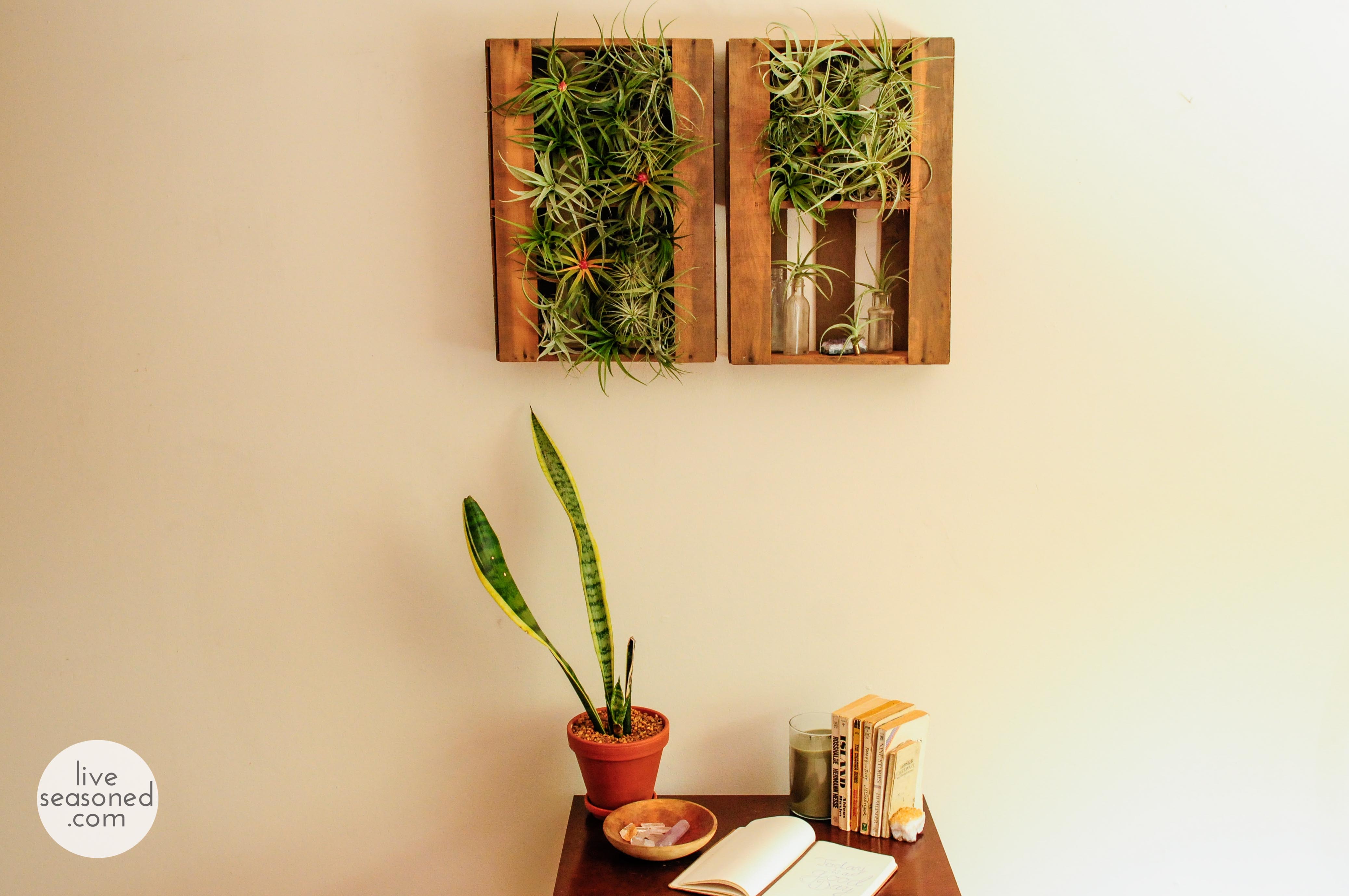
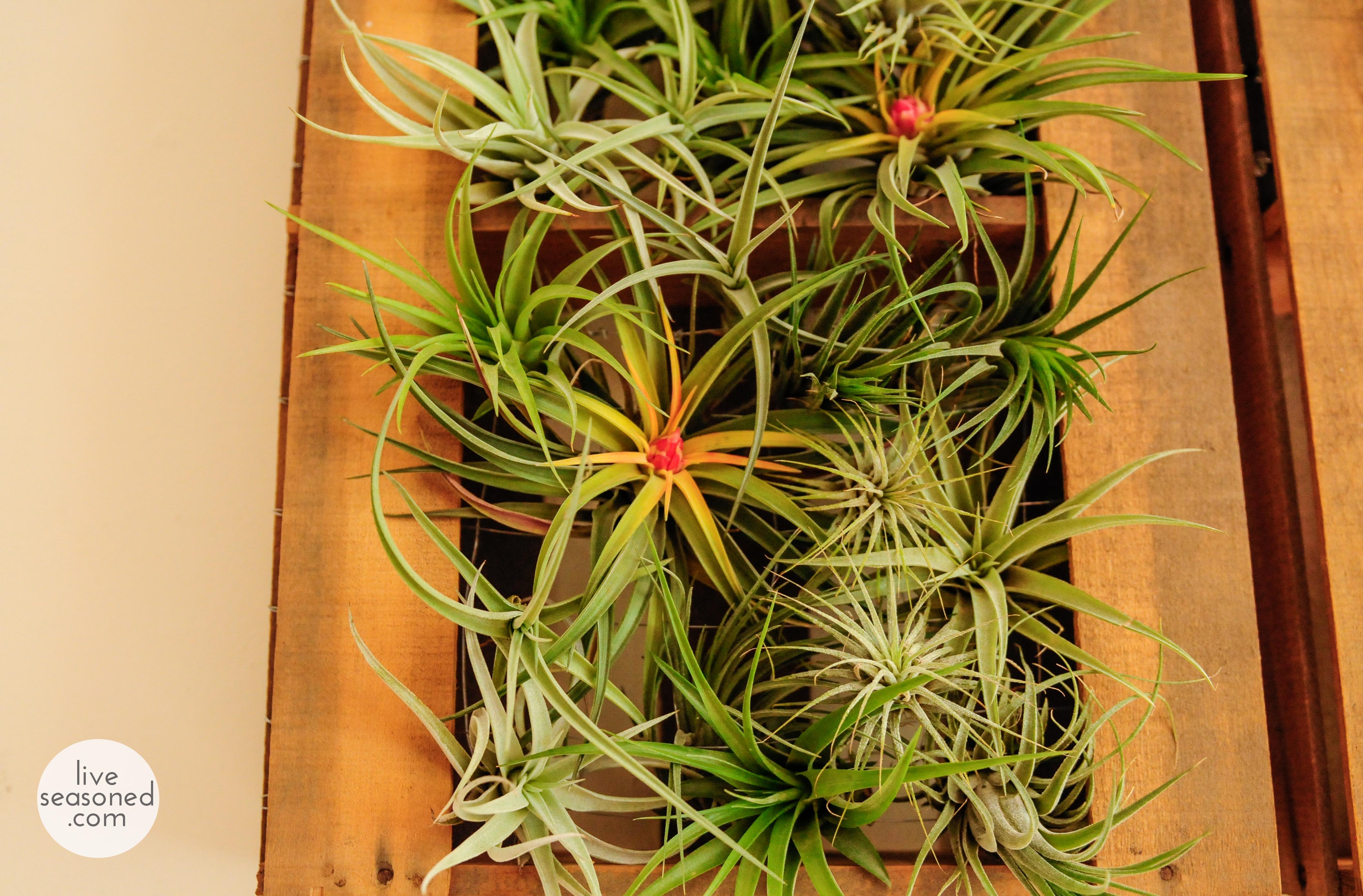
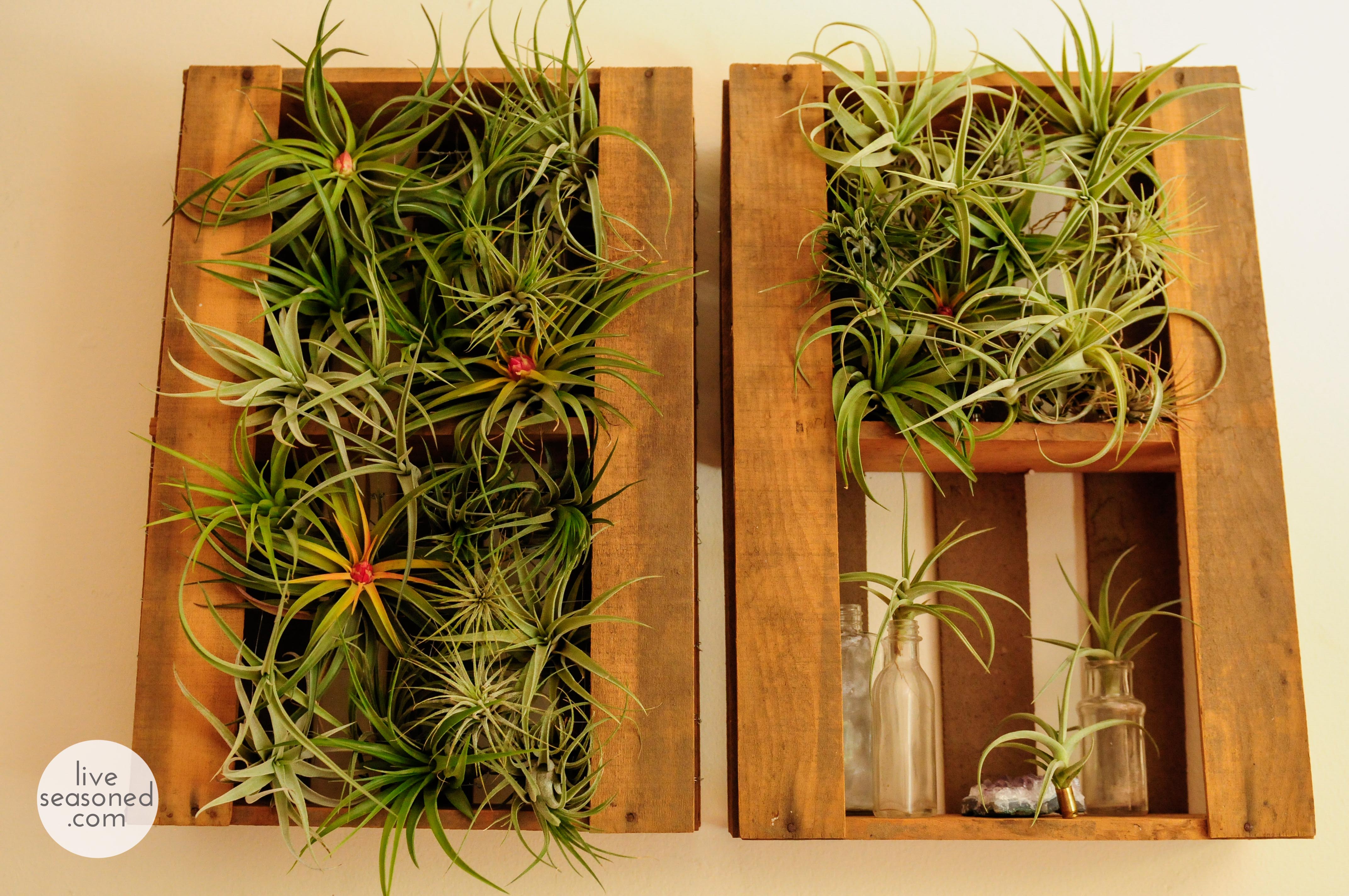
I really like the idea of displaying the tillandsias like artwork so I knew I needed some type of frame.  I picked up two antique berry boxes from my local flea market for 75 cents a piece.  The vendor told me they were about 35 years old.  They definitely had 35 years of dirt on them, which I didn’t wash off BTW.  I figured it added to the feel of the whole project, but who am I kidding? I was just too lazy and dry dirt is ok with me, wet dirt is when things get messy, right?  I bought my air plants from this wholesale vendor.  The site isn’t flashy and I wasn’t really sure what I was getting since there aren’t photos for each individual item, but I was blown away by my package of plants.  It arrived severely dented (because it was so light), but not a single plant was damaged or dead and I ordered sixty plants!  Yes, I spent $84 on air plants, but the most expensive kind was only $2.20!  Now I have a whole little colony of air plants. They’re my children. Don’t come too close.  After spreading them out on my kitchen table and looking at them for days (that is not an exaggeration) I finally came up with this easy display idea.  While I had enough plants to fill up the berry boxes, I also wanted a display shelf for crystals and treasures and thus my design:
liveseasoned_summer14_airplants-7

Air Plant Display DIY Supplies:

  • air plants
  • 25 gauge wire
  • scissors
  • pile of clear (or really whatever color) thumbtacks
  • frame of choice (I used a berry box. You can use an empty photo frame, crate, pallet, random rusty frame you found in the woods (I did that also!) or whatever you have on hand)


liveseasoned_summer14_airplants-8

Air Plant Display DIY Instructions:

  • Depending on what type of frame you are using, your DIY instructions may differ.  Use this as a guideline and if you have any questions just drop me a line.  Because everyone’s frames will be a little bit different, I’ll show you two basic ways of setting up your display. Here we go: The first option is to wrap the wire around the frame edges (in my case the frame is a crate, but it’s the same basic structure) to create a wire grid.  Thread the wire (length depends on your frame width) through and behind the frame, bring it around in front of the perimeter and tightly twist it around itself (the length of wire that will run horizontally across the frame). Repeat by threading the length of the wire through and behind the frame, bring it around the front of frame and this time run it in a straight line across the frame. Repeat on the other side by wrapping it around the outside and back of the frame and pulling it through the frame opening two times and finishing it off by twisting it around the straight horizontal wire.  Cut the excess with scissors.  Repeat this process down the entire length of the frame.  Leave 1-2 inches in between each row.
  • After you have completed the horizontal rows, it’s time for the vertical columns. Cut a piece of wire 3 inches longer than the inside of your frame.  Twist the wire onto the top rung of the horizontal wire “ladder” and thread the wire behind the rungs.  Twist the wire onto the bottom rung as well.  Repeat across the entire frame leaving 1-2 inches between each vertical column.
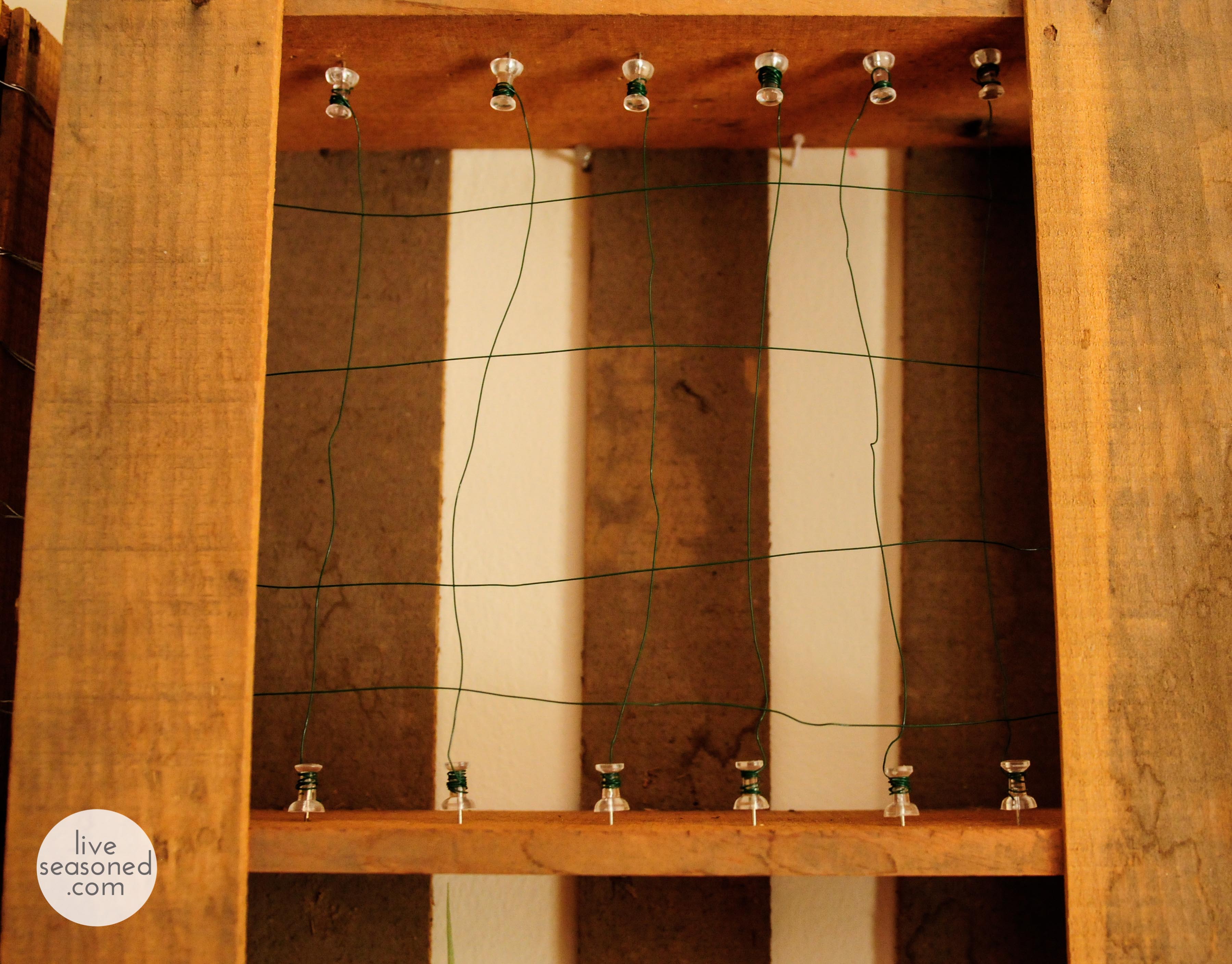
  • Now you are ready to add the tillandsias, but first let me briefly explain the thumbtack method.  If you are using a wooden crate or pallet, this method is nice because it completely hides all the wiring.  Simply create a wire grid like previously mentioned, but instead of wrapping the wire around the frame, wrap it snuggly around a thumbtack and stick it in place inside the edge of the crate.  Continue the process starting with horizontal rows and moving on to vertical columns until a grid is formed.
  • Placing the tillandsias is quite easy, but it must be done with care.  Simply push the bulb of the plant through a wire square and thread a couple leaves behind and then through adjacent squares.  Two or three leaves should do it.  Start with the largest plants and don’t put them too close together.  Tillandsias need good air circulation to survive.  As you add plants, you can thread them into place by using larger tillanndisa plants’ leaves.  As you can see, some of the plants aren’t threaded through the squares rather they are held in place by other plants.
  • Remember you’ll have to mist or submerge your plants every so often to water them.  I plan on taking my frames off of the wall, misting my plants, waiting until they dry (they dry pretty quickly) and hanging them back up.

*If you want to hide the wrapped wire, try wrapping your entire frame in hemp, jute or yarn.

**If chicken wire is available to you (I didn’t buy it because I didn’t want 20 yards for a .3 yard project) you can easily attach it to the center of your frame by wire wrapping or the thumbtack method instead of creating a grid with 25 gauge wire.


Air Plant Care:

  • Air plants prefer bright, but filtered light. Don’t place them in direct sunlight.
  • They thrive in 45-95 degree weather (7-35°C).
  • In dry climates (air conditioning especially) mist your plants 3-4 times a week, mist less frequently in humid climates.  You can also water your plants by soaking them in room temperature water (don’t submerge the flowers) for 10 minutes at a time ONCE every two weeks.
  • Allow your plants enough circulation to dry within 4 hours of watering.  To check for dryness, look at the leaf bases in the central part of the plant.  If the plant remains wet for too long, rot may develop.
  • Water in the morning or afternoon so that they dry by evening time.  Tillandsias are nocturnal and respire at night, which means they take in carbon dioxide at night. If they’re covered with water they cannot take in carbon dioxide.

As you can see, there are endless ways to display these little gems.  Since you don’t have to worry about soil you can get really creative.  I love the little Peru Inca Gold in the shell casing.  Don’t you?  In case you were wondering, the plants with the pink buds are a Xerograhica x Brachycaulos hybrid and they were only $2.20 a piece! Also, the potted plants from left to right are Harrisii ($1.65), Ionantha Guatemala ($.61), and Kolbii Large ($.94).  I also purchased 10 Brachycaulos ($1.38), which is the lone plant in the wire grid  and lastly, six Velutina ($1.83), which kind of look like a bigger version of the Harrisii.  I would recommend doing a quick google search of each plant before you buy them to get a better understanding or at least a general idea of what you’ll receive.  Like I said, I was ecstatic with my package and I’m dying for an excuse to buy more.  Christmas come quick!
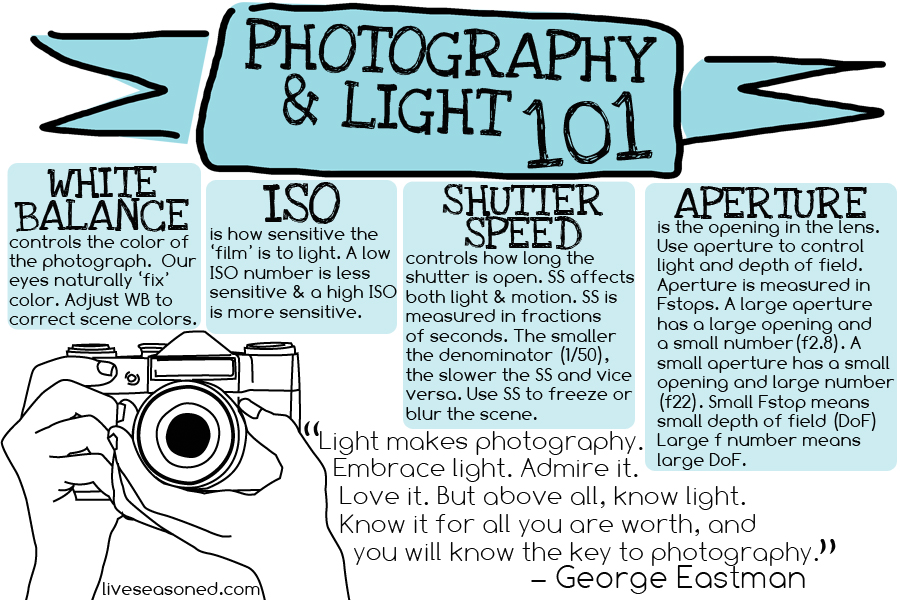
 

Photography 101

As you may know, I’m obsessed with photography.  I have a degree in photojournalism from Temple University and I have been working in some sphere of the photography world for the past five years.  I’m the first to admit that you do not need a degree in photography in order to take great photos. In my spare time, I teach photo classes to adults who would like to become more comfortable with their DSLRs and photography in general, and I thought it would be helpful to start sharing that information here as well. Today is the first installment of Photography 101.

Photography can become quite overwhelming because when it comes down to it, there is a lot to learn.  The good news is, you do not need to learn it all right away!  Today in Photography 101, I’m going to go over four important tools for shaping light in your photographs.  These four components: aperture, shutter speed, ISO and white balance are the key to creating a beautiful photograph.  Once you have a clear understanding of all four, you can begin experimenting, breaking out of your comfort zone and using the MANUAL setting every time you are out and about.  You are smarter than your camera, which is why you are probably frustrated with the AUTO setting.  Follow along and learn how to understand the relationship between light and photography.

liveseasoned_spring2014_photo101

Continue reading

Arrow Embroidery Tutorial & DIY

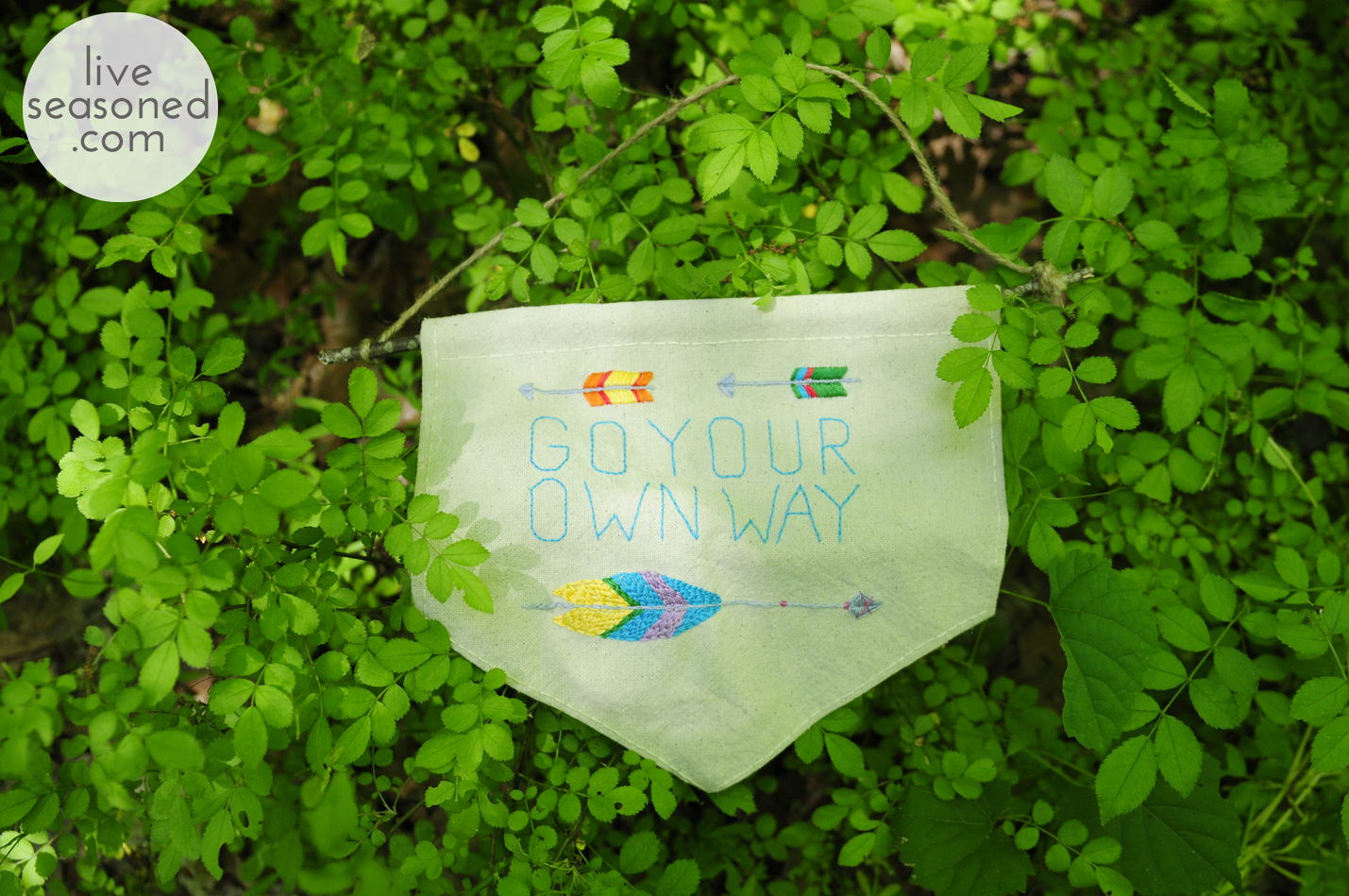
Don’t shoot! I know this post is a little later than normal, but that’s because I was working on an original arrow embroidery DIY for you cats.  I think we can all agree that arrows are both adorable and hip.  They deserve to be embroidered on cabin pillows, baby onesies, inspirational banners and just about everywhere else.  Whenever I see arrows, I think summer camp, forest adventures and cabin get-aways.  Who doesn’t want to think of those things? That’s why I created this arrow embroidery tutorial.

liveseasoned_spring2014_arrowstitch6

I’m not fibbing when I say arrows are easy to embroider.  Each arrow is made up of a couple different stitches all of which are outlined below.  The colors, style and feel of each arrow is up to you!  I encourage you to sketch out a few arrows to define the style you’re going for and then start stitching.  If you really want a summer camp vibe, take your arrow embroidery supplies to the woods!

Continue reading

Rosemary Body Scrubs

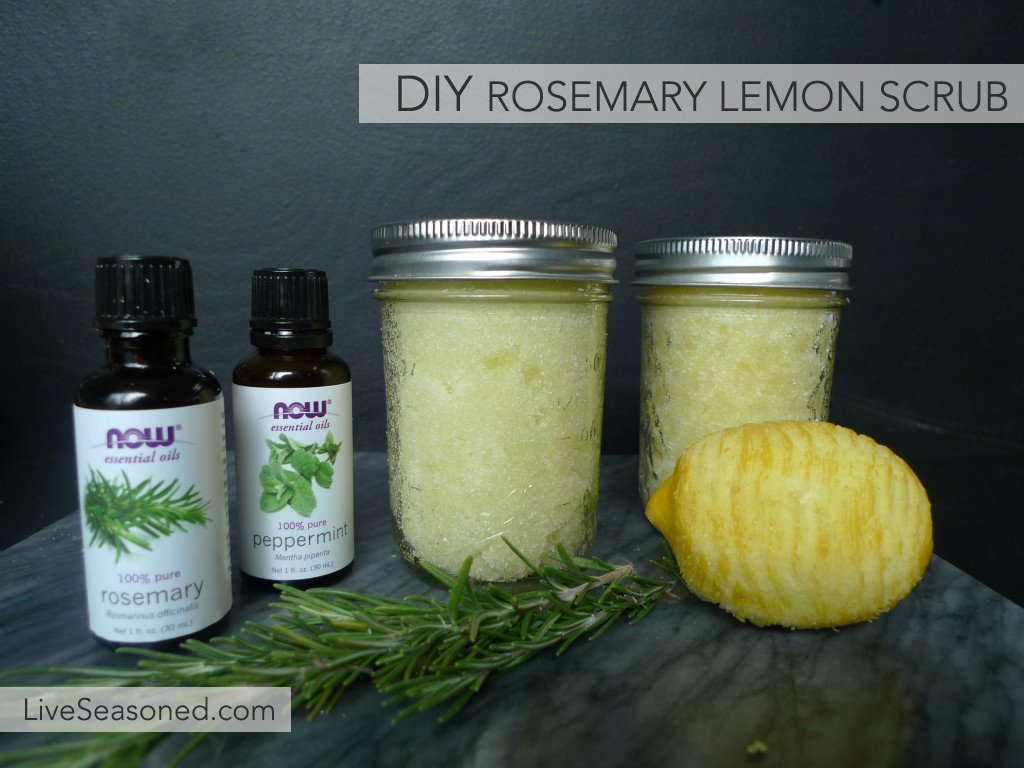
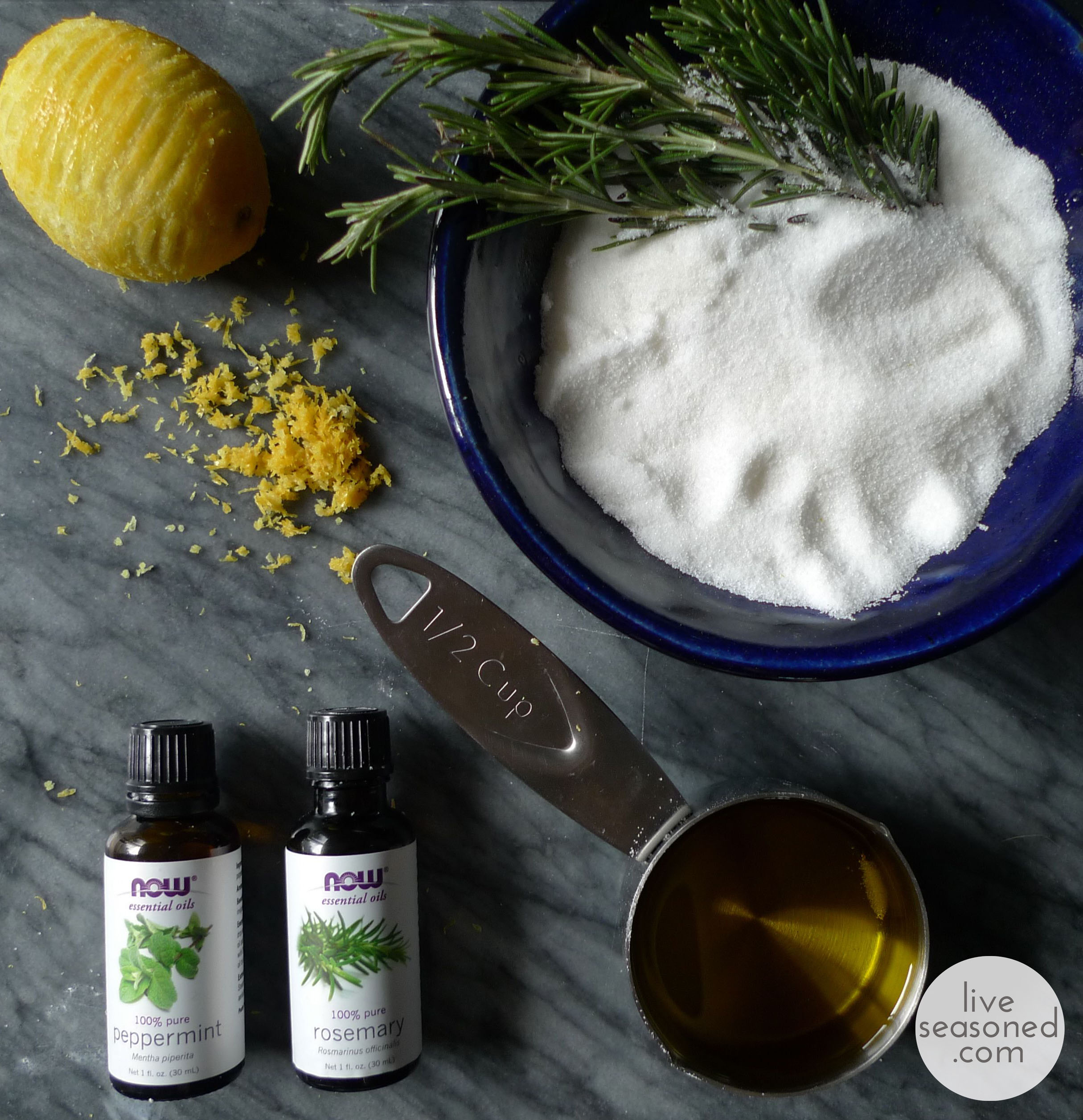
Rosemary is our ingredient of the season. Today we’re using the same rosemary essential oil that we used to make those invigorating room sprays. Want the recipe for a perfect evening? Take a shower with these scrubs, pore yourself a Rosemary SAGE Fizz, and roast a plate of rosemary tomatoesliveseasoned_spring2014_rosemaryscrub7-1024x768 copy

We are always down for making our own body care products. Sure, it requires time and sometimes a bit of experimentation, but it’s almost always worth it. Why? It feels good to know the short list of ingredients we use are nontoxic. It’s often cheaper than products from the pharmacy. The options for personalization are endless! And finally, when I’m in the kitchen mixing up a big batch of this or that, I love that Calder refers to them as potions. Silly, but fun.

liveseasoned_spring2014_rosemaryscrub4_wm Continue reading

Map Stitching Tutorial

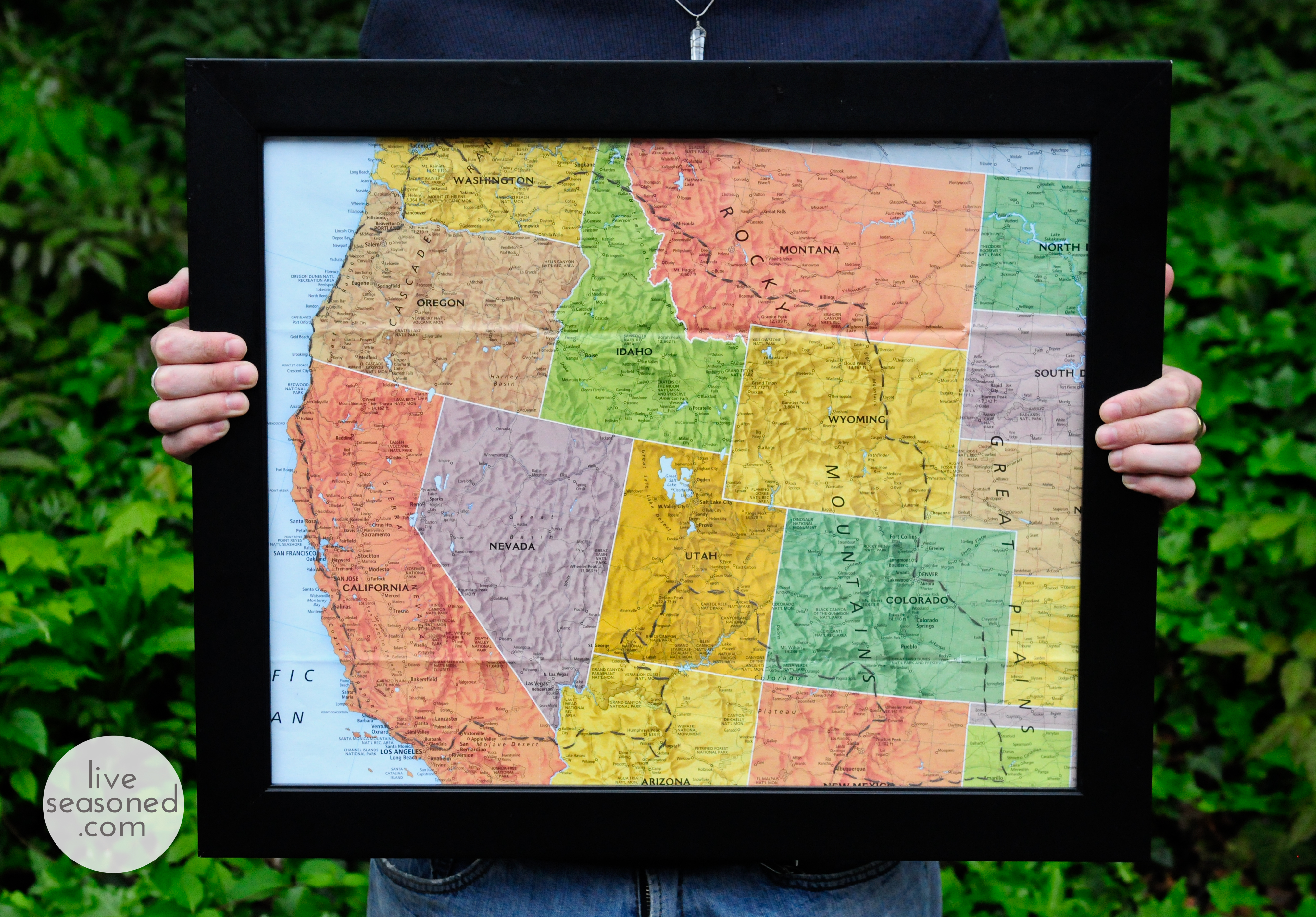
There is no better way to remember a special trip than to have it hanging on the wall.  That is why I have gotten into the habit of stitching my trips onto paper maps.  That way I can be reminded of and inspired by past trips as I walk through my home.  Is it weird that I rarely take selfies while traveling or ever for that matter?  When you walk into my apartment, you won’t see me smiling in front of waterfalls or on tops of mountains, nope, none of that. Cheers to you if that’s your style, but I’m just a little too camera shy and usually I’m the one taking all the pictures.  It does not even cross my mind to ask someone else to take my picture in front of amazing landscapes.  Sometimes I think I would like to work on that, but then a trip comes and goes without a selfie thought and here I am stitching maps in my free time.

liveseasoned_spring2014_maps-1

Stitched maps make great gifts for your road trip buddies too.  It is also a cool way to tell someone you are taking them on a trip.  Imagine opening up a framed stitched map of Europe and having your sister yell, “Surprise! Pack your bags!”  Or whatever else really amazing sisters say when they are taking you to Europe.  [Katie here : now I’m hoping a stitched map shows up in the mail today! ;)] Grab your chosen map and let’s get started.

Continue reading

Indoor Herb Gardening 101

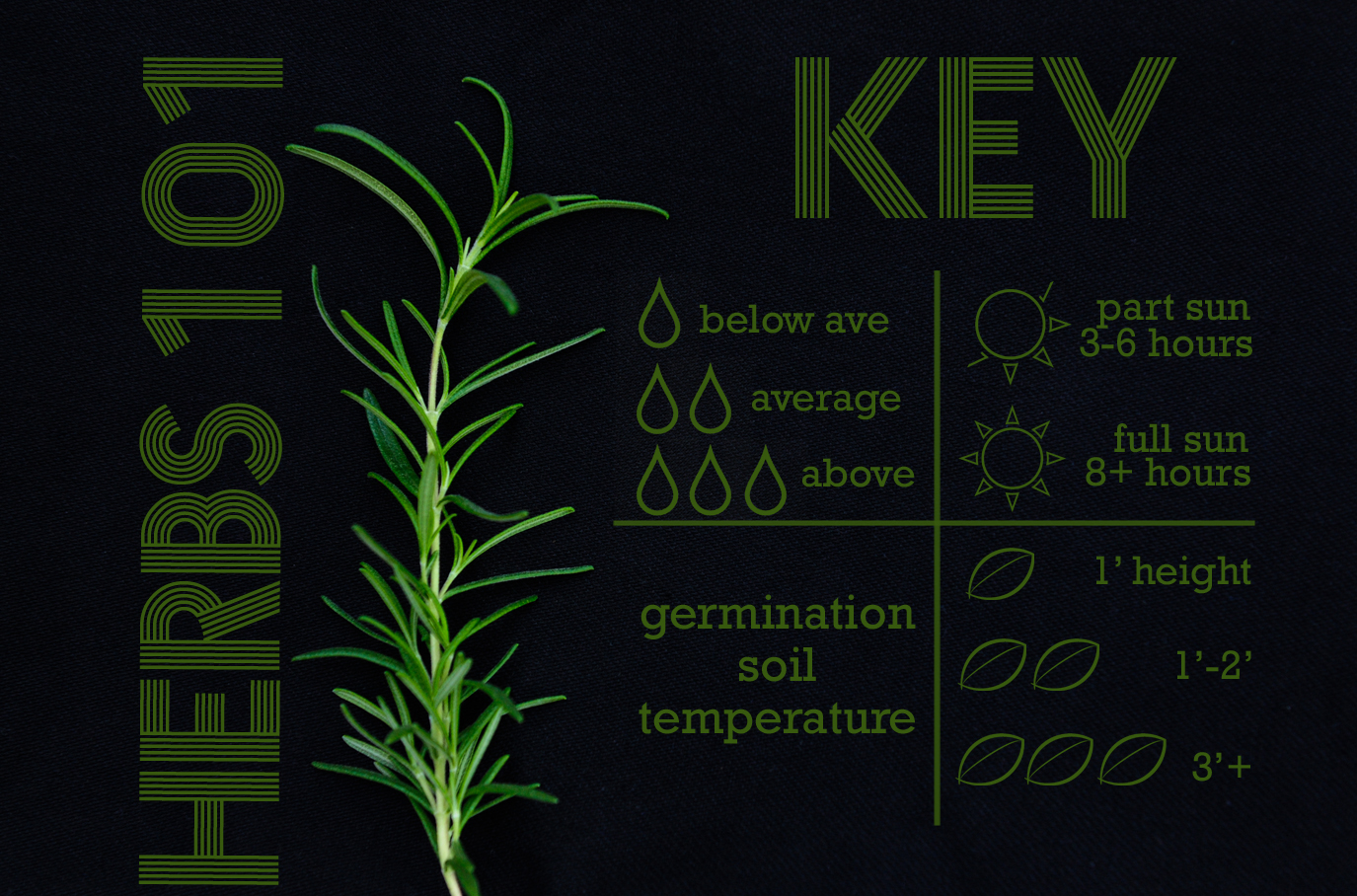
If you haven’t grown your own food yet, we think herbs provide one of the easiest ways to begin gardening.  Herbs can be grown indoors or outside, whichever you prefer.  Once they get growing, they’re relatively low maintenance, and you can begin harvesting almost immediately.  I recently moved to an apartment with no yard so I began an indoor herb garden.  This post contains a few things I’ve learned about growing herbs indoors, and that terra-cotta pot painting tutorial we promised is at the end of the post!

liveseasoned_spring2014_herbsguide

Continue reading

Knitting Project : Washcloths

I’m the first to admit that knitting a washcloth sounds a touch absurd, especially since you can go out and buy a dozen lickety split. But don’t knock it until you’ve tried it. Washcloths are the perfect canvas for trying out new stitches. They’re quick to knit and make the perfect gift, especially when paired with a bar of fancy soap. The only downside? Knitting with cotton yarn can be a bit rough as it doesn’t have the same stretch as wool.

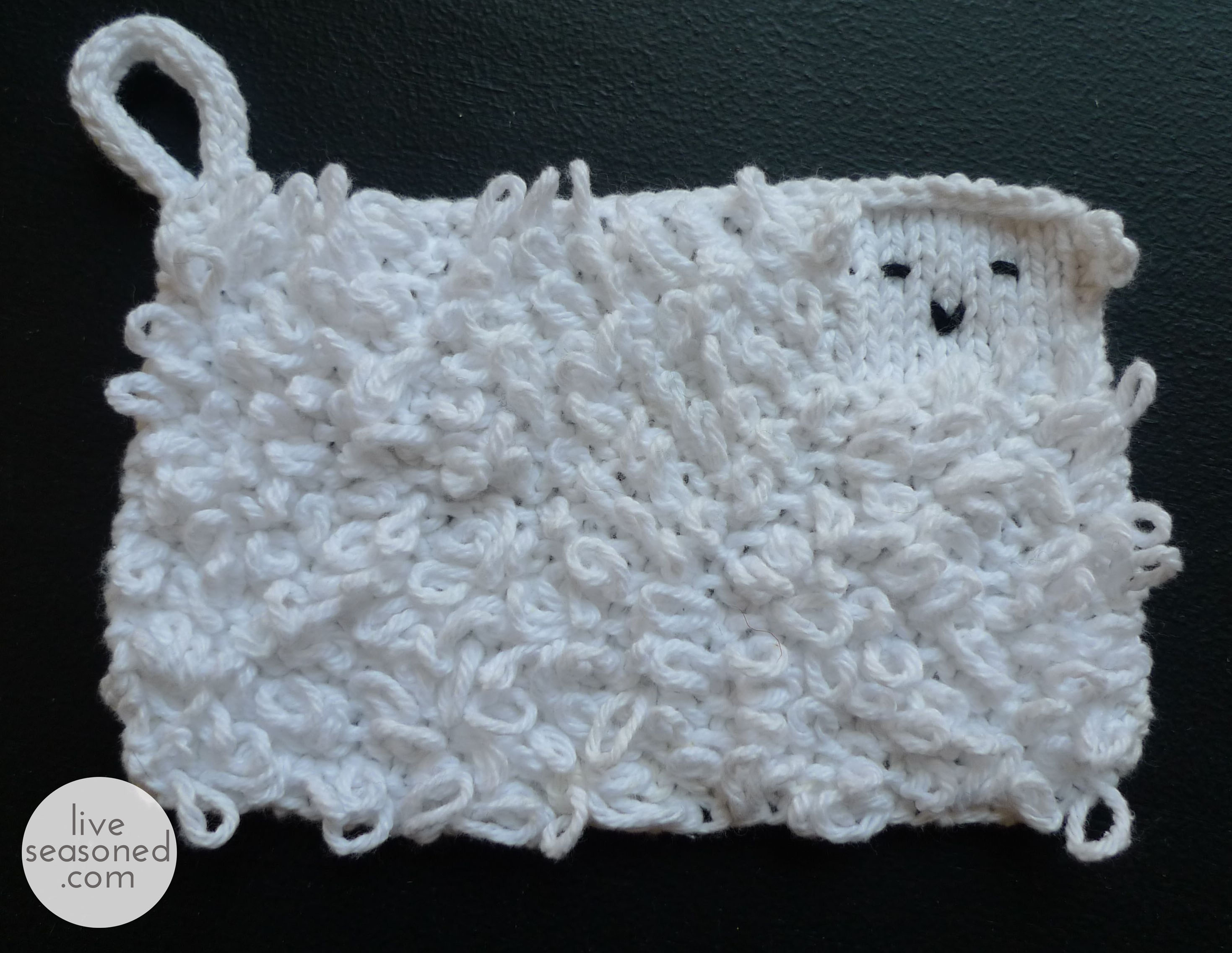
Today we’re sharing ideas for five washcloths including the full pattern for this cute-as-a-button lamb. Pick up the supplies this weekend and you’ll have plenty of time to knit a few lambs for Easter baskets!

liveseasoned_spring2014_lamb_wm

Continue reading

Rosemary Room Spray

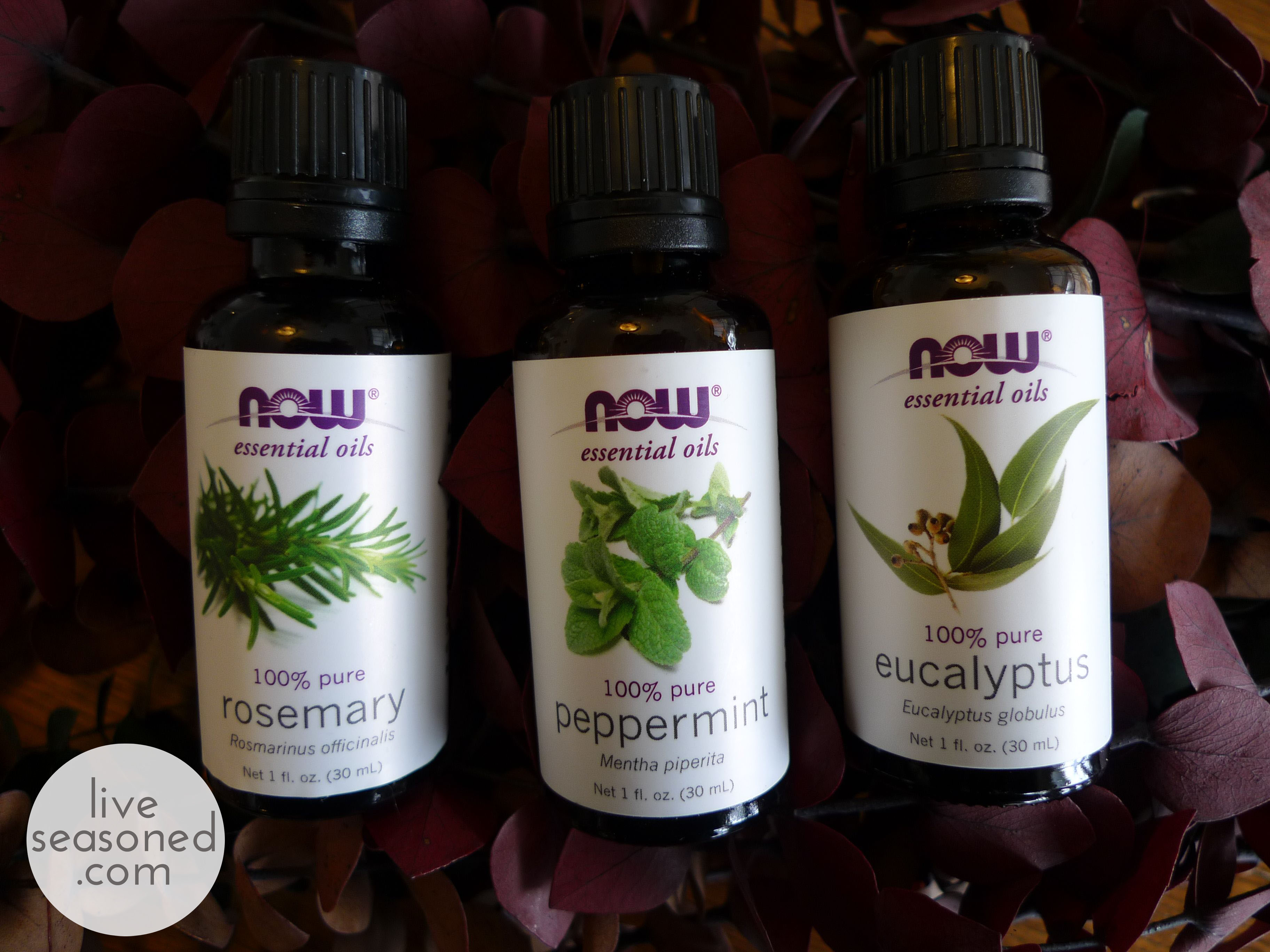
Rosemary is our ingredient of the season. Today we’re stepping out of the kitchen and using rosemary oil to create a room spray that will leave your whole house smelling fantastic!  If you follow this link, you’ll see some of our other favorite uses for essential oils. 

Hey readers, it’s been a fun week around here, hasn’t it? Did you check out Sarah’s profile of Connie Zamorano Tuesday afternoon? Now I’m obsessed with getting one of those cicada prints on my wall!

If the bugs left you squirming in your seat, you can channel that energy into this super simple project: homemade rosemary, mint and eucalyptus room spray. Have you tried store bought room sprays? I have a few, and I have to admit that I love them at first, but find that they can be a bit overpowering in their staying power and/or they just smell chemically over time. I don’t have either problem when I make my own. As for complexity, it’s going to take you longer to read this post than it will to mix up your spray.

liveseasoned_spring2014_roomspray_oils_wm

Continue reading

Yarn Tassel Garland

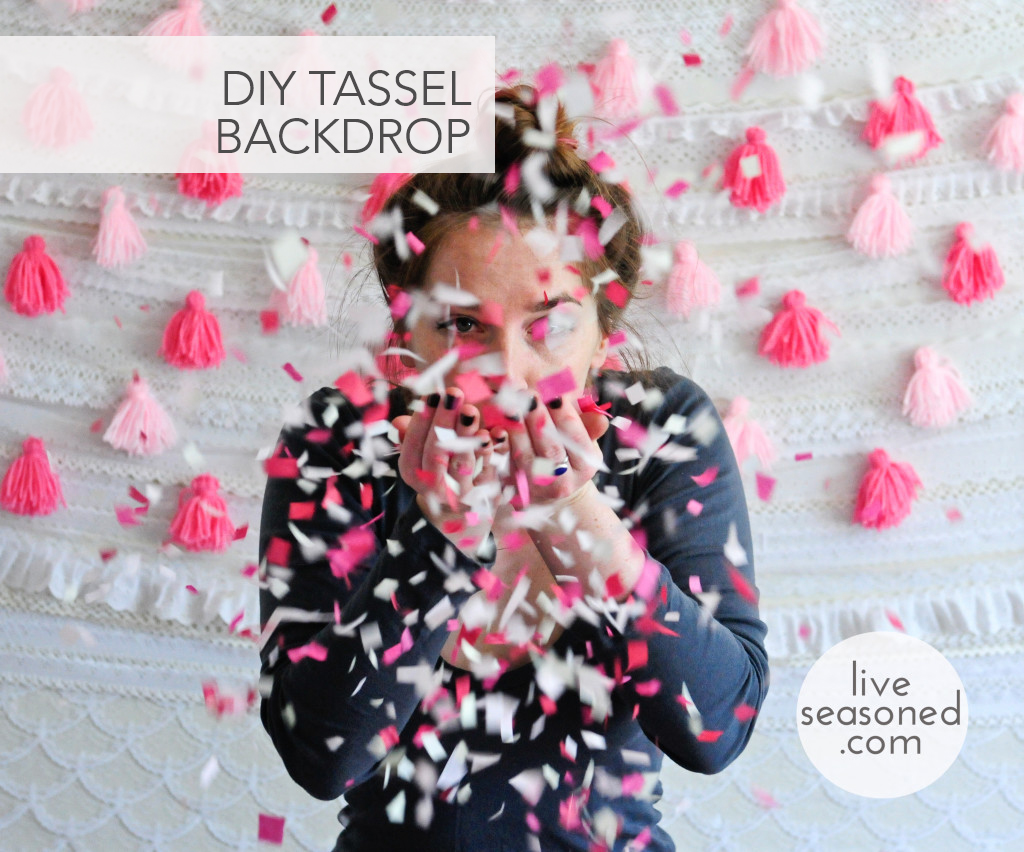
I’m loving these sweet and simple yarn tassels.  Knowing that I needed a cute backdrop, I decided to hop on the yarn train to garland town.  Once I got started, I quickly decided that one can never have enough fun fluff to string about the house.  I’m not sure my live-in boyfriend agrees, but if he says anything I’ll just shove a tassel in his yap trap.  These little tassels are really easy to make and their design is easily customizable to suit your tassel taste.

liveseasoned_spring2014_tasselbackdrop-2-1024x852 copy

Continue reading

Potato Stamp Tutorial

If you’ve never transformed a vegetable into a stamp now’s your chance.  It’s a quick and disposable option for those days when you want to create something without too much preparation and effort.  Potatoes are cheap and it’s likely that you have a couple living in your kitchen right now.  Sliced in half, potatoes are a perfectly blank canvas just waiting to be customized.  Cheap, easy and customizable means a perfect craft for groups so test out this tutorial at summer camp, in the classroom or on a rainy day.  We love stamping so much here at Live Seasoned that this is just the first post in a Stamping Series.  From time to time we’ll be back to teach you how to make stamps from just about anything from Styrofoam takeout containers to pencil erasers.  For now grab your spuds and let’s get starchy.

Supplies:

  • Canvas or Cardstock
  • Potato
  • Pen
  • Pairing Knife
  • Paint
  • Exacto Knife (optional)
  • Paper (optional)
  • Stencil (optional)

Instructions:

  • Pick a potato, any potato.  Slice your potato in half and boom, we’re already on our way to making two stamps.
  • First cut the desired letters or shapes out of card stock to create a stencil.  If you’re a confident cutter, by all means skip the stencil step.
  • Stick a stencil on each half of the potato.  The moisture will adhere the paper to the potato; it’s quite convenient.
  • Carve around each stencil, basically tracing its form onto the potato.  I actually did this step with a pen.  I poked it in a little bit and then dragged it along the outside of each stencil.  (I had planned on doing it with the exacto knife, but the pen worked so well and I figured it’s more likely that you have a pen handy.)  If you aren’t using a stencil then carve your chosen shape into the potato using a pen, exacto knife or pairing knife.
  • After your shape is carved into the top of the potato, take your pairing knife and slice into the potato about a quarter to a half-inch.  Drag it all the way around the circumference of the potato making sure not to cut all the way through, which would cut off the design you just created.  Then cut down into the potato on each edge of the design removing any excess potato.
  • You should be left with a raised design, in my case an X and an O.  Clean up the edges of your design with an exacto knife, pairing knife or even your fingernail.
  • Finally make a small mark on the skin of the potato to signify where the top and sides of your design is.  This will help if you want to line up your stamp or space it evenly on your project.
  • Next dip your stamp in paint or brush some directly onto the potato and stamp your heart out.  I found that it worked best to dip my spud in a thin layer of paint rather than a puddle.  Potatoes have a high water content, that mixed with paint can make them slip around on your paper or canvas.  I used an old tin can lid as my paint palette, which worked well as far as pushing around the paint and ensuring only a thin layer was being applied.

Each stamping will look a little different and that’s really the beauty of the potato stamp.  It’s not rigid and formal; it’s unique and playful.  I played around with both repetition and white space.  I could have decorated a dozen canvases, but I only had three.  As you can see, some of the stamps are more opaque than others.  I decided to use a paintbrush on some and others I left alone.  It’s all a matter of personal preference.

I had a great time playing around with these potato stamps and it made me excited to babysit or teach again so that I could pass on the fun.  I’m always looking for cheap and easy household crafts that I can create in a pinch to entertain bored kiddos.  Potato stamps are the perfect solution for creating decorations, invites, or gift wrapping for those random occasions or specific party themes.  I know I’d rather run to my kitchen rather than a craft store whenever I need a simple stamp.  I hope you’ll try this out next time you’re entertaining some art-lovin’ little ones or maybe you’ll throw your first ever ‘Buds and Spuds’ art party.  Be sure to instagram your results and tag @liveseasoned, we’ll love you forever.

*This post contains affiliate links