Lemon & Herb Salt

This past summer lemon was our ingredient of the season. We’ve created a dandy of an archive of lemon posts, and we’re still not done!

As September’s weather is straddling the line between summer and fall, we found that the combination of flavors in this bright and savory lemon & herb salt do the same!

liveseasoned_fall2015_lemonsalt5

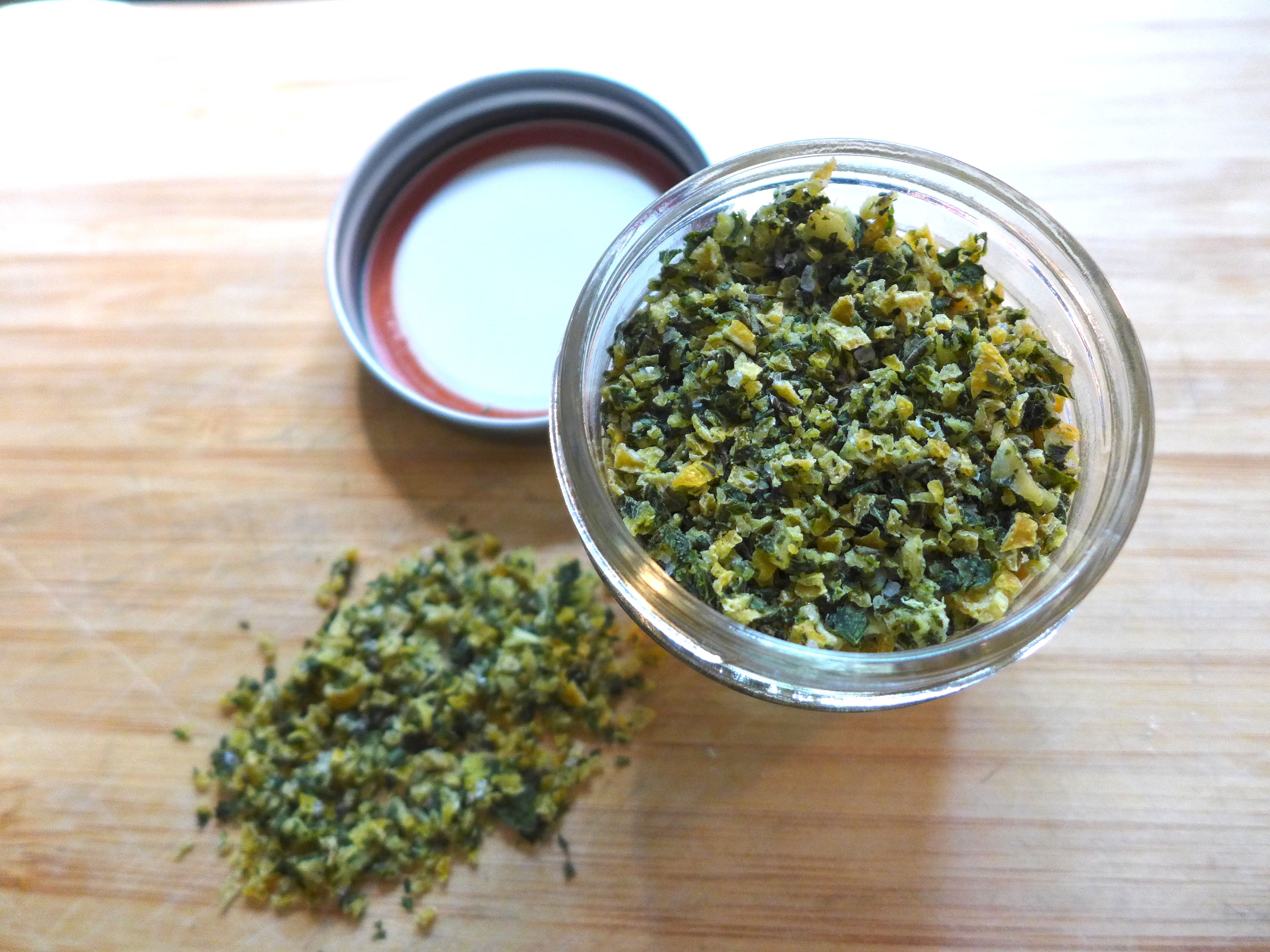
While doing some canning at the beach, I noticed this recipe in a copy of Preserving by the Pint and was immediately excited to try it. I love fresh herbs and am always looking for new ways to preserve their flavors as the plants fade in our late-summer garden. On the other hand, it’s taken me quite a while to appreciate lemon flavor in my savory dishes. Thank goodness I’ve come around, because this chicken dish is something I would not have made a few years ago, but we had it again last night for dinner (it’s just that good!). What I’m getting at is that a few years ago, I would have turned my nose up at this simple seasoning recipe, and what a shame it would have been. This seasoning is simple to make and adds a flavorful punch to a variety of savory dishes, making creative weeknight cooking a breeze.

liveseasoned_fall2015_lemonsalt8

liveseasoned_fall2015_lemonsalt9

Preparing the seasoning requires just a bit of chopping and time. I did my chopping on a day when people were constantly coming in and out of the beach house, and every single person asked what was cooking and remarked that the kitchen smelled great. The chopping releases an amazing blend of aromas from the herbs, lemon zest, and garlic.

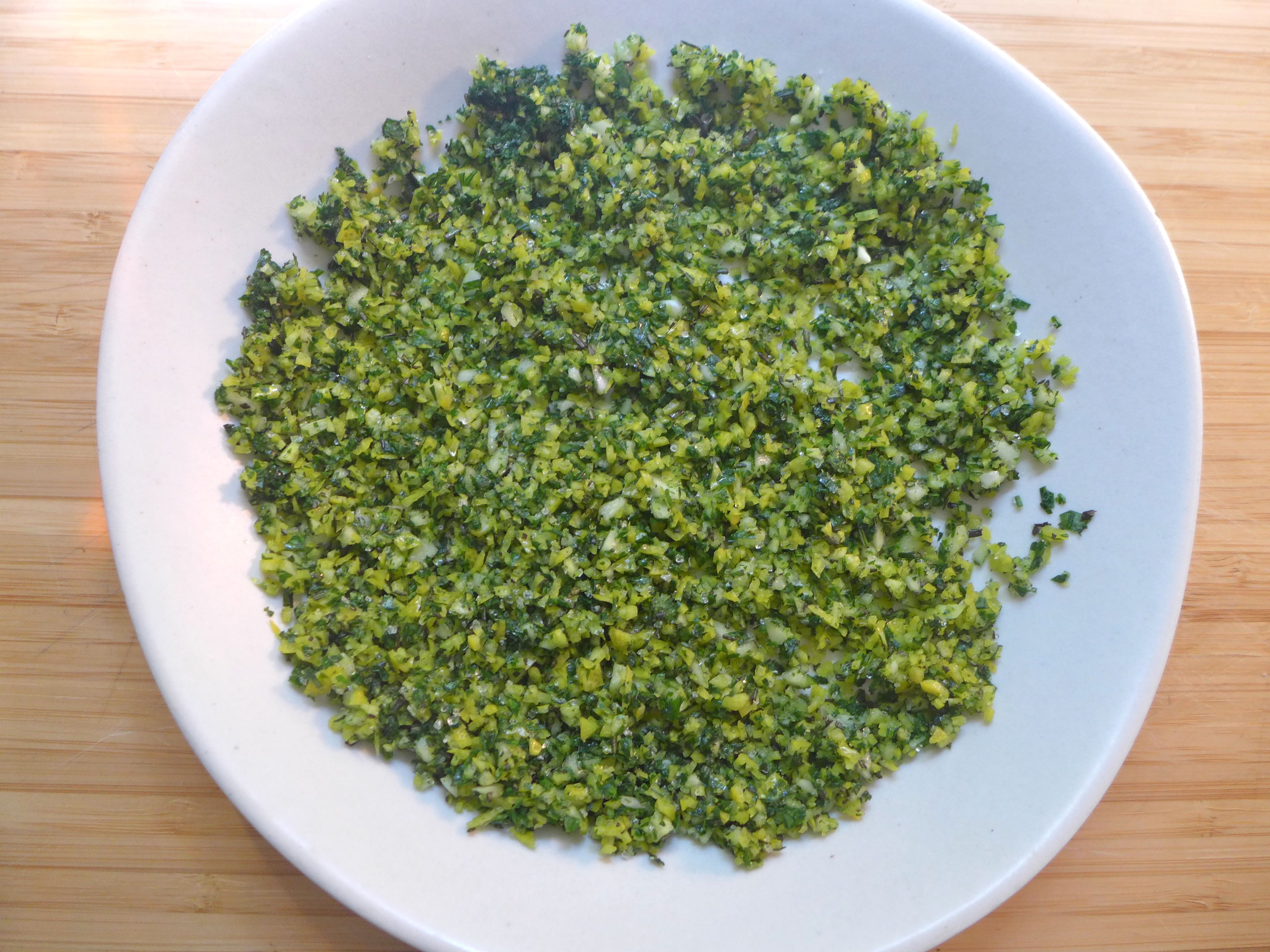
Once chopped, the mixture is spread out on a plate and left to dry for a couple of days. Since we were making this on the humid east coast in the middle of August, I put my plate in front of a fan to help with the drying process. If I were to make this at home in Colorado, the fan would be completely unnecessary because the air’s so dry. So use your discretion and help the drying process with a fan or warm oven if you’re in a high humidity environment.

Lemon & Herb Salt

Lemon & Herb Salt

Ingredients

  • zest from 4 lemons
  • small bunch parsley
  • 3-4 sprigs of rosemary
  • 3 garlic cloves
  • 2 Tbsp coarse sea salt

Instructions

  1. Wash the parsley and rosemary and remove the leaves from the stems. This can be tedious with the parsley, but do the best you can, and a few stems are fine.
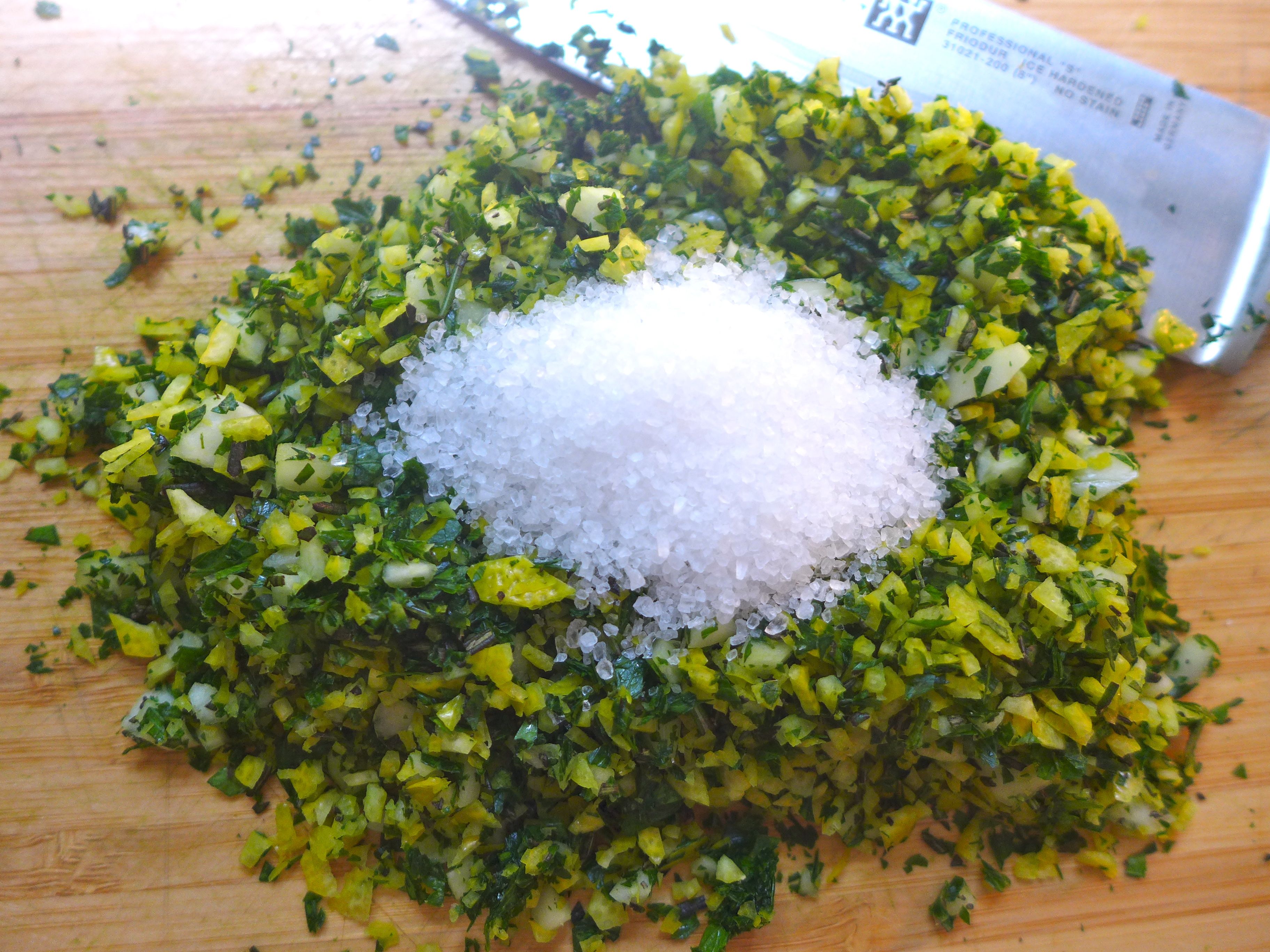
  2. Roughly chop the herbs. Add the zest and chop together with the herbs until well combined. Add the garlic and continue chopping. Add the salt, and... continue chopping until all ingredients are finely chopped.
  3. Spread the mixture on a plate and allow it to dry for at least 48 hours. It should be completely dry, with no sign of moisture.
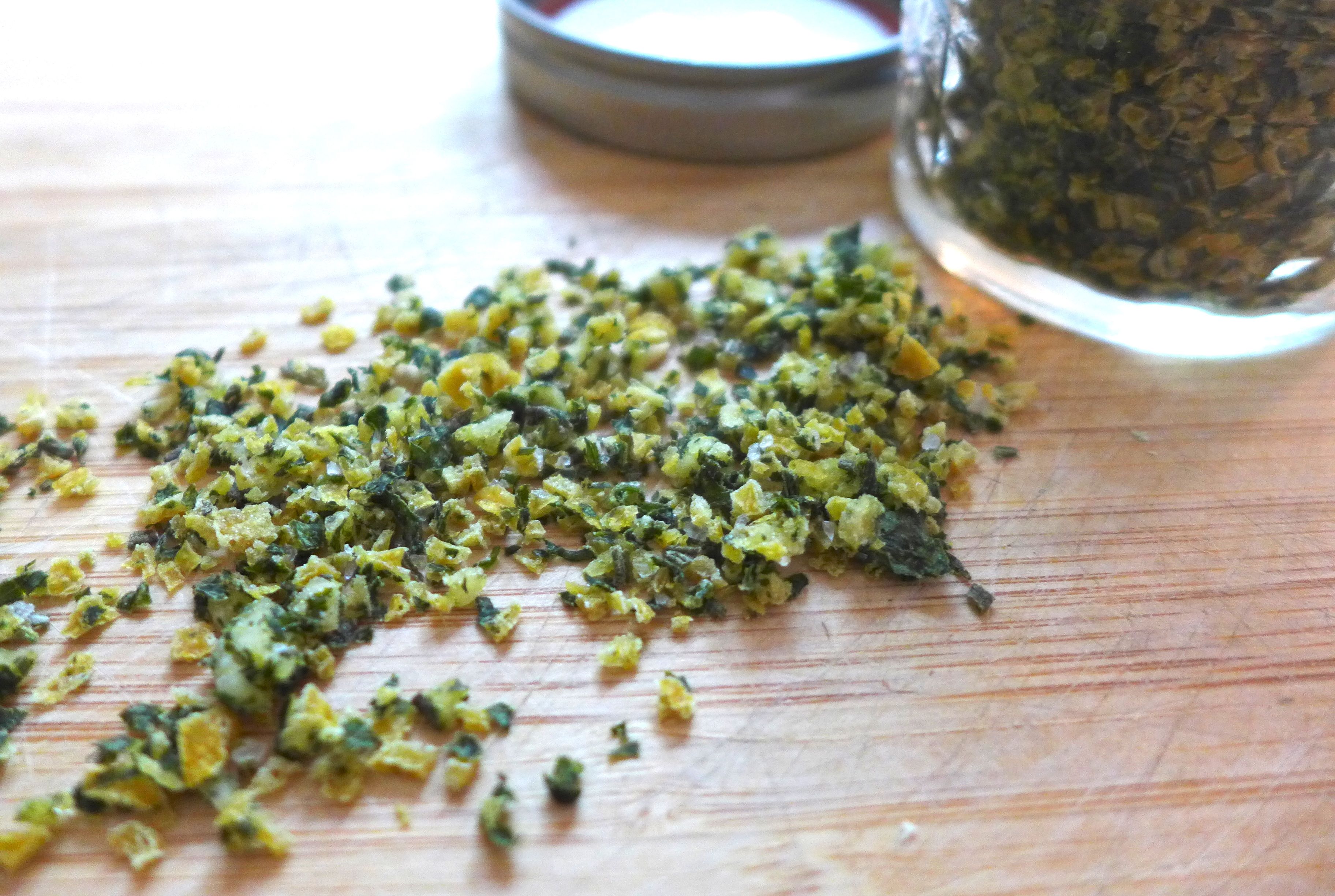
  4. Store in a jar and use anywhere you would like to add a bit of flavored salt.
https://liveseasoned.com/lemon-herb-salt/

liveseasoned_fall2015_lemonsalt3

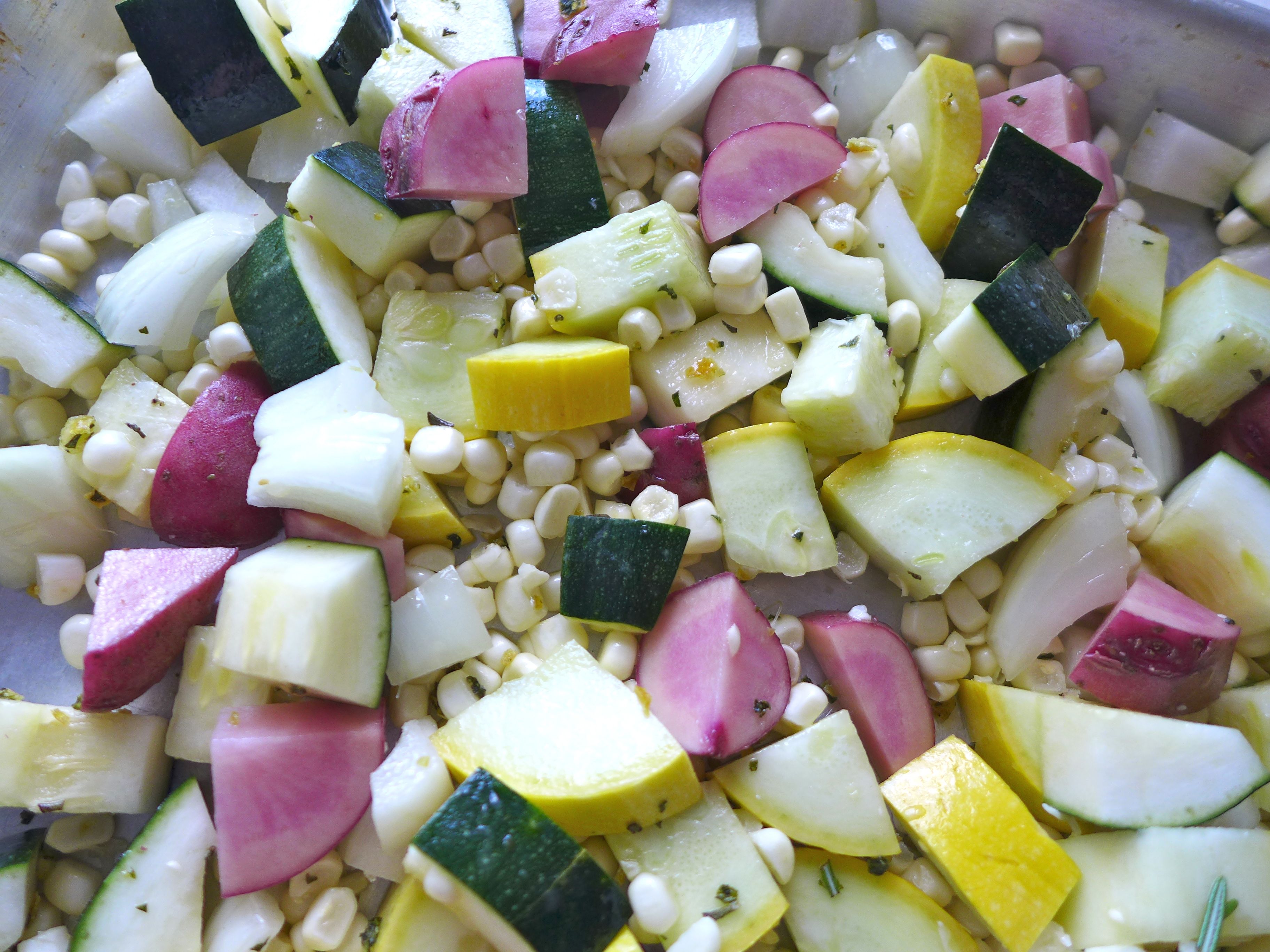
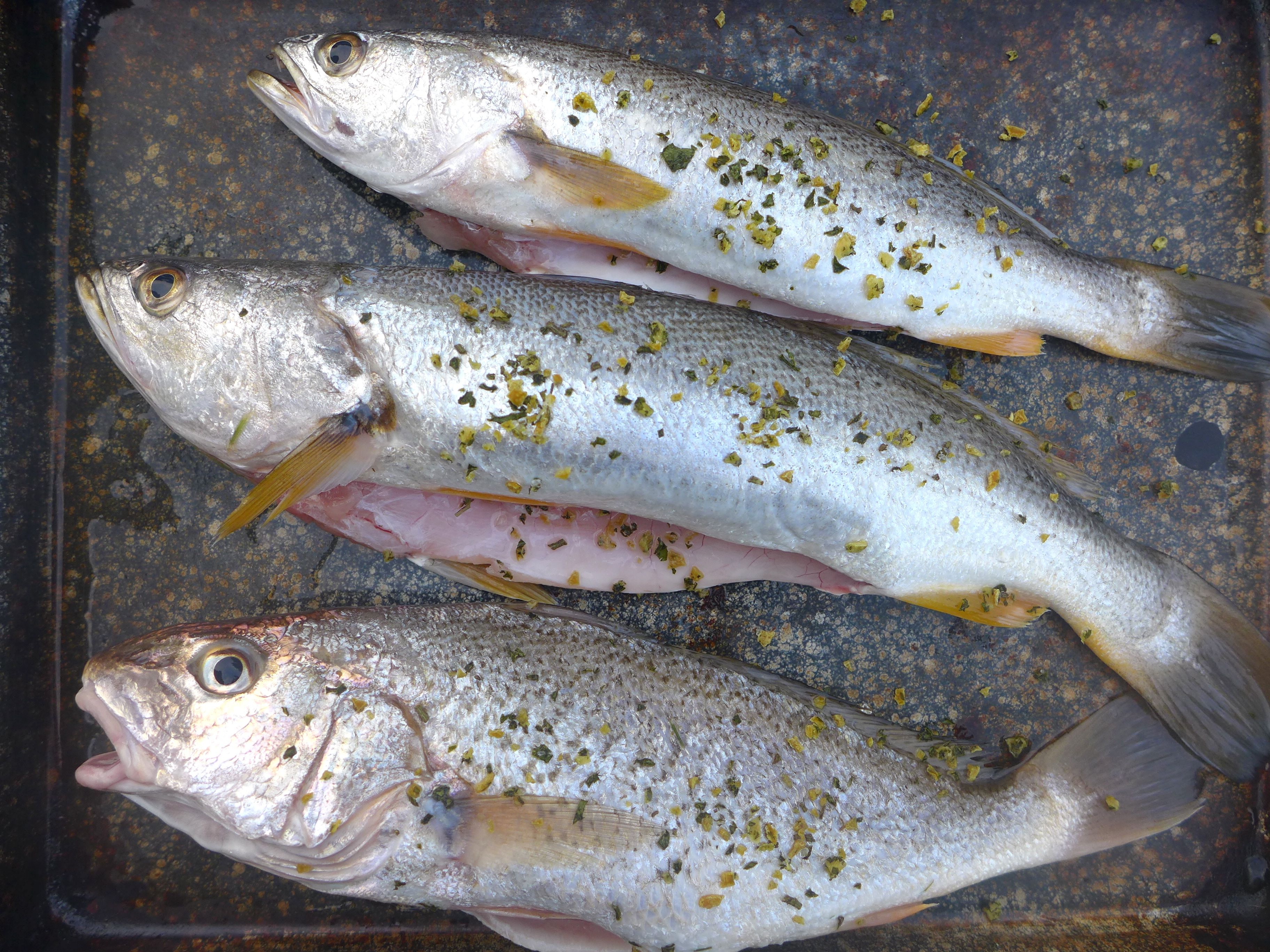
After the seasoning has dried, you can use it on any variety of dishes. One night we tried it on our roasted summer veggies, which were a combination of summer squash, onions, potatoes, and corn. They were delicious, but I didn’t *love* the flavor of lemon on the vegetables (can’t win them all!). The next night we sprinkled the seasoning on and in some fish freshly caught by our pop. I included a pat of butter inside each fish because they were on the leaner side. Our mom loved the fish so much that she made sure to confirm that I “took a picture for the blog”. Everyone loved the fish, and it couldn’t have been easier to make.

liveseasoned_fall2015_lemonsalt2

I have to admit that I never buy seasoned salt or herb mixes from the spice section. Instead, I sprinkle on the combination of individual herbs I want for any particular dish. That said, this seasoned salt was so easy to make, and it’s motivated me to experiment with the rest of the fresh herbs in our garden to develop a number of custom salts that will let me preserve those flavors and use them all winter long.

Alex’s Bedroom

Hey there! If you’ve been following along, you may know that Calder and I bought a house in March and moved in a week or so before little Luc was born. It could have been a crazy and hectic time, but all in all, it wasn’t that bad (really!). We were lucky that our new house was in great shape did not require any major work. In fact, the only thing I want to change about the house are the colors of the walls. The walls are painted shades of beige. It’s nice enough that we can live with them for a while, but eventually I would love to brighten everything up and paint most rooms white.

liveseasoned_fall15_alexroommakeover-17

To give you an idea of where I’m going: between the mountain views outside our windows, the wooden trim and furniture, and eventual white walls, I’m feeling inspired my many of the elements common to Scandinavian design. I want to add pops of color with the artwork on the walls, the furniture and other elements that can easily be changed within the rooms. That said, we took a big risk and added a huge mural across one wall in Alex’s room. Luckily it turned out great! Today I’m going to share snapshots from his room and in a follow-up post I’ll provide a more detailed tutorial and tips about how we painted the mural.

Continue reading

Pumpkin Butter

Pumpkins are our ingredient of the season. In the past we’ve sampled pumpkin brews, used them to make mini pumpkin pies, and have added the seeds to not one, but two, salads.

After seeing Sarah’s request, I couldn’t help but make pumpkin butter as the first recipe for our new ingredient of the season. I have made apple butter many times, this was my first attempt at pumpkin, and rather than use the crockpot, I decided to try an oven-based recipe. I’ve since learned that while they are both butters and methods equally easy and produce delicious results, pumpkin butter cooks up much faster than its apple counterpart! I used this recipe for guidance, but made a few modifications as discussed below.

liveseasoned_fall2015_pumpkinbutter1

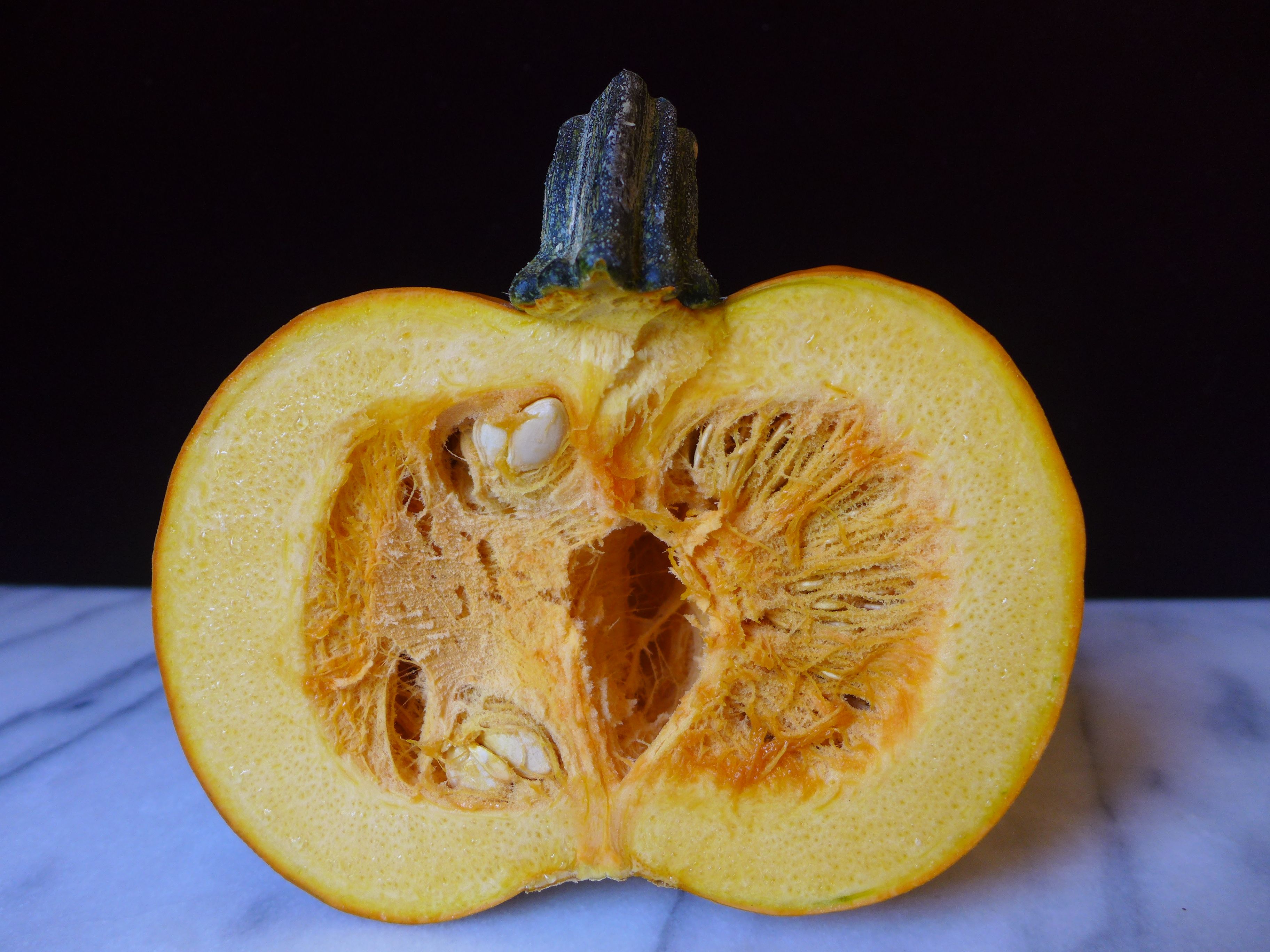
For this recipe we’re skipping the canned variety and starting with a raw pumpkin. If you’ve never bought a pumpkin for baking, you want to pick up one of the smaller “sugar pumpkins” and not the big pumpkins used for carving jack-o’-lanterns.

Continue reading

How To: Survive an International Flight

live seasoned fall15 international flight3

Some folks really dread flying.  Usually it’s because of the jet lag and awful airplane food and while those things do stink you can still survive a fourteen hour flight with a smile.  I know because I’ve experienced three extremely long flights to Asia all coming in at different levels on the comfort scale.  If you’re prepping for a holiday overseas, here are a few tips that should make your time in the air a bit more enjoyable. Although, even I couldn’t prepare for the time I woke up with a baby sleeping on my tray table. Even so, here’s how to best survive an international flight and walk away with a smile.

Continue reading

Rishikul Yogshala Yoga Teacher Training Schedule

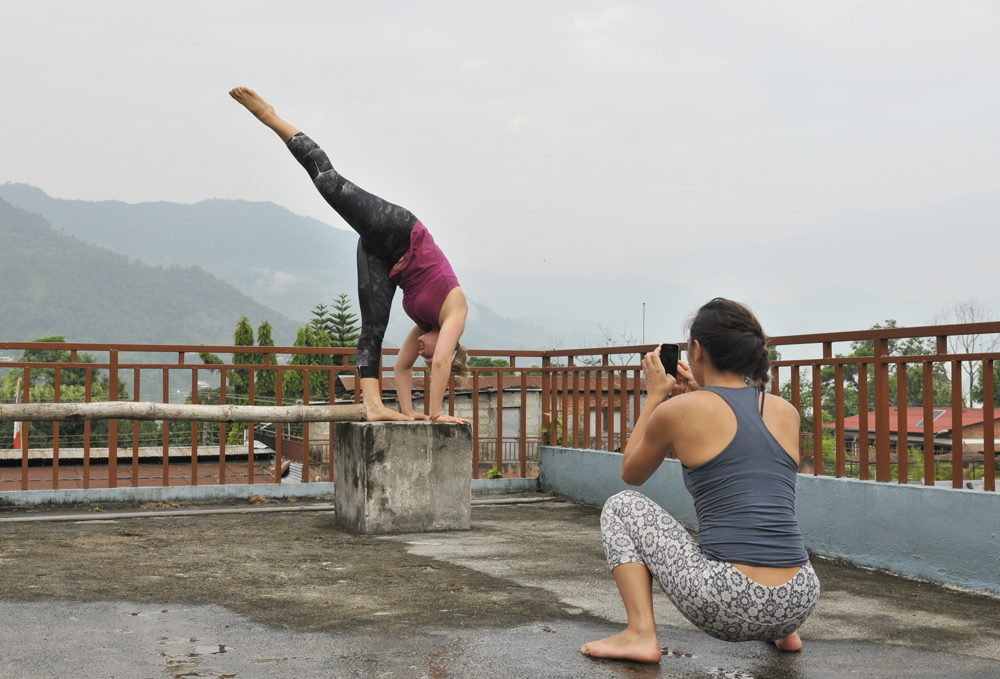
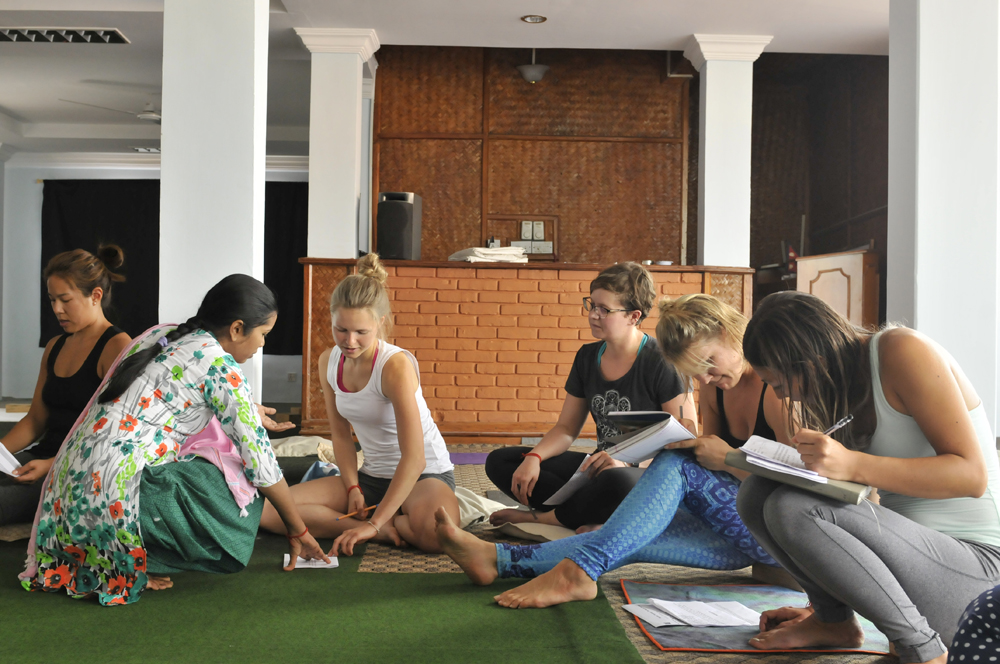
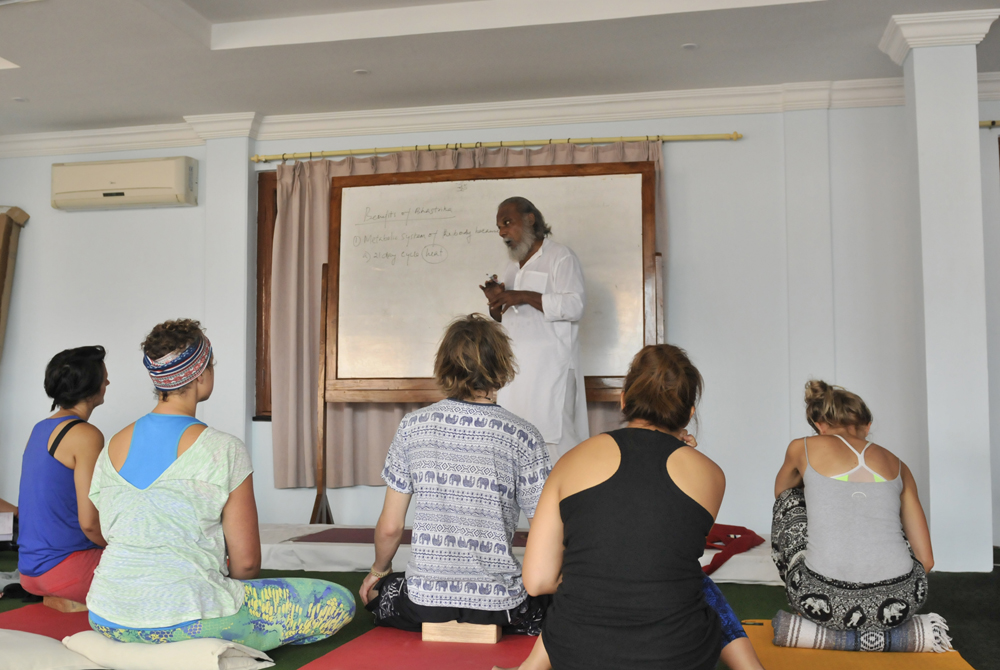
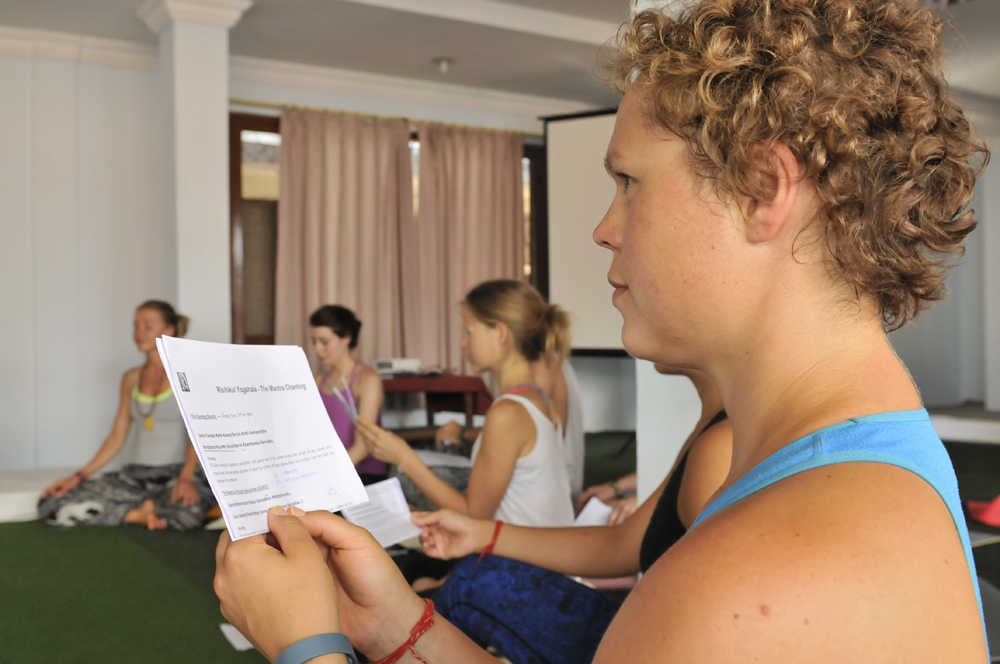
Take a look inside Rishikul Yogshala’s 200 hour yoga teacher training in Pokhara, Nepal.liveseasoned_fall_nepal yoga teacher training7

liveseasoned_fall_nepal yoga teacher training12

liveseasoned_fall_nepal yoga teacher training4 liveseasoned_fall_nepal yoga teacher training9  liveseasoned_fall_nepal yoga teacher training13 liveseasoned_fall_nepal yoga teacher training16 liveseasoned_fall_nepal yoga teacher training18 liveseasoned_fall_nepal yoga teacher training20

Sarah here :

Today marks my fourth full day of yoga teacher training in Pokhara, Nepal.  Only one more day and then I have a whole half day to myself on Sunday!  Because we’re squeezing a 200 hour training into 28 days, the schedule is absolutely packed.  I thought it would be fun to share it here to give you an idea of what I’ve been up to the past week.

  • 5-5:30AM Morning Tea
  • 5:30-7 Hatha Yoga
  • 7-7:15 Tea Break
  • 7:15-8:15 Pranayama aka breath work
  • 8:15-9 Yoga Nidra
  • 9-10:30 Breakfast
  • 10:30-11:45 Yoga Philosophy
  • 11:45-noon Tea Break
  • noon-1PM Mantra Yoga aka chanting sanskrit
  • 1:15-3 Lunch & Rest aka Lunch and shopping at my new favorite store
  • 3-4 Yoga Anatomy
  • 4-6 Ashtanga Yoga
  • 6:15-7:15 Meditation – Today the theme was self love. It was so amazing.
  • 7:30-8:30 Dinner

So that’s that. Lots of learning, practicing and tea all day long.  Each teacher is inspiring and full of knowledge.  I feel extremely lucky to be here and that feeling carries me through the long days.  If you’re wondering how we fill three and a half hours of asana practice, just imagine holding each pose for an excruciating amount of time and then repeating that four or five times.  As much as I hate holding wheel for ten breaths, it’s kind of nice to go into each pose slowly with so much detailed instruction.  Today we worked on handstands and arm balances in the morning and in the afternoon so. many. down. dogs.

I’m pretty sore, but as of today, I can honestly say I’m having the best time of my life.  The days are long, but they’re powerful and magical and I cannot say enough wonderful things about my teachers.  Each and every session I am reminded why I chose to train in the east with Indian teachers, my new yoga family.  I can’t wait to share more about this trip, if you have any questions, just ask!


Traffic in Kathmandu, Nepal

liveseasoned fall15 kathmandu nepal traffic 3liveseasoned fall15 kathmandu nepal traffic 12

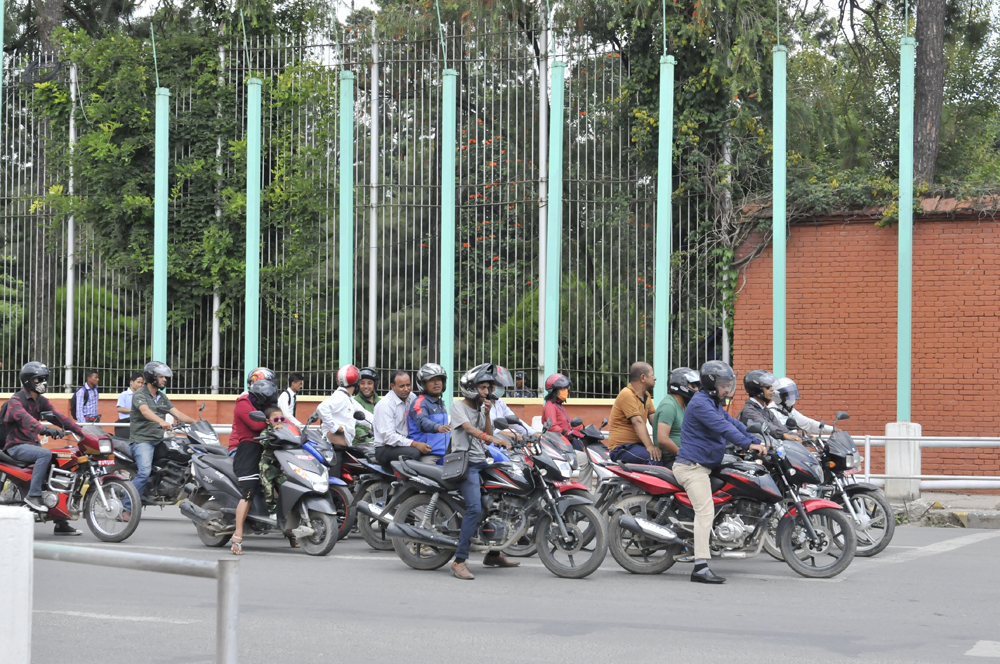
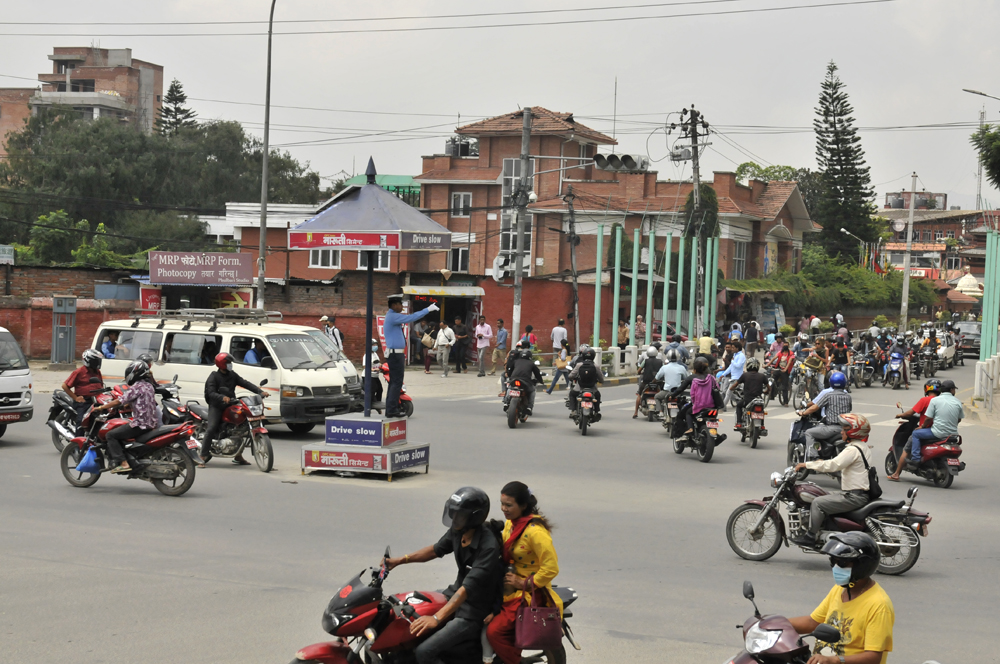
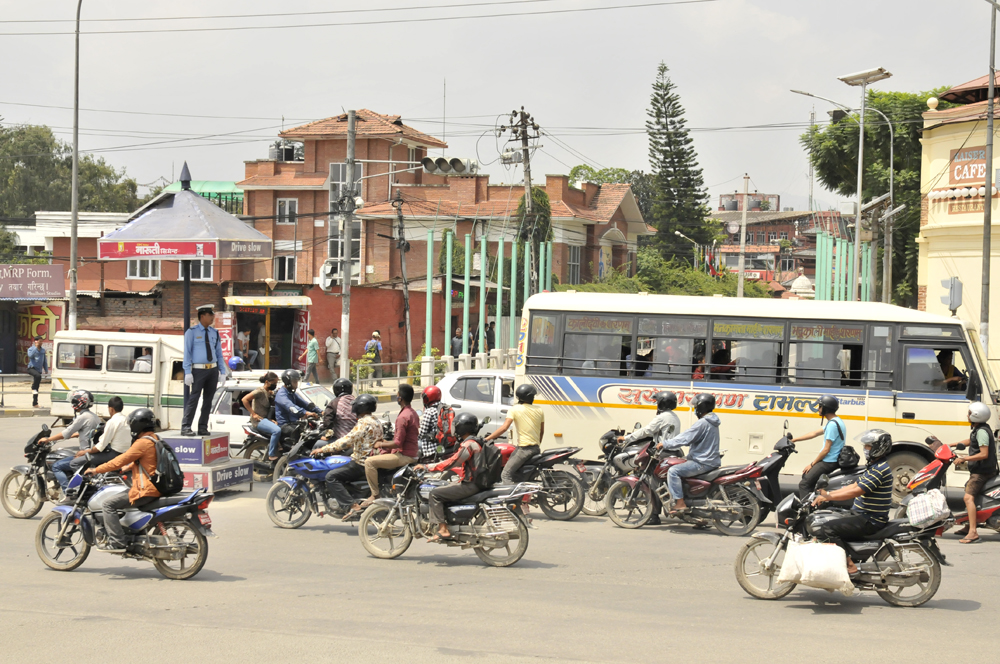
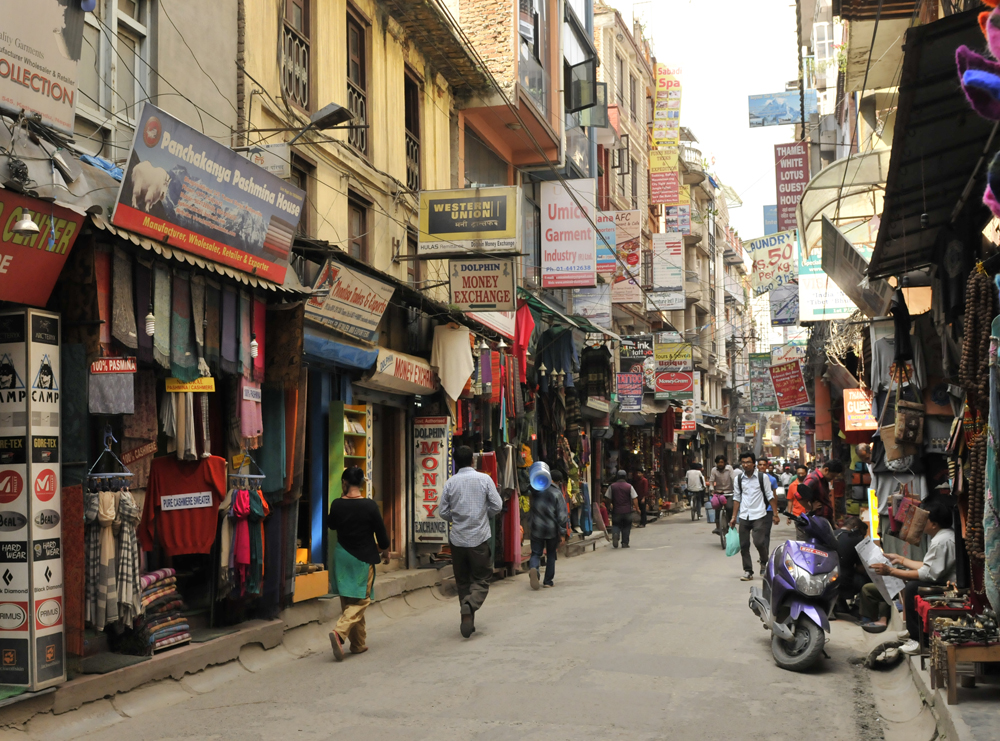
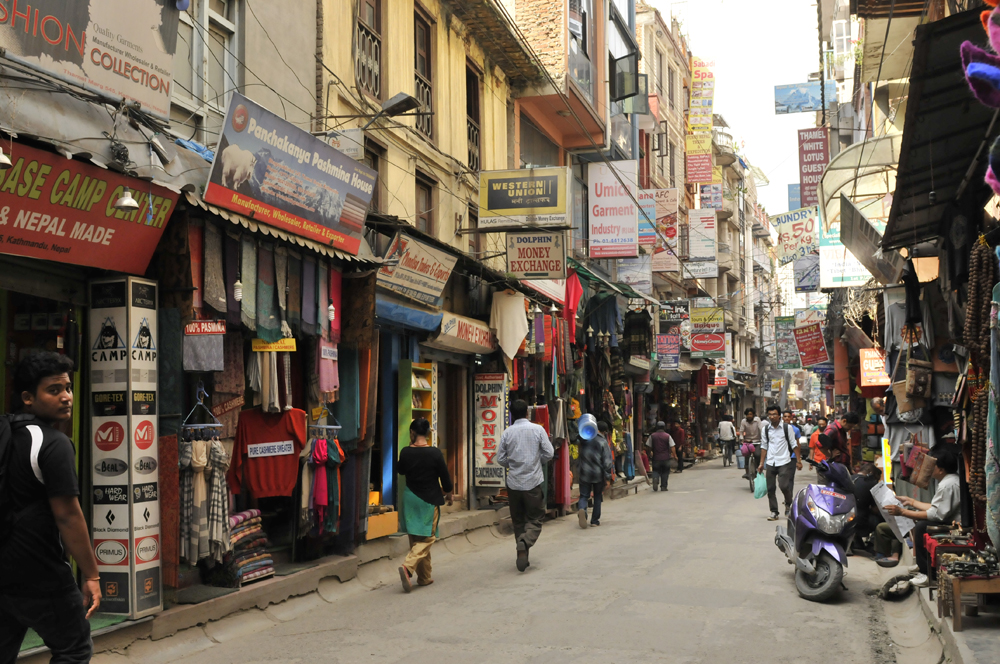
If you have ever traveled internationally, you know there are certain aspects of life you will observe time and time again.  You’ll notice the way Europeans dress differently than Americans even though they all tend to wear pants and tops of similar brands.  You’ll certainly notice how Hindu and Buddhist populated countries dress more conservatively and almost always cover their shoulders and knees.  You’ll probably eat out while abroad and you’ll admire the way Vietnamese people can sit on furniture made for preschoolers and still look comfortable or how Indians eat with their right hands only.  You’ll also walk around abroad and you’ll notice how easy it is to shop and walk in countries with pedestrian zones. You’ll wish America (or your home country) adopted a few more car-free areas in your city too.  You’ll also notice how hard it is to cross the street safely in some countries, especially if the traffic moves in the opposite direction than what you’re used to.

liveseasoned fall15 kathmandu nepal traffic 10

To say crossing the street in Kathmandu, Nepal is difficult, is an understatement.  First off, there are no traffic lights or at least none that I have observed in the city center so you won’t see any flashing walk symbols.  The main streets are very wide too and there are certainly no lines painted on them.  If there are crosswalks painted, it’s almost irrelevant because of the lack of traffic lights.  It’s almost impossible to interpret which lane has the right away, when cars will be turning into the intersection, and at what point will the wall of traffic lurch forward.

liveseasoned fall15 kathmandu nepal traffic 2

Continue reading

Welcome September

On the first Wednesday of each month we like to pause and take a look at what’s going on in the world around us, with a particular focus on animal activity, celestial events, and our farmers’ fields.

liveseasoned_fall15_welcome september liveseasoned_fall15_welcome september2

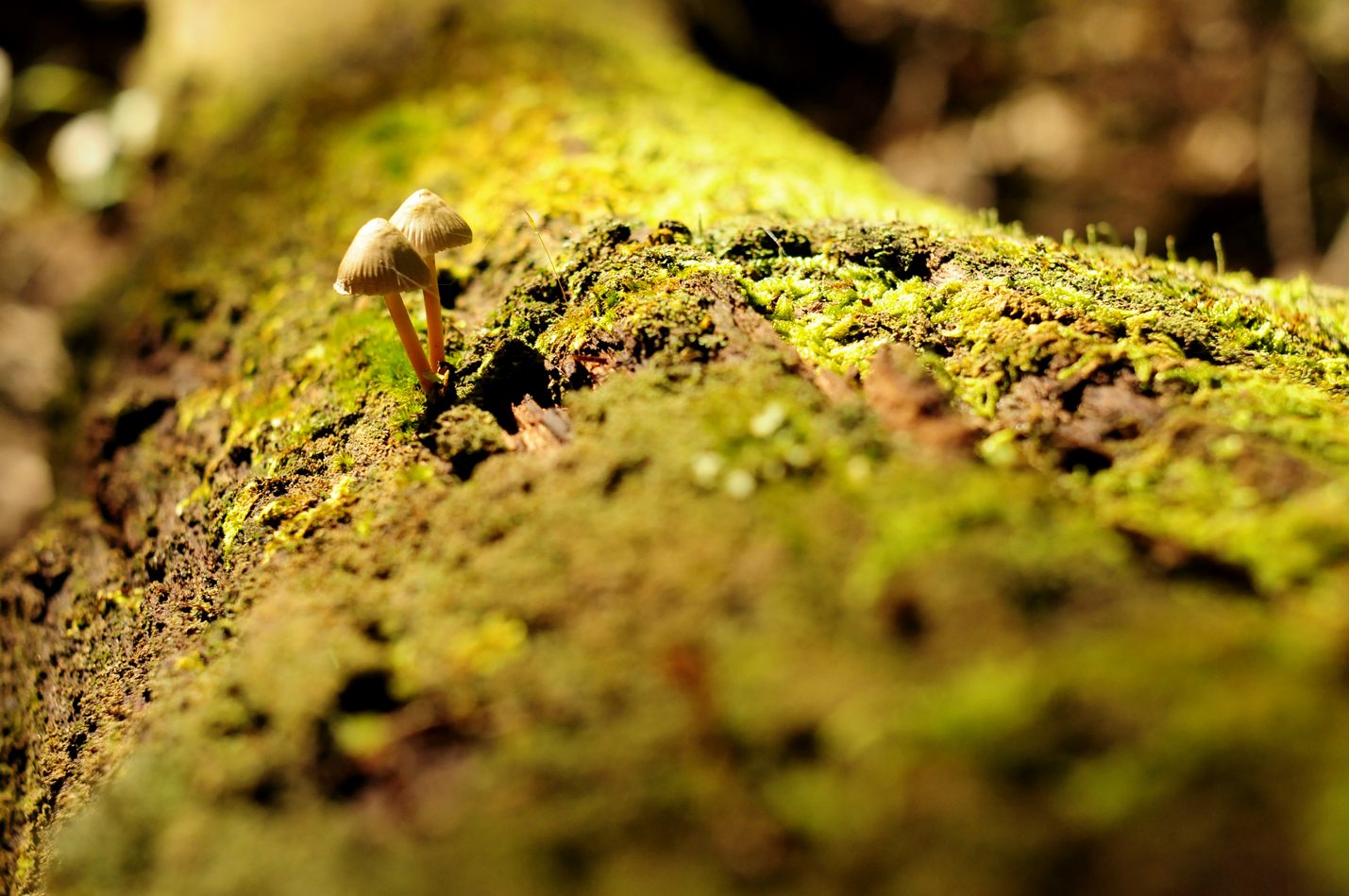
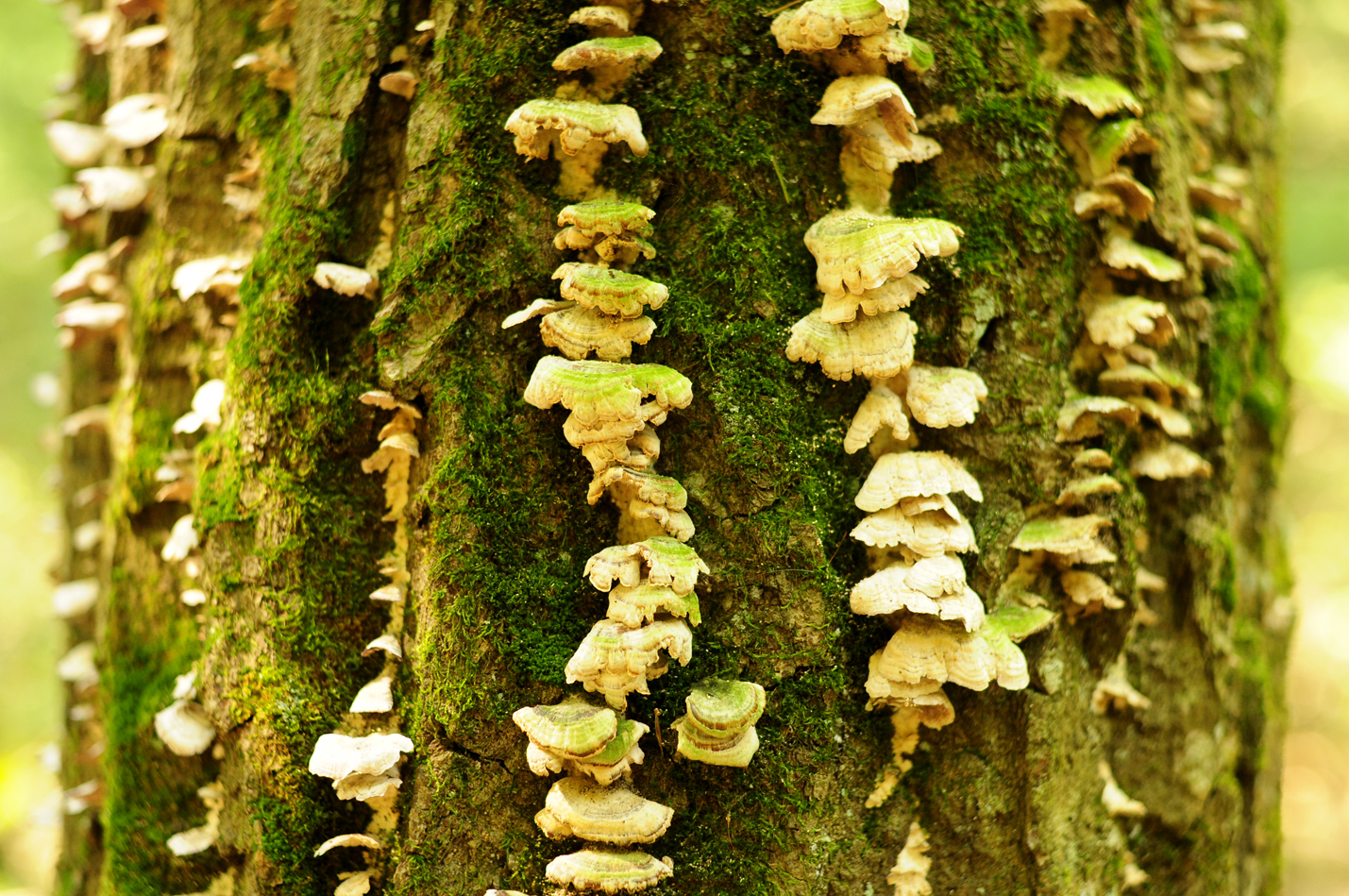
September is a great time to take a hike.  The extreme heat disappears, rain moves in and cooler temperatures arrive.  The damp woods are bursting with fungus. You could even think about joining a mushroom club or going along on a foray this month.  If you’re trotting along you’re sure to see squirrels and chipmunks gathering nuts and seeds for the winter months.  Overhead you’ll hear birds migrating, check out this post to see how to properly prepare for those on the move.  If you’re interested in following along with this season’s migrations, the Cornel Lab of Ornithology produces a bird migration forecast.  You’ll learn what species you should expect to see traveling in different regions of the United States.  Migrations are heavily dependent upon weather conditions.  The best times to see large flocks are directly after a cold front passes and very early in the morning.  That’s why birdwatching groups always meet at the crack of dawn, if you wake up early, head to the nearest native habitats with lots of water.

liveseasoned fall15 welcome september

Bats are also on the move this month.  As fall approaches big brown bats are looking for a place to hibernate.  Cool nights with fewer insects are the primary force that starts the migration to hibernation.  Some of these migrations may be very short, only a few miles from their summer homes.  At this time of year, big brown bats are plump, healthy and ready for a long sleep.  Unheated attics are actually ideal hibernation places for bats so keep an eye out in case some make their way into your home.  You’ll want to have them removed before they hibernate or else you shouldn’t disturb them until spring!


Continue reading

Ingredient of the Season : Pumpkins

Every season we like to pick one ingredient and find a variety of ways to love it and use it. You can find our complete ingredient archive here.
pumpkin3

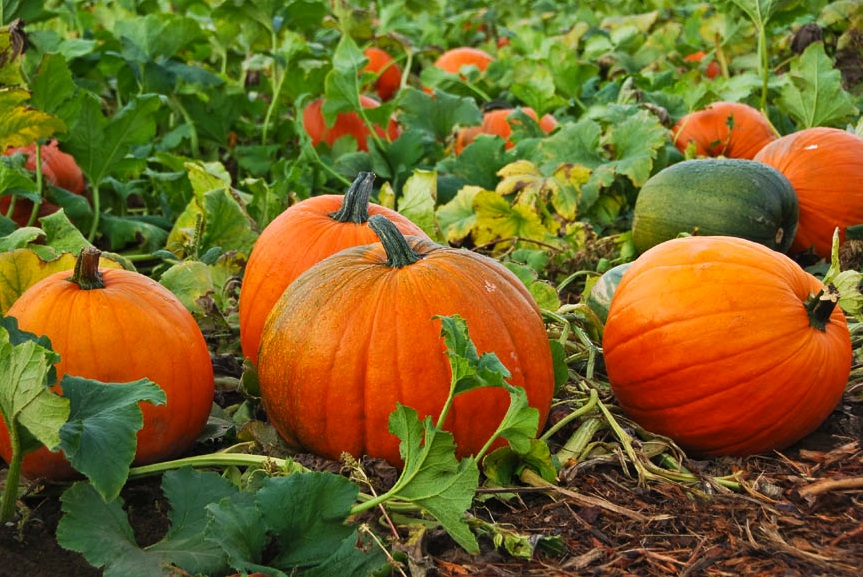
When we think of autumn, our minds wander to all our favorite fall activities.  Hayrides, long walks, apple picking, pumpkin carving and of course Halloween.  With pumpkins popping up everywhere during the fall and pumpkin spice flavor exploding in popularity, we thought it would be fun to share all the different ways Katie and I use pumpkins.  We promise it’s a total coincidence that Starbucks launched it’s pumpkin spice latte today and honestly we have to laugh at the insane ways the food industry is using pumpkin spice flavoring these days.  This autumn you can expect to see some delicious pumpkin recipes, hold the cinnamon and nutmeg though, we’re talking breads, curries, soups and other spicy and savory dishes, okay and maybe a pie or two.  Before we head straight down pumpkin street, let’s talk cucurbits.
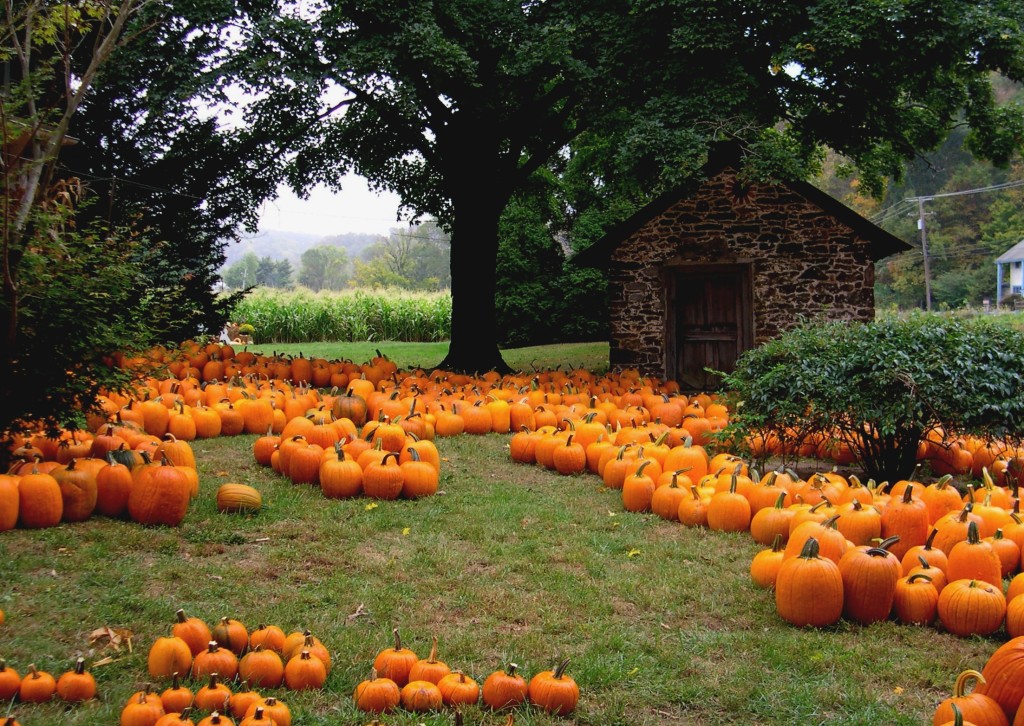
Pumpkin Harvest Display

History

Cucu who? Pumpkins are a member of the cucurbit or gourd family.  Most cucurbits grow on vines and are believed to be native to the Andes and Mesoamerica. Pumpkin seeds dating back to 7000-5500 bc were found in Mexico.  Pumpkins were first cultivated in America before being brought to Europe by early settlers and they remain an important source of food, livestock feed and oils around the world today.  Pumpkins of our ancestors didn’t look like the common big, round and orange varieties of today, but more like long necked squash.

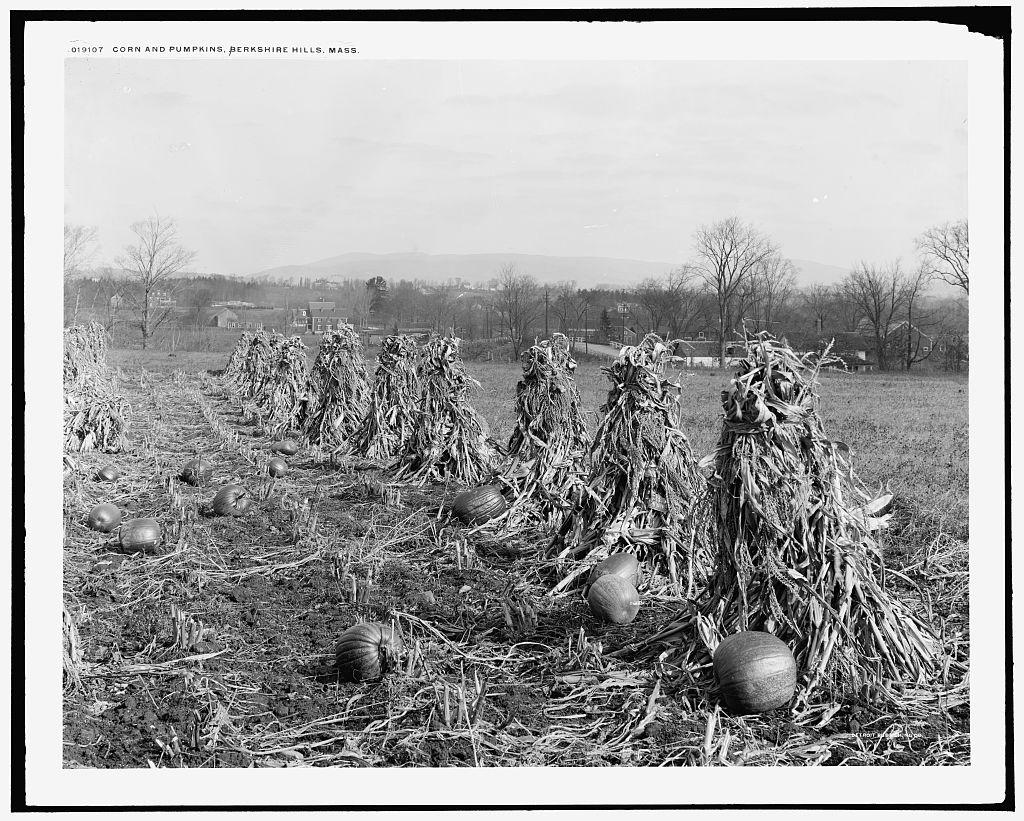
Native Americans utilized pumpkins for food and materials, roasting them over fires and drying long strips to weave into mats.  Pumpkins, along with beans and corn are commonly referred to as the three sisters because of the planting style of Native Americans.  The first pumpkin pie came about when settlers cut off the top of a pumpkin, removed the seeds and added some spices, milk, and honey and baked it over hot coals.

The word pumpkin originates from the Greek word pepon meaning large melon.  The French nasalized pepon transforming it into pompon.  The English morphed pompon to pumpion and American colonists changed it to pumpkin.

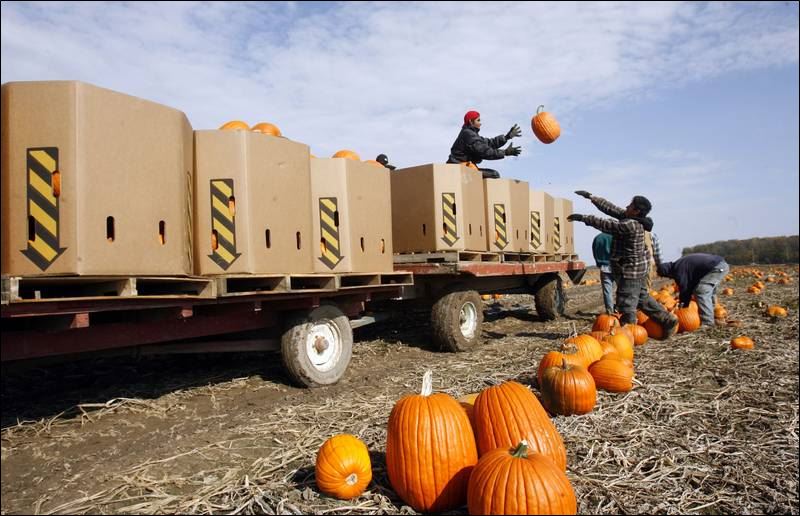
Today China leads the world in pumpkin production with India, Russia, U.S.A. and Egypt falling in behind.  In the United Sates, Illinois, Indiana, Ohio, Pennsylvania and California are the top pumpkin growers with Illinois producing far more than any other state.  Around 1.5 billion pounds of pumpkins are grown on 75,000 acres annually in the United States and that number is growing.  Most pumpkins are processed into canned pumpkin.
liveseasoned fall 15 pumpkin2

Biology

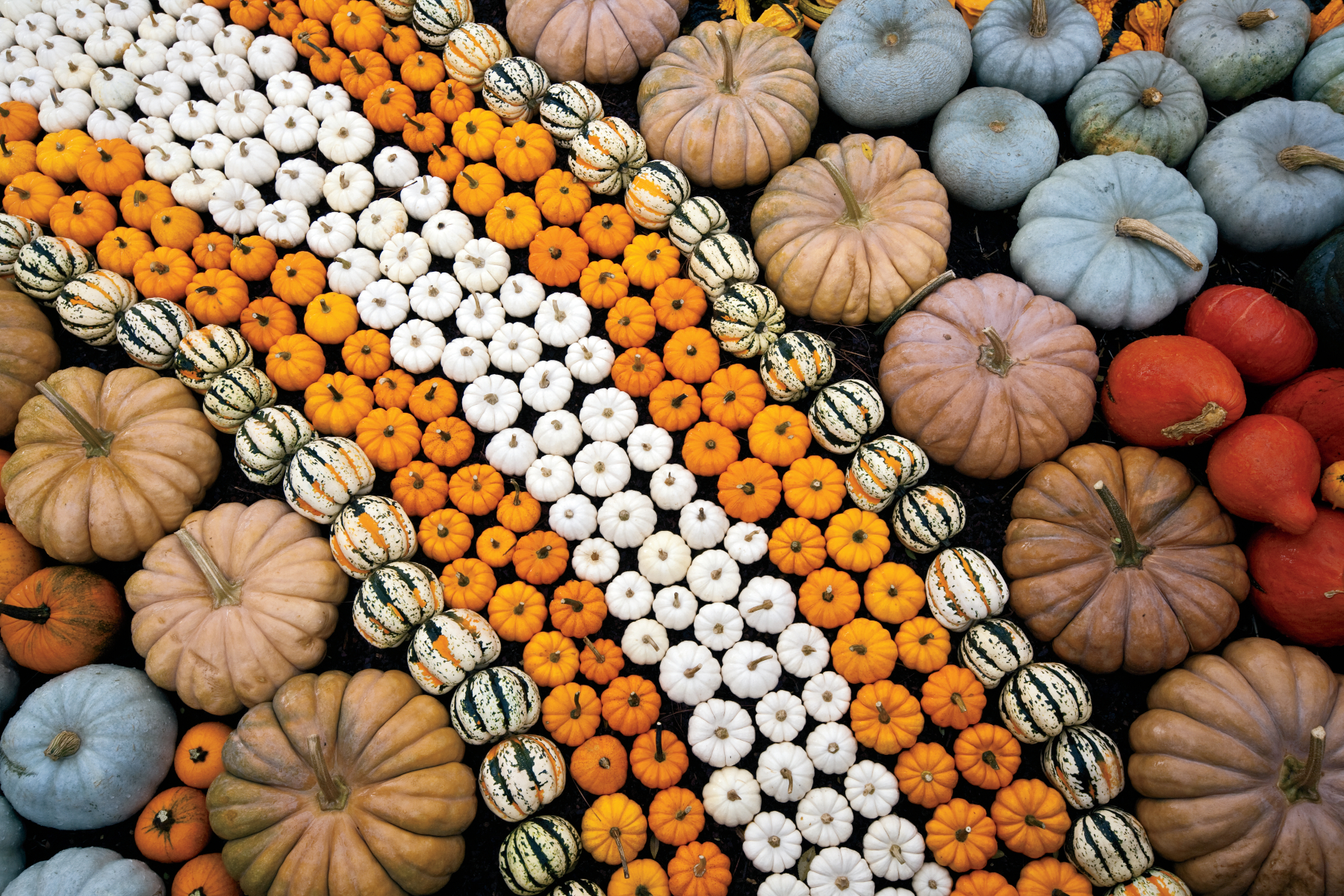
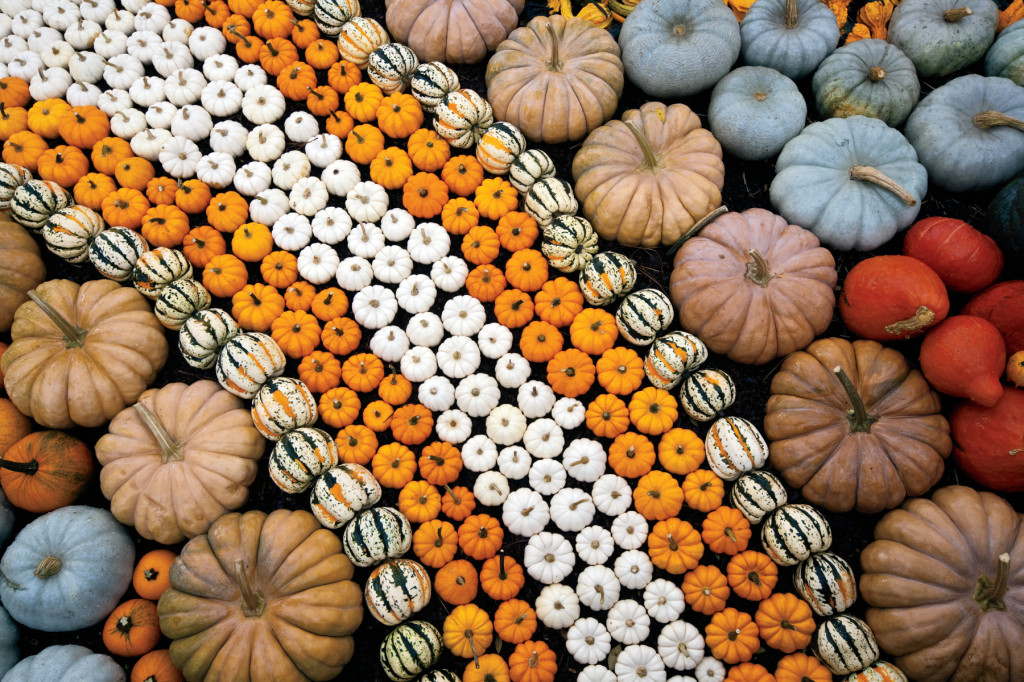
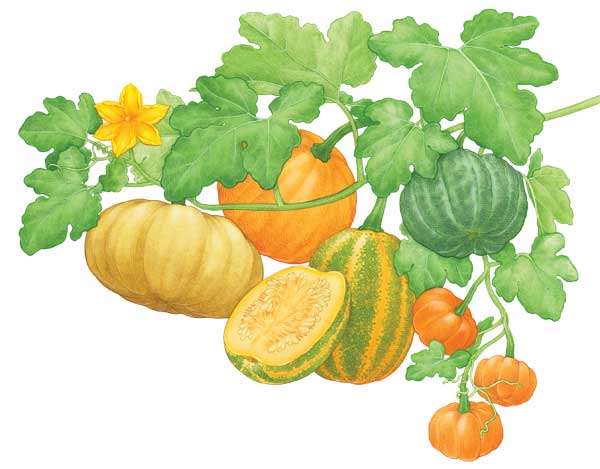
As you know, pumpkins are not just big, round and orange.  Pumpkins come in all shapes and sizes although you may have thought they were other kinds of squash.  There are green, yellow, red, white, blue and even striped pumpkins. If you’ve ever visited a pumpkin patch, you’ve likely seen big, small, round, tall, flat, smooth, ribbed and warty varieties. While some pumpkins are excellent for culinary uses, others are best left for decoration.

There are four main species of pumpkins that we eat: Pepo, Maxima, Moschata, and Mixta. Traditionally, carving pumpkins and baking pumpkins are of the Pepo species.  When you think of Pepos, think deep, bright orange with a hard woody stem. Maximas on the other hand have a spongy, cork-like stem and can grow to be very large just like Pepos.  Maximas keep fairly well, while Moschatas keep extremely well.  Moschata stems are smooth with deep ridges and they usually have orange skin.  Moschatas are sweet and work well in most recipes.  Mixtas are usually cream colored or pale yellow.  Mixtas aren’t as sweet as Moschatas and Maximas and thus are usually baked with maple syrup or brown sugar to compliment their flavor.  While there are only four main species of pumpkins, there are over thirty (and that’s being conservative) varieties of pumpkins!  Side note: the guest house I’m staying at in Nepal is called Harvest Moon and guess what? That’s a common pumpkin variety!
pumpkin_illustration


Upon flowering, pumpkin vines initially produce only male flowers, but eventually grow both male and female flowers and are completely dependent on bee pollination for proper fruit production.  Similar to day lilies, the vine’s flowers only last for one day.  If the female flowers aren’t properly pollinated, they’ll begin growing, but usually stop within a few days.  Upon proper pollination, the ovary will grow rapidly and after a few weeks the fruit will mature.   Most plants tend to grow faster at night than during the day, and the same is true for pumpkins.  This video shows the dramatic difference in growth during the day and night of one pumpkin, check it out! While we may tend to associate pumpkins with vegetables, we al know they’re technically fruits because of the seeds, oh those glorious seeds.

There is actually a bee known as the eastern cucurbit bee that is common wherever cucurbits grow.  These bees, Peponapis pruinosa, are found throughout northern Mexico and most of the continental United States.  These pollinators specialize in squash, pumpkins and other cucurbits and have a competitive advantage over honey bees.  The eastern cucurbit bees begin collecting pollen earlier in the day and are slightly larger and faster.  Curiously enough, most pumpkin growers are unaware that these bees exist and have an advantage over the honey bees that farmers rent annually to pollinate their crops!
pumpkin_loc

Uses

Unfortunately in the United States, it seems like the only uses are carving and canned pumpkin, but we’re about to change that, right?  Most of the world tends to eat their pumpkins and we can’t blame them.  We’re excited to test out and share some ideas for main dishes, deserts and pumpkin seed snacks with you.  Katie is a pro when it comes to making apple butter so we can only hope (hint hint) that she tries her hand at pumpkin butter.  We may even try to make a pumpkin stock with the guts, who knows it’s a new season, things could get interesting!  We’ll also take full advantage of some pumpkin products and bring you a few new fall cocktails.

Beyond the kitchen, pumpkins can be turned into useful decorations like bowls and utensils.  Have you ever seen an African Calabash? They’re beautiful! I can guarantee we will not reach that level of mastery this season, but we’ll definitely carve, paint and otherwise decorate some pumpkins.  Pumpkins are also a hit in the beauty department. With a little more research, we may be ready to try our hand at pumpkin face masks, exfoliants and body butters.

As Americans, we must admit we love a good jack-o-lantern and a nice display of pumpkins next to our haybale, I mean, who doesn’t?  When those pumpkins are past their prime though we make certain to throw them into the woods where wild creatures can munch on them or on the compost pile where they’ll help enrich the soil.  Birds are fond of the seeds too and if you live in the city, zoos often collect old pumpkins to feed to their critters!  If you have a surplus of pumpkins, they truly do make great animal feed.  Apparently feeding pumpkin to chickens in the cooler months will help stimulate and prolong egg production, if we had a roost we would totally try this out.  If you do, let us know if you witness a difference.
pumpkin2

Nutrition

The bottom line? Pumpkins will keep you feeling full while also providing some essential vitamins and nutrients.  Pumpkins have three grams of fiber per cup, which is one of the reasons they fill you up and keep you feeling full long after lunch.  One cup of pumpkin has two and half times your daily recommended serving of Vitamin A, which aides in low light vision.  Pumpkin is low in cholesterol, saturated fat and sodium.  Pumpkin is a good source of Vitamin E, B6, and C. It’s also a good source of iron, phosphorus, potassium, copper and thiamin.  You can see the role those vitamins and minerals have in our daily life here.

And let’s end with a bit of fun.

Facts:

  • Pumpkin is the name of a movie starring Christina Ricci and it got a horrible review on IMDB.
  • Peter and Cindi Galsier take the prize for the largest pumpkin grown in America weighing in at 2058 pounds.
  • Beni Meier holds the Guinness World Record for his 2096 pound pumpkin grown in Switzerland.
  • Apparently there is a whole world of punkin chunkin that I didn’t even know existed. There are different machine classes, but maybe you were already aware of that?

1/2/3/4/5/6/

Seasoned View: Vol. 18

Each month we share our Seasoned View.  Snapshots of nature and daily life taken by the Seasoned sisters. Find our archive of past months’ views here.

liveseasoned_fall15_seasoned view

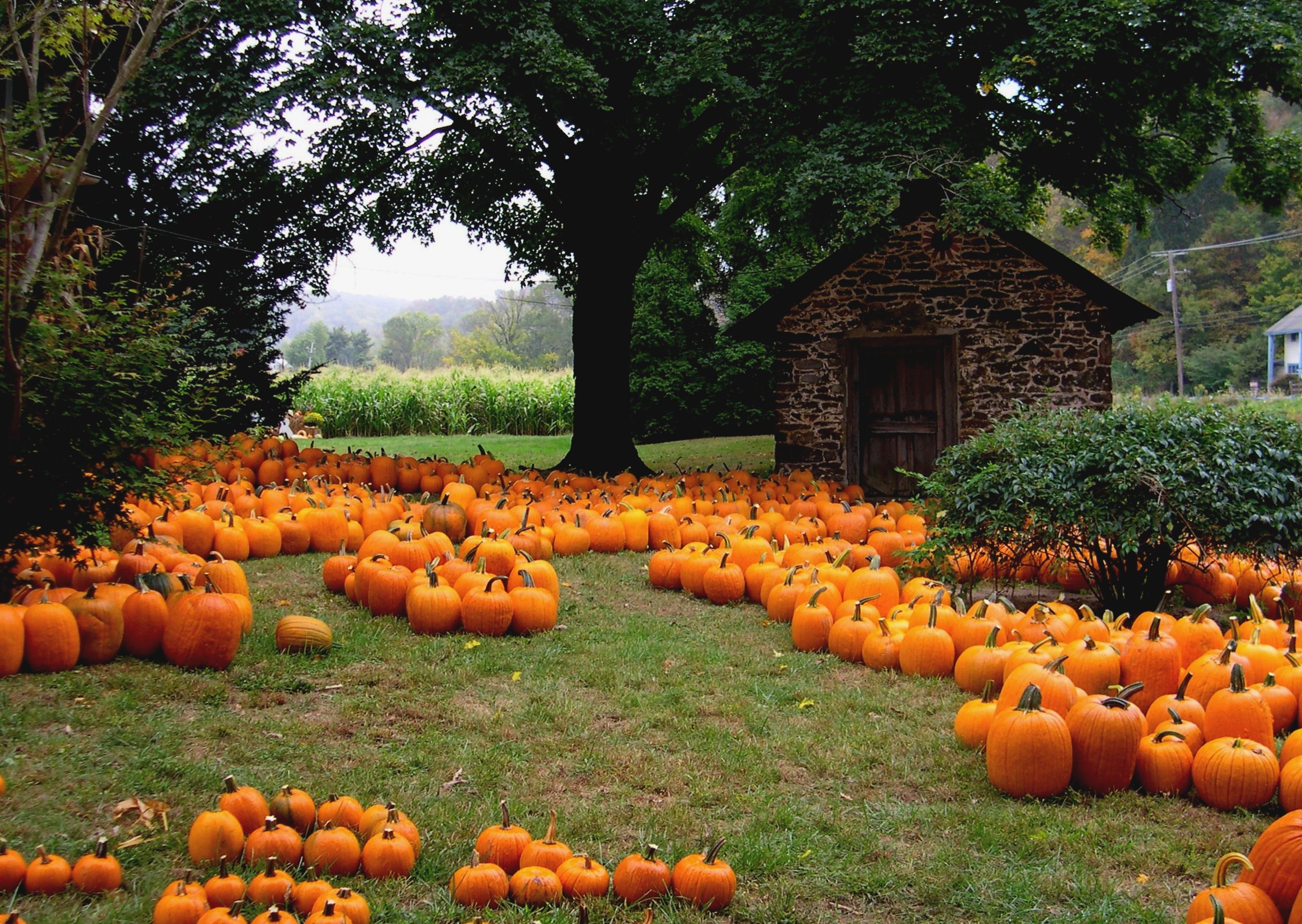
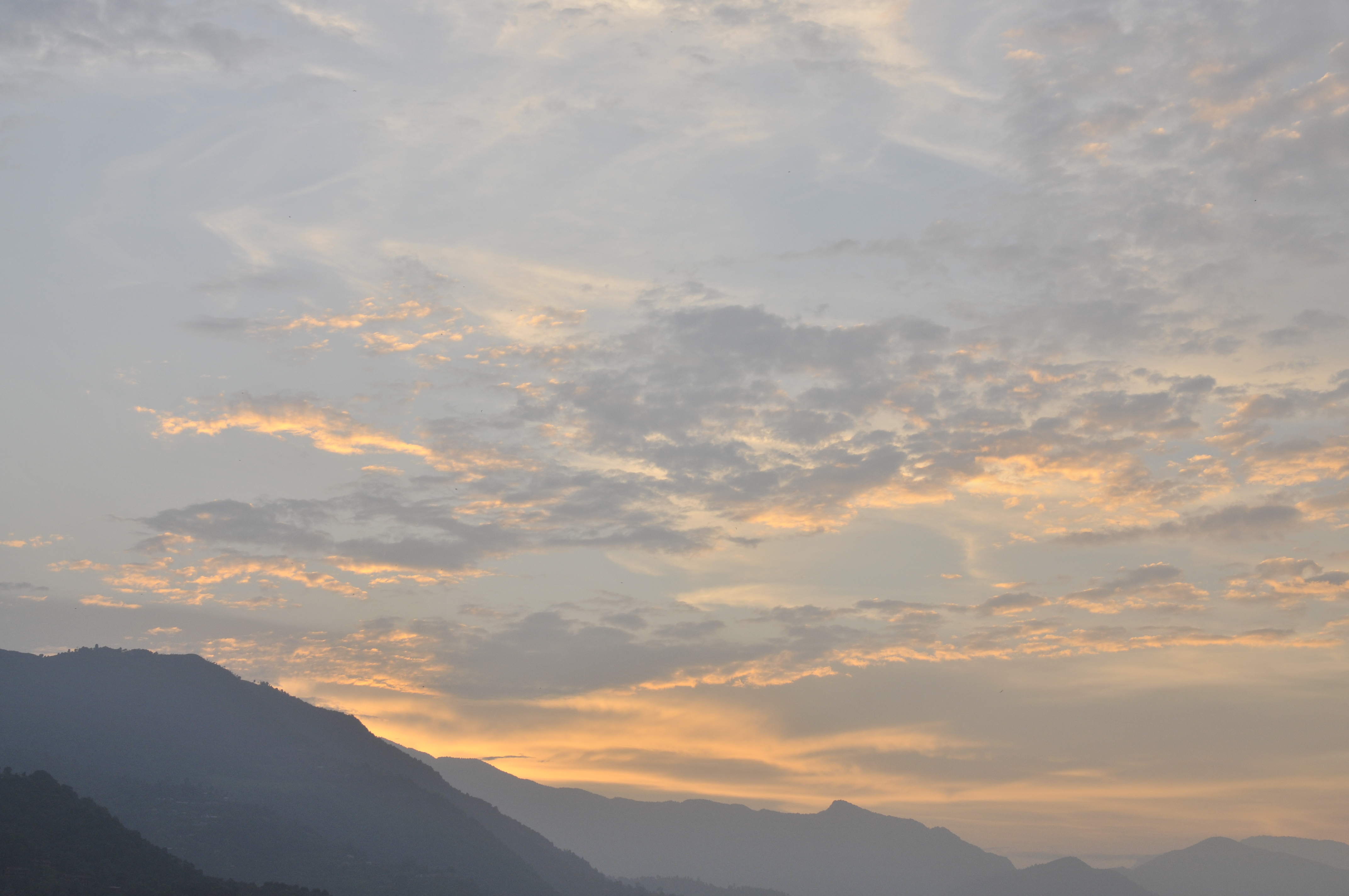
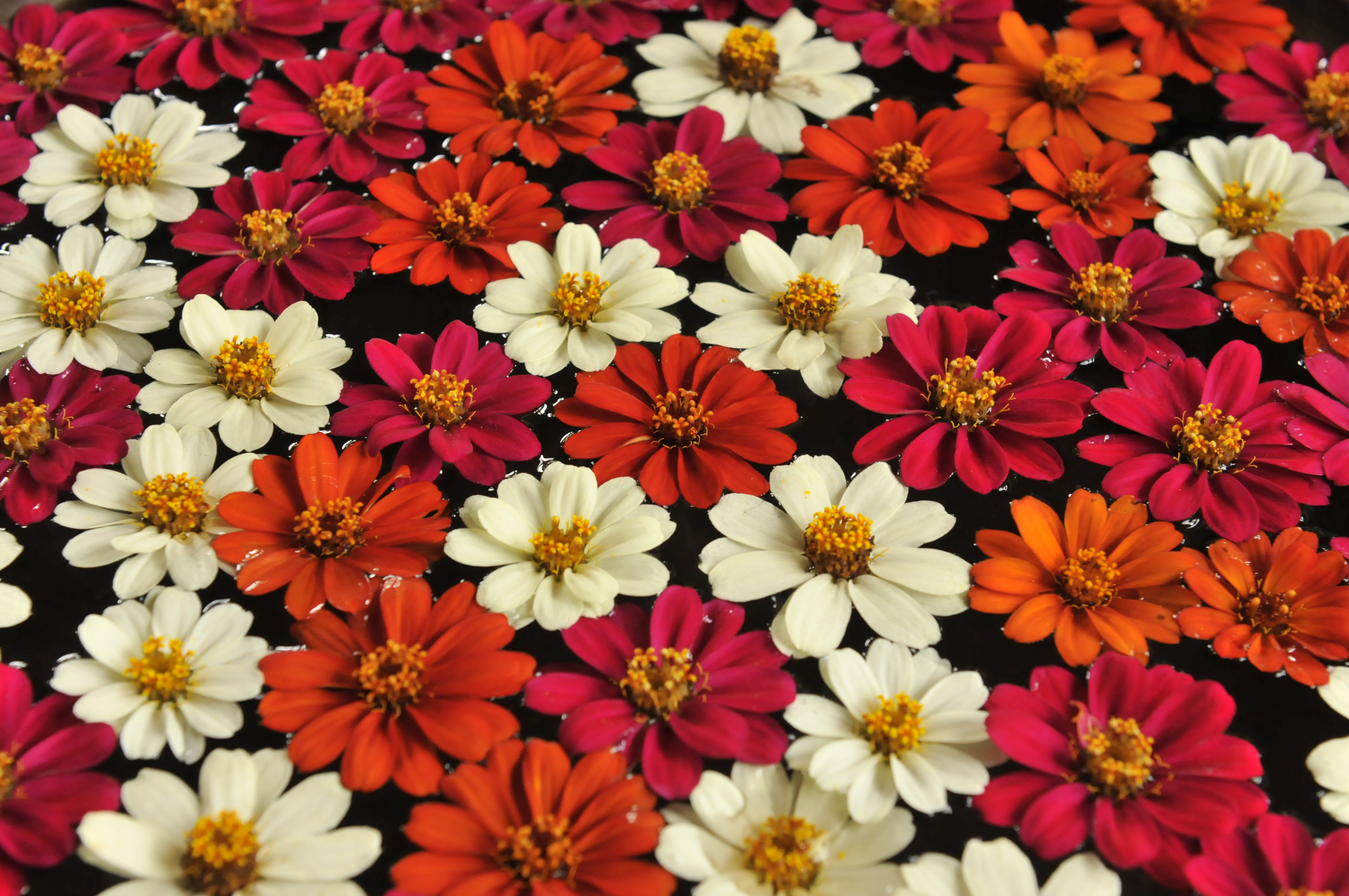
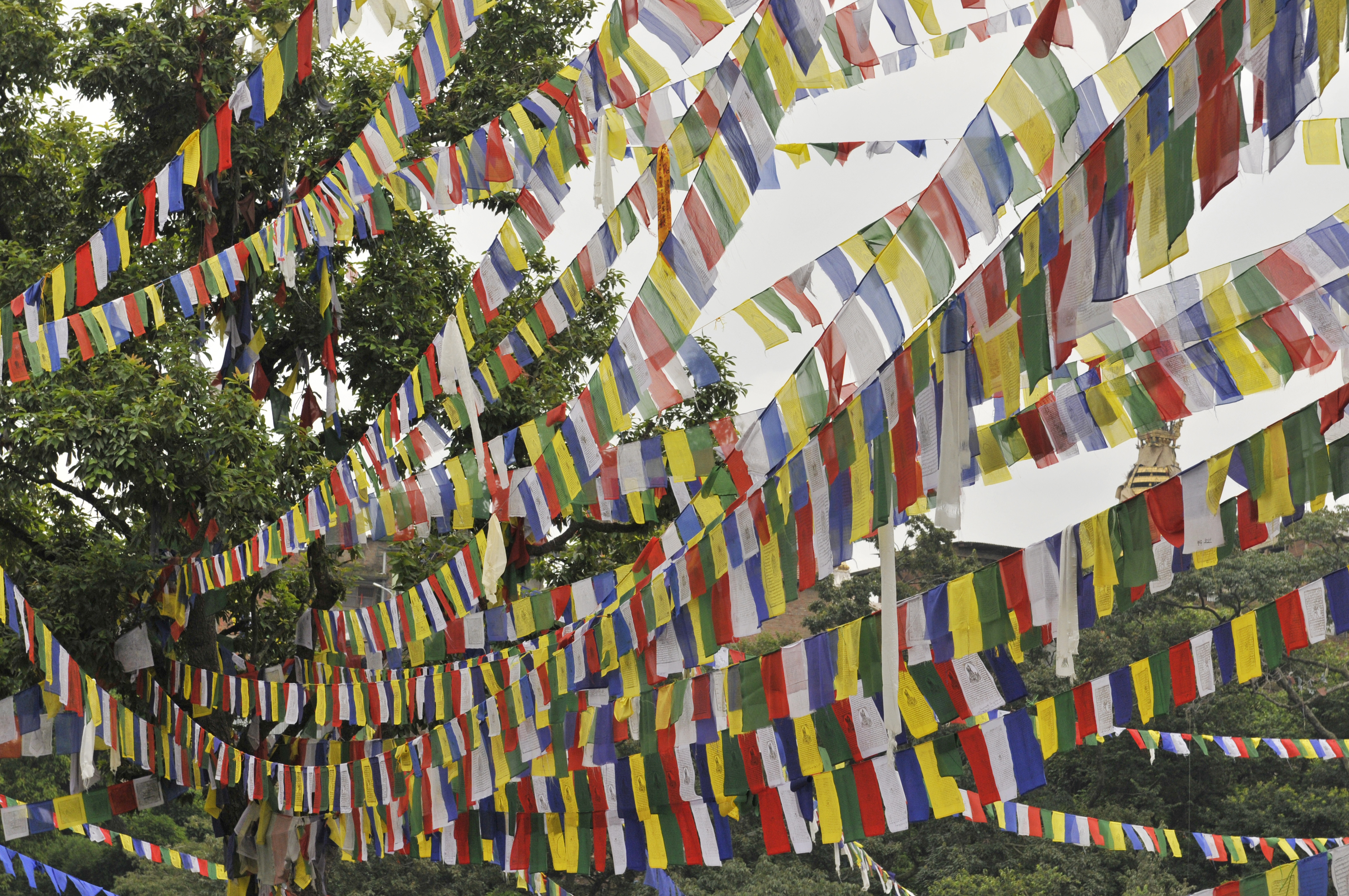
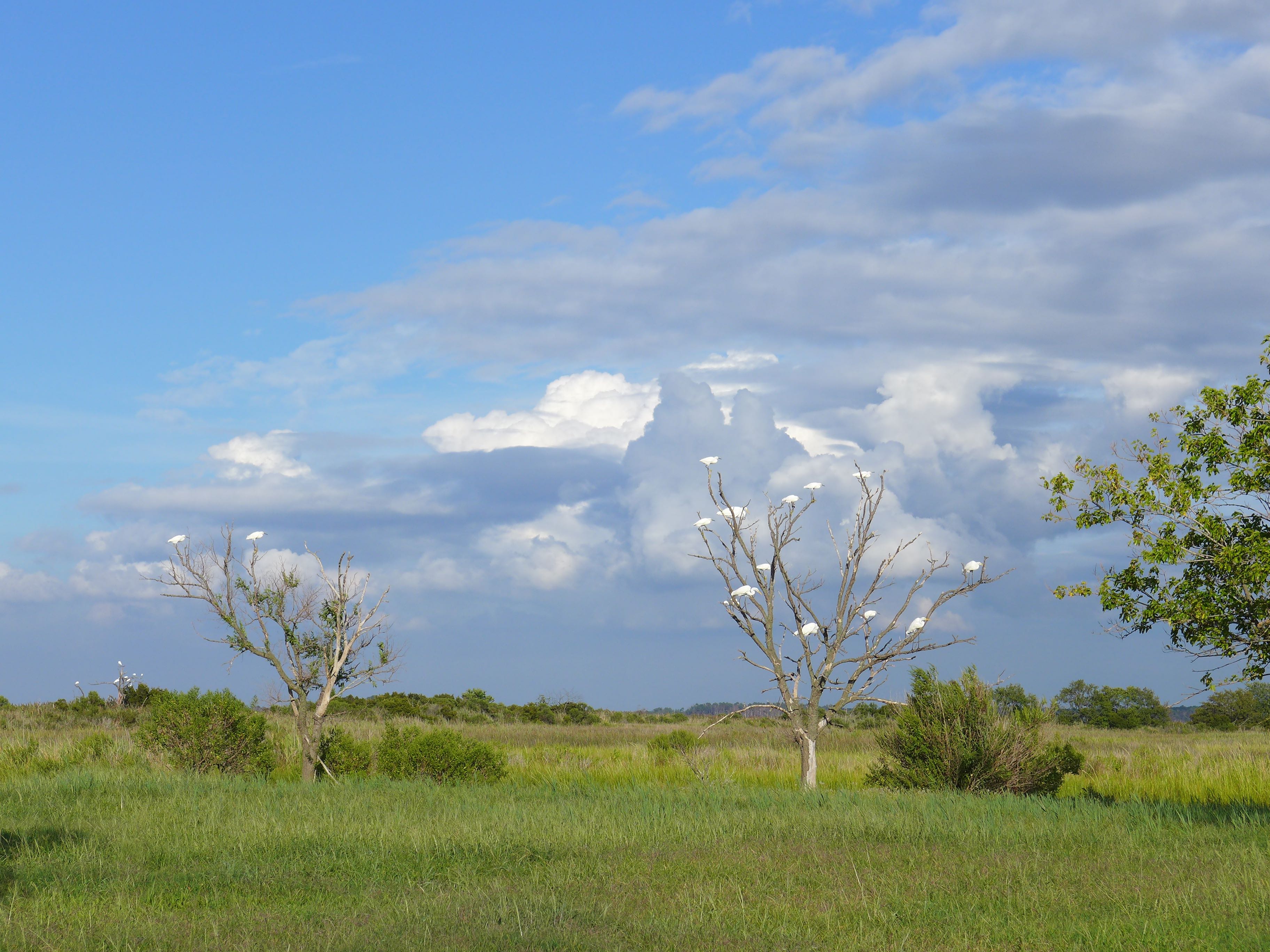
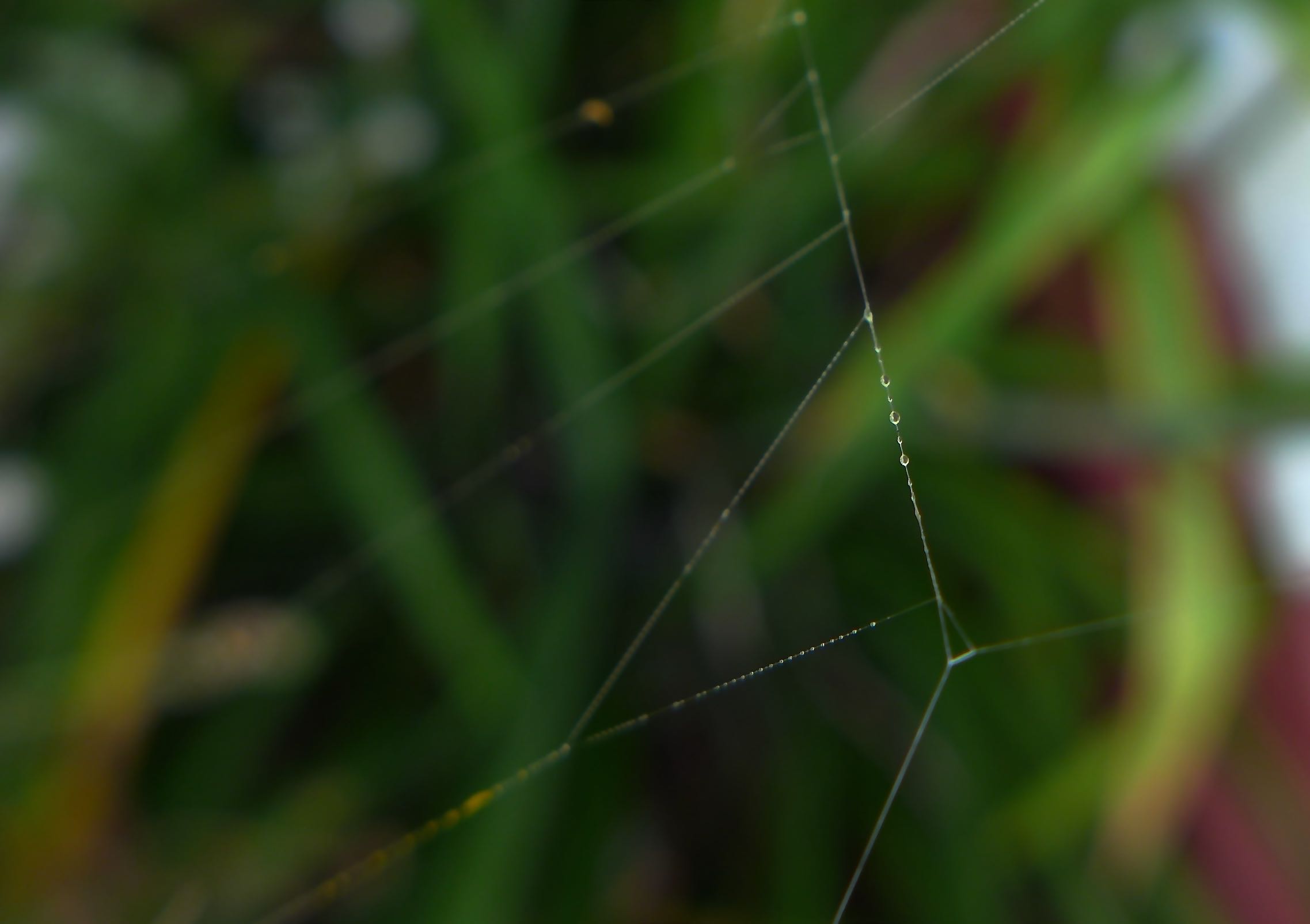
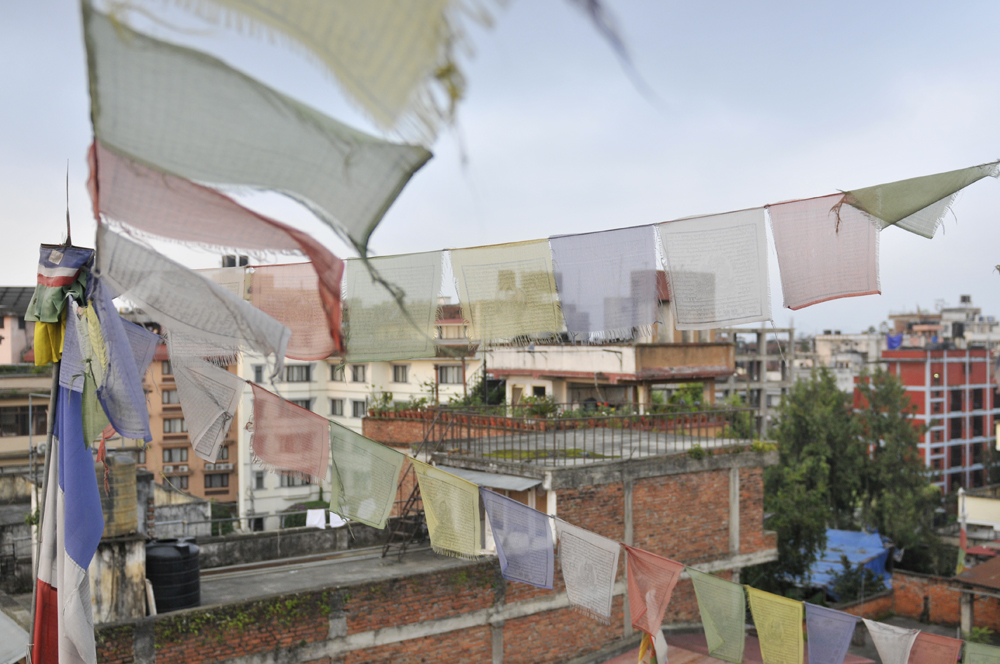
Happy Monday! Hopefully you had a nice labor day weekend. Kate spent her holiday at the beach with the family doing all kinds of summer stuff.  I spent it alone in Nepal and while there were no grills and swimming pools, I still managed to have a nice time 🙂  Enjoy this September’s Seasoned View.  You can download any or all of these images to use as  backgrounds and screensavers for your computer, phone or tablet.  Simply click on the link below each photo then right click on the photo and save it to your device.

_DSC5292Click for Pokhara.

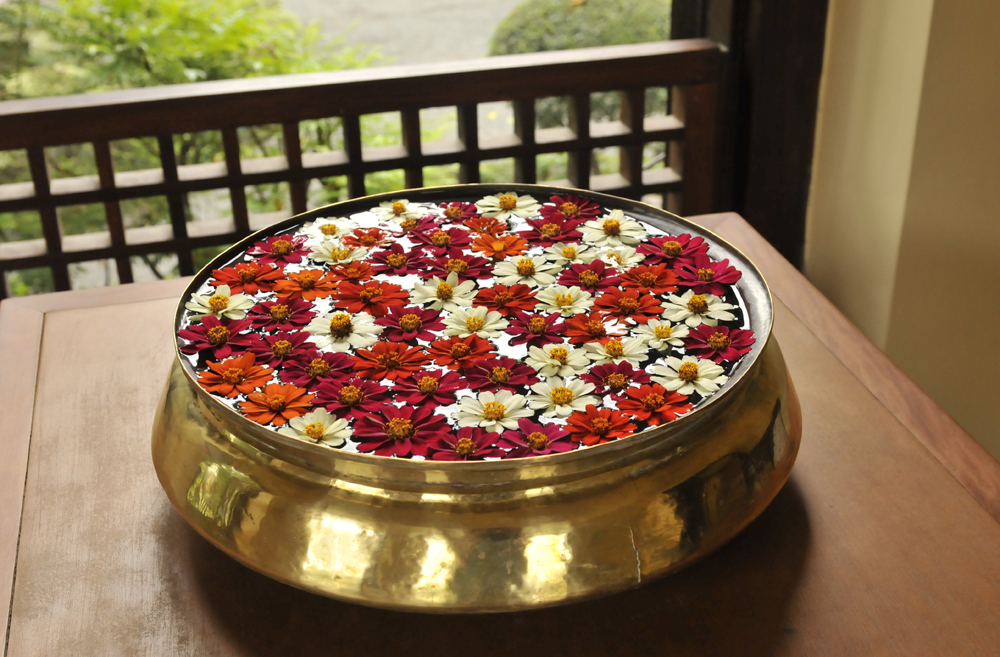
_DSC4180Click for floating flowers.

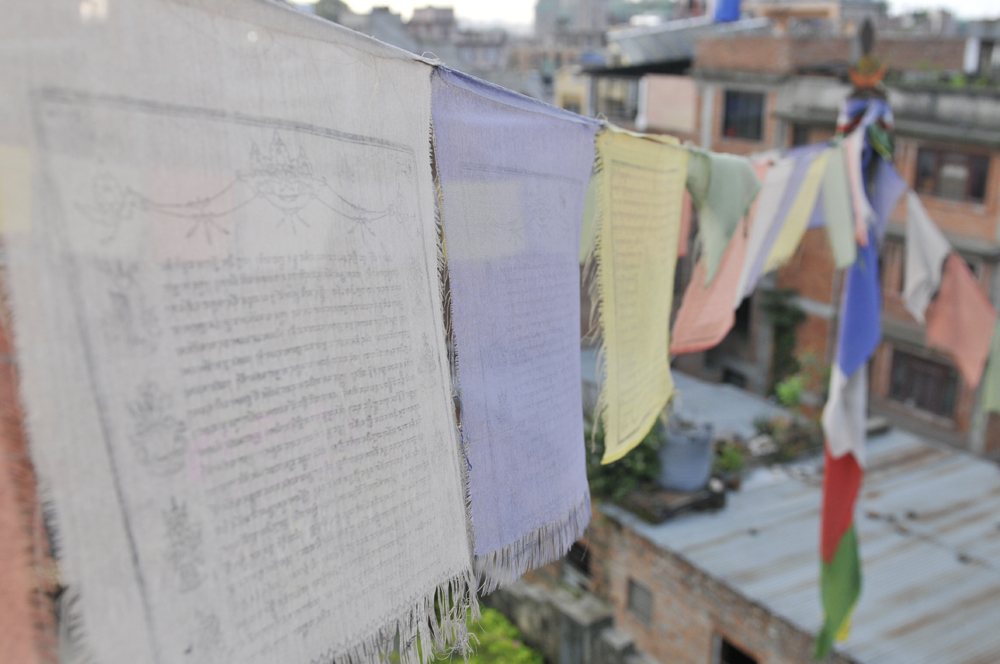
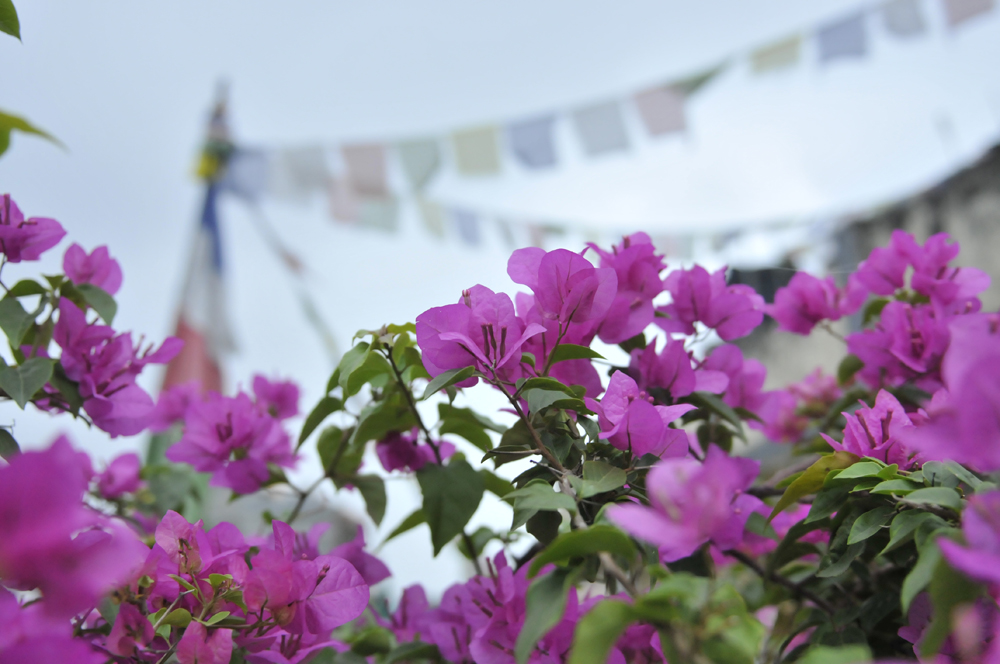
_DSC4526 Click for prayer flags.

liveseasoned_summer2015_beachviewClick for egrets.

liveseasoned_beachview3Click for web.

liveseasoned_summer2015_beach20159Click for gulls.

If you’re off of work today, enjoy it! If not, we hear ya 😉

Gardens of Nepal

liveseasoned_fall_nepal gardens6

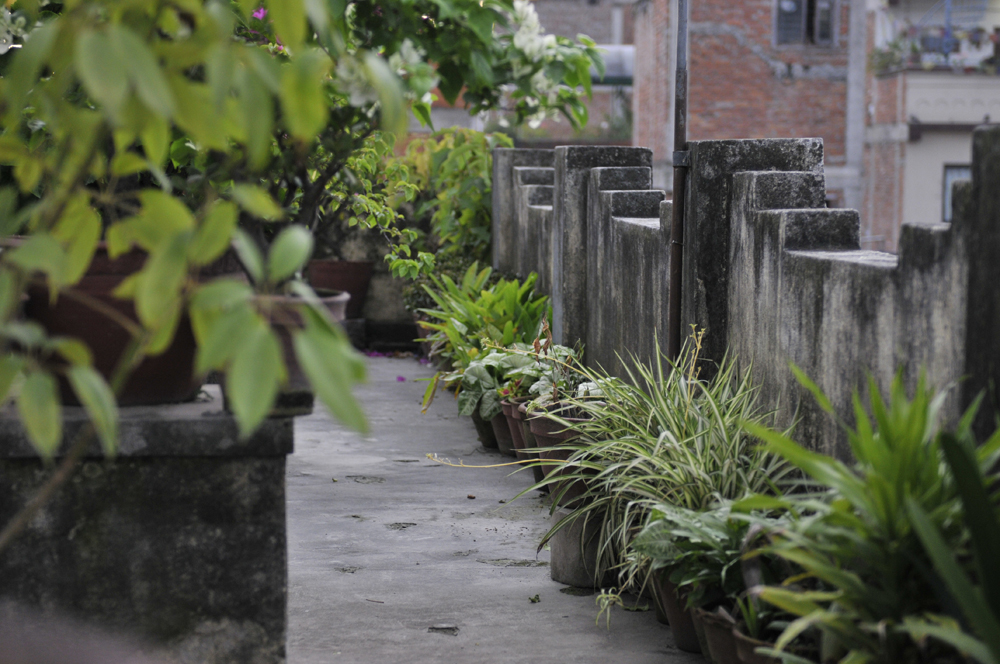
Namaste from Nepal!  I arrived in busy Kathmandu on Tuesday afternoon at which point I found a cozy little guesthouse in thamel and promptly went to sleep.  I was so worn out from thirty-six hours of travel that I needed a long nap.  I ended up sleeping from 6p.m. on Tuesday until 4 a.m. on Wednesday morning.  When I woke up, I decided to go up to the rooftop garden to read until the sun came up.  Later in the afternoon, I ended up wandering into another lovely garden that I enjoyed so much I spent four hours there.

liveseasoned_fall_nepal gardens7

liveseasoned_fall_nepal gardens4

liveseasoned_fall_nepal gardens3

liveseasoned_fall_nepal gardens8

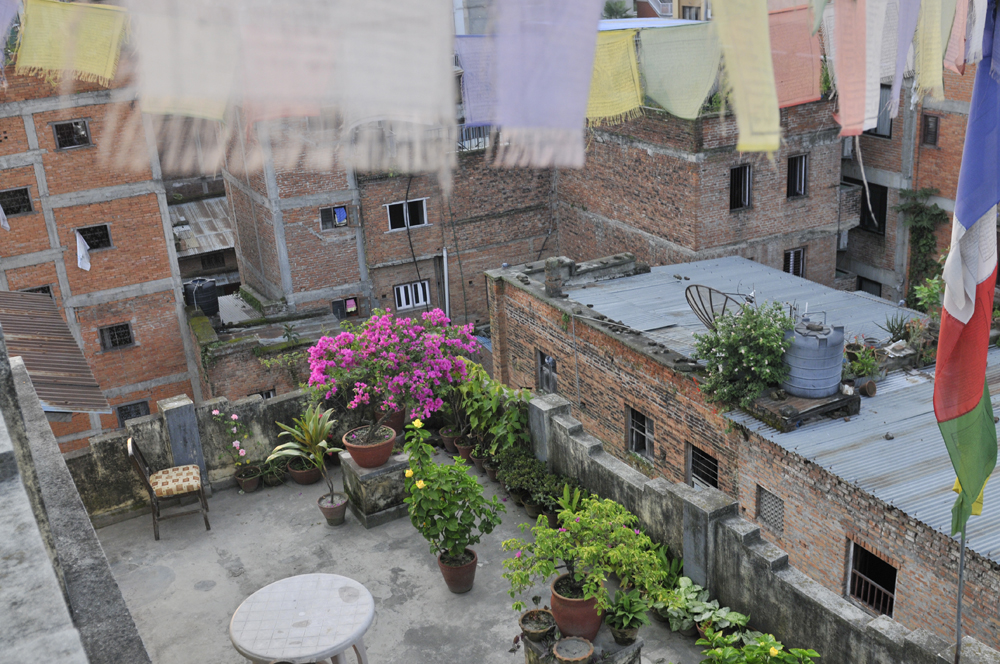
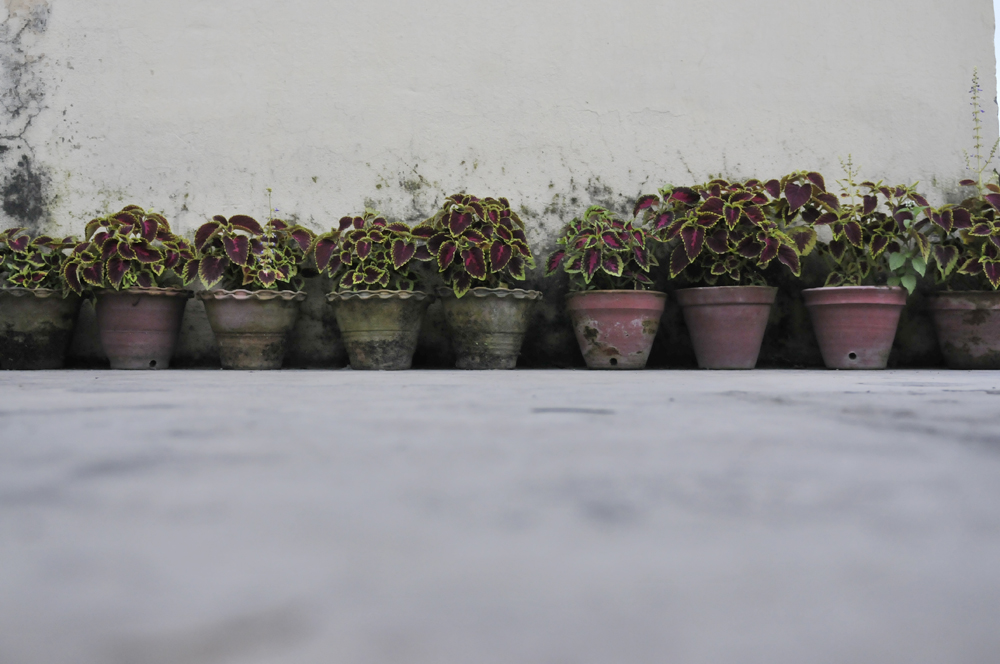
The rooftop garden at my guesthouse is so quaint and beautiful that I had to share it here today.  It is the perfect representation of so many small rooftop gardens all over the city of Kathmandu.  While there is currently a broader initiative to promote vegetable rooftop gardening in Kathmandu, it is already widely popular to cover roofs with potted plants of all varieties.  I most often see jade, spider, and coleus plants with a bunch of other beauties sprinkled in.  I admire the simplicity of the rooftop garden.  Nothing too fancy just a whole lot of potted plants.  I love how my guesthouse rooftop garden was arranged by type of plant.  That is something I probably would not have done.  I’m always mixing and matching plant types on shelves and windowsills, but now I think I’m doing it all wrong. What do you think?

liveseasoned_fall_nepal gardens

liveseasoned_fall_nepal gardens5

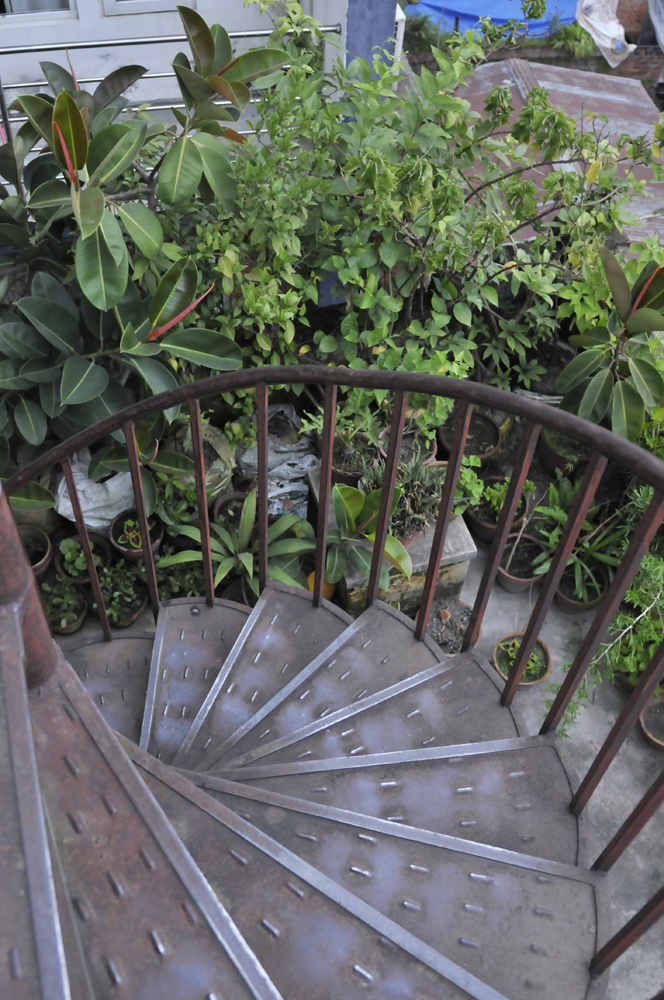
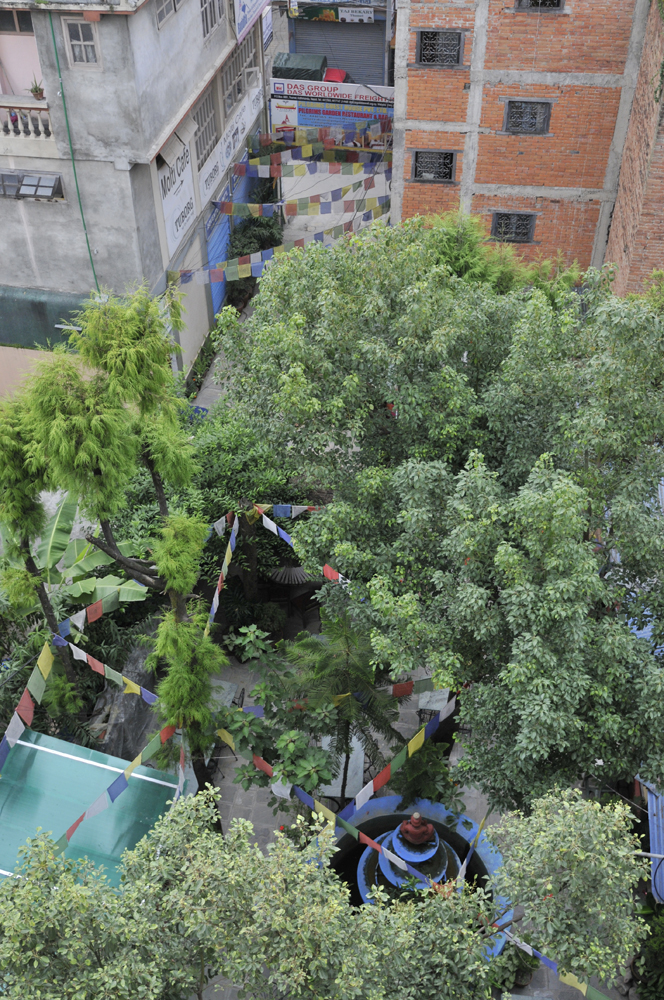
The view looking down from the roof at the courtyard isn’t too bad either, right?  I couldn’t have been more lucky with my choice of guesthouse this time around.  If you’re staying in Kathmandu, I highly recommend Pilgrims. Don’t be afraid to haggle on the price either, I shaved a few bucks off of each night.

liveseasoned_fall_nepal gardens2

After watching the sunrise and having breakfast, I took yet another nap.  I woke up around lunchtime ready to explore Kathmandu by foot.  I decided not to take a map since I giggle at tourists squinting at their paper maps in the sun and the last thing I want to be is a hypocrite, but really, Kathmandu is a fast paced city and there is no time or space on the sidewalk to be looking at fine print.  Instead of relying on a map, I made sure to be extra observant about where I was going, when I was turning or crossing streets, and any major landmarks or buildings that seemed unique and memorable.  After a couple hours of wandering around, I conveniently ended up near the border of thamel again.  Just as I heard my belly growling and felt my feet aching, I passed a small sign that said, Garden of Dreams.  There was no other hint at what might be beyond the ten foot wall so I figured what’s there to lose and I wandered through the small gate and into an oasis.

liveseasoned_fall_nepal gardens23

liveseasoned_fall_nepal gardens22

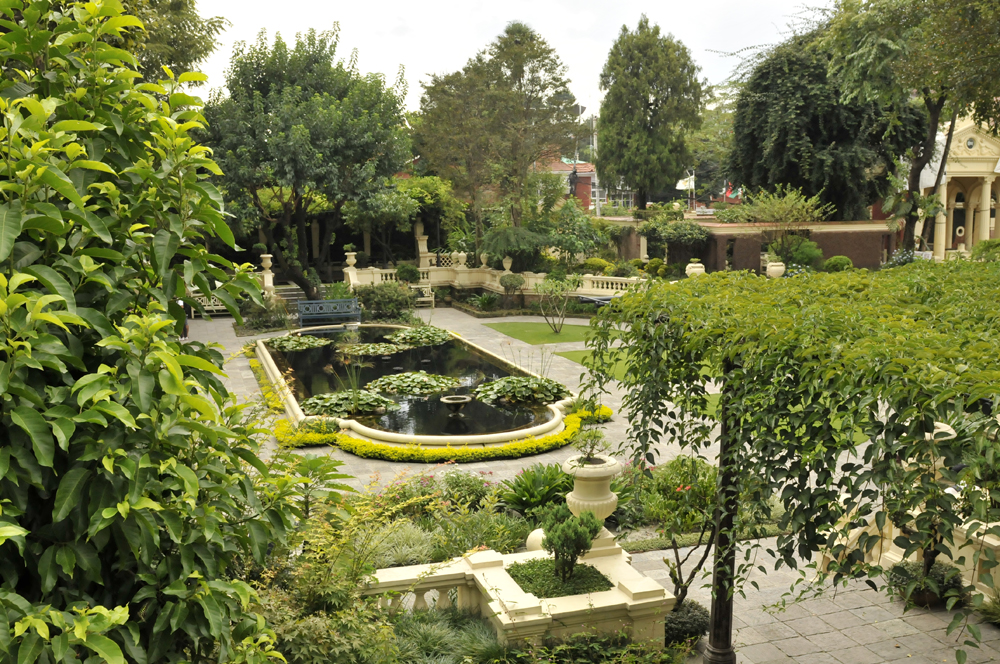
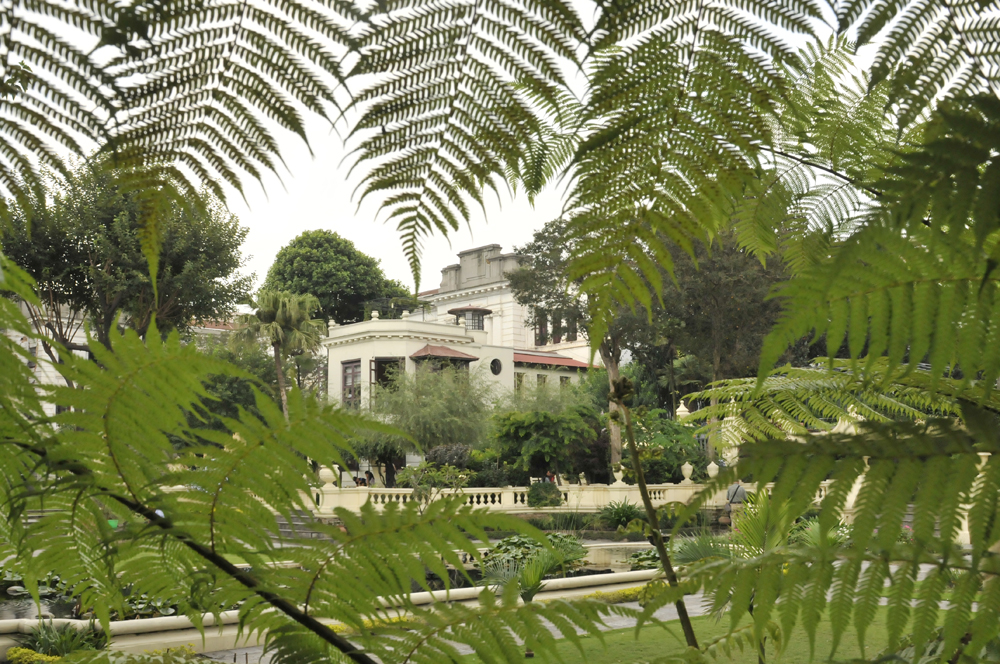
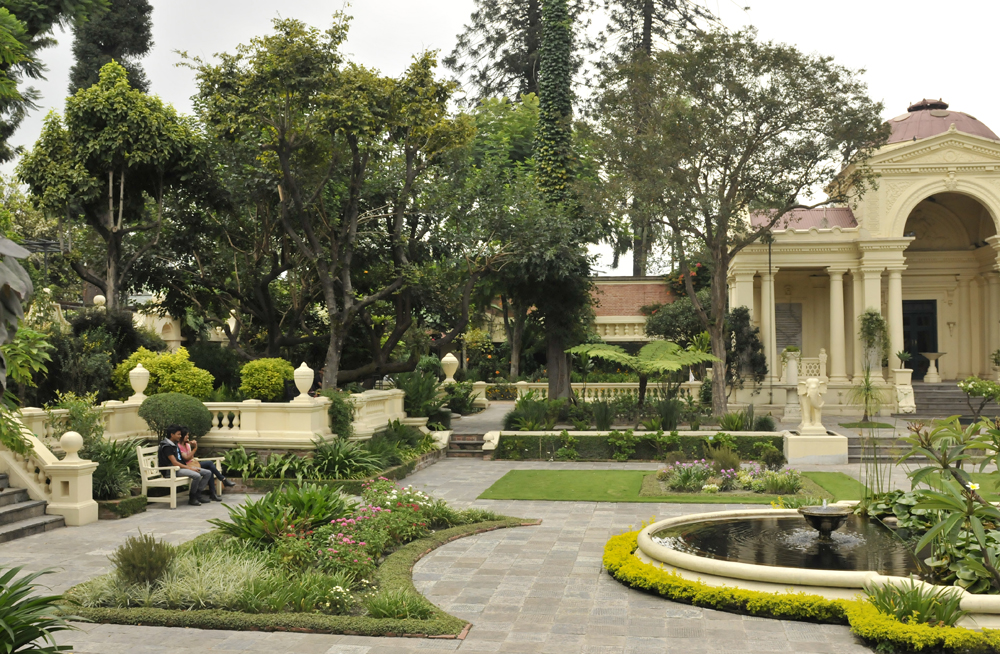
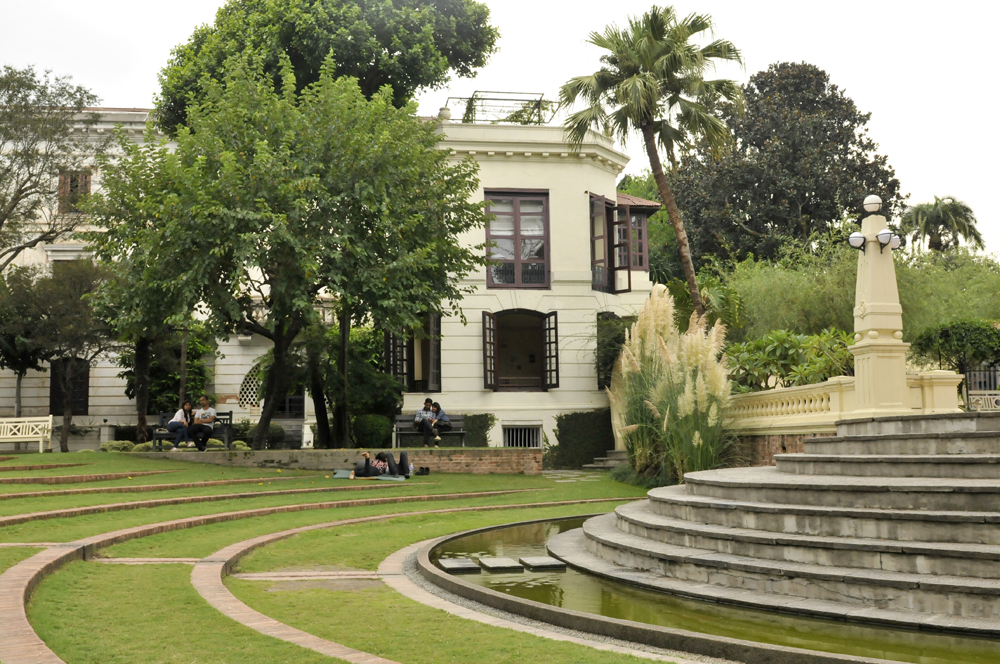
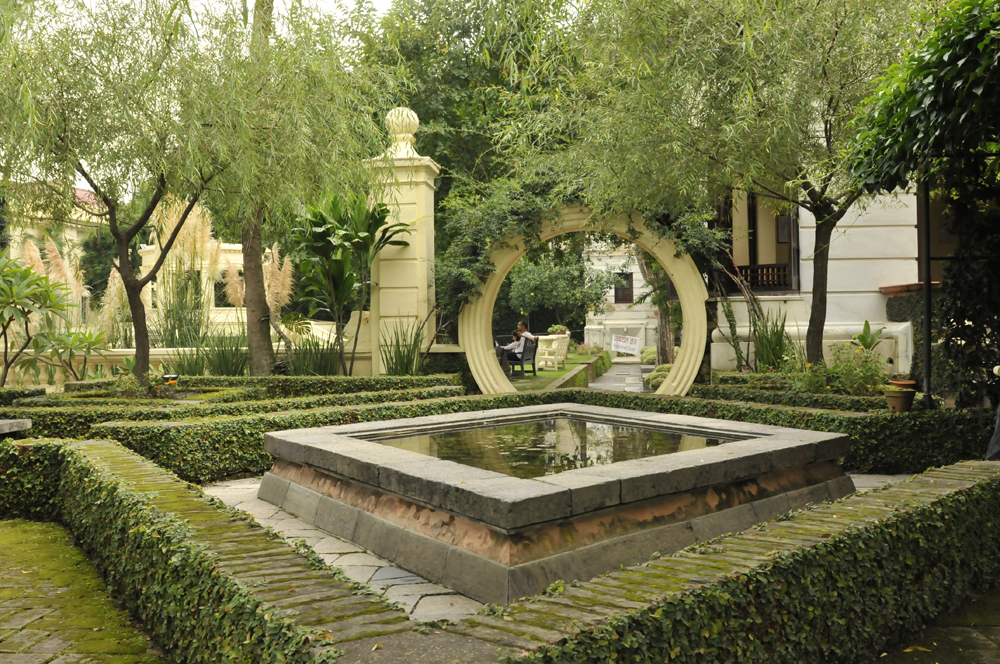
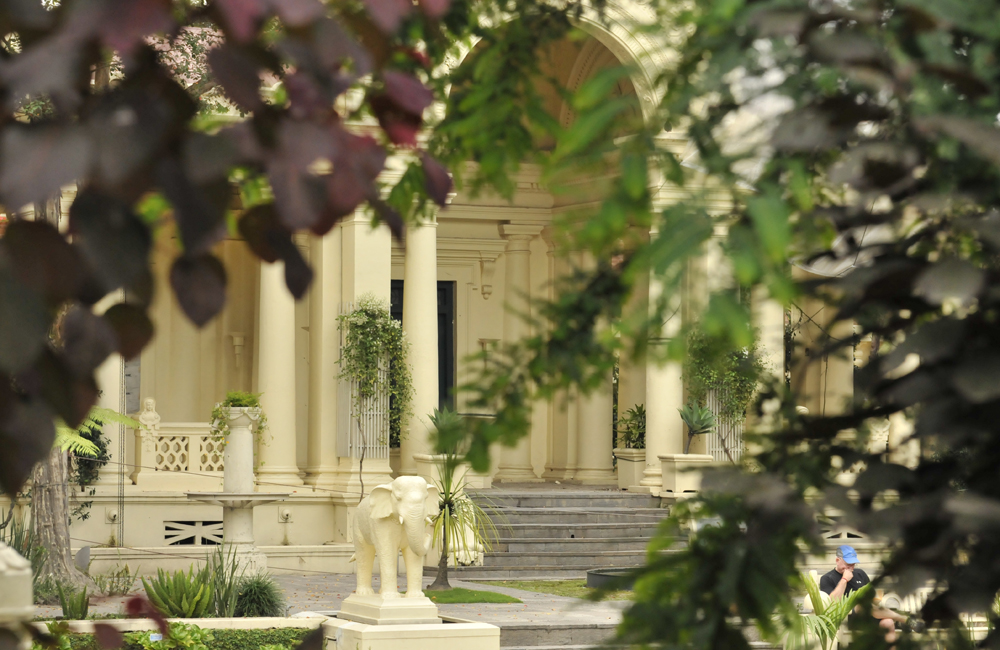
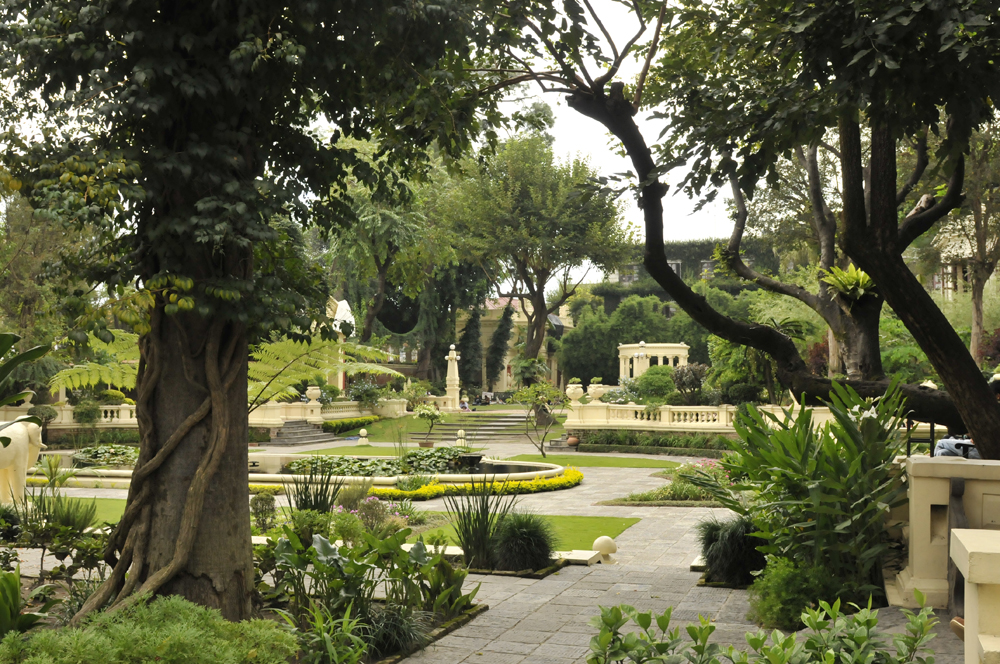
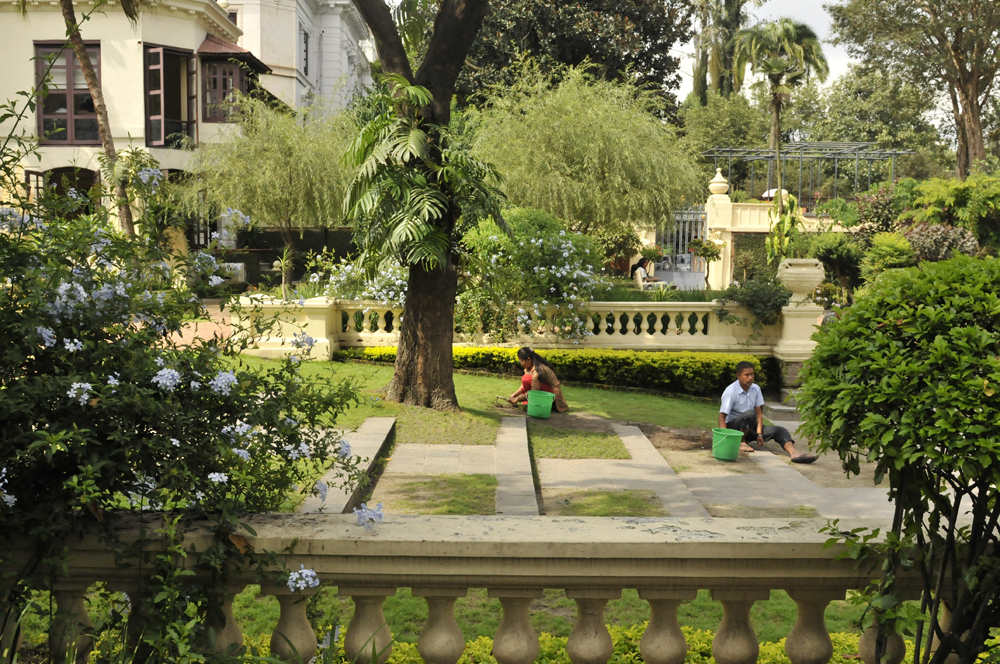
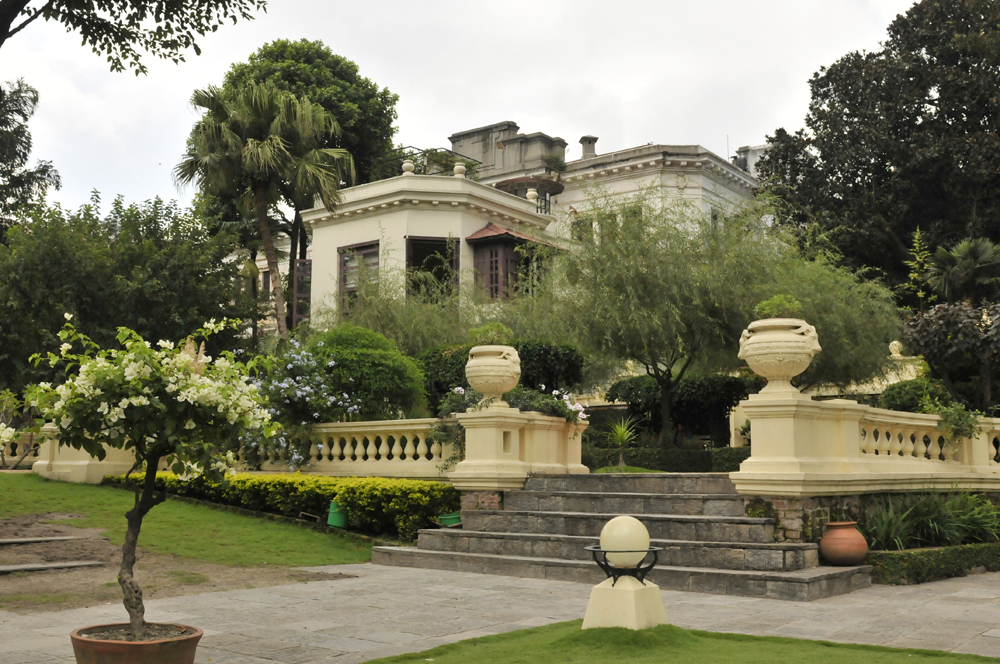
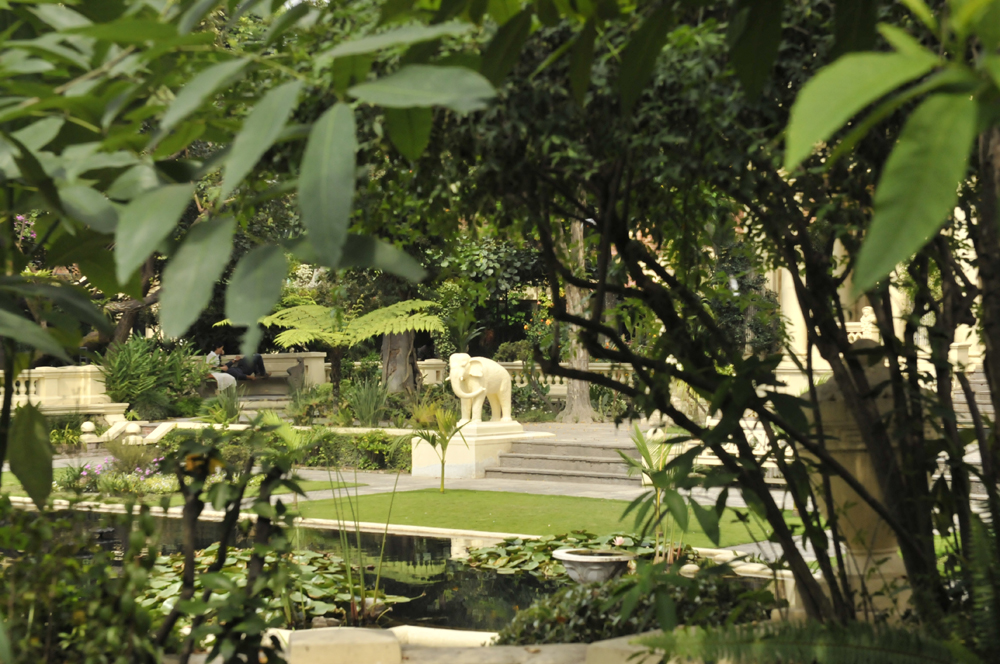
After paying a small entrance fee of 200 rupees ($2), I was granted access to a beautiful neo-classical garden that spans over 74,000 square feet.  The Garden of Dreams was also known as The Garden of Six Seasons, but I must admit, if it was named Kathmandu Botanical Gardens or something similar I would have passed right by.  There is something enchanting about a mysterious high-walled garden sitting right in the middle of crazy Kathmandu, with a name like Garden of Dreams, that encourages the passerby to stop and explore.

liveseasoned_fall_nepal gardens16

liveseasoned_fall_nepal gardens11

liveseasoned_fall_nepal gardens12

The Garden of Dreams sits across the street from the former Royal Palace and was originally thought up by Field Marshall Kaiser Shumsher Jung Bahadur Rana in the 1920s.  (Imagine trying to remember that name at a cocktail party.)  Apparently upon completion, the Garden of Six Seasons (as it was known then) was considered one of the most sophisticated private gardens of that time, which surprises me none at all.  Traditionally Nepal has six seasons: spring, early summer, late summer monsoon season, early autumn, late autumn and winter.  The garden was designed by Kishore Narshingh, a prominent architect who designed and constructed Singha Durbar (a massive palace) in 1907.  In the 1920s, the Garden of Six Seasons had six pavilions, numerous fountains and sunken pools, verandas, pergolas, urns and birdhouses. He erected six impressive pavilions, each dedicated to one of the six seasons of Nepal.  Today, only half of the original garden and three pavilions are in existence, but the renovations pay homage to the beautiful garden of the past.

liveseasoned_fall_nepal gardens15

liveseasoned_fall_nepal gardens14

liveseasoned_fall_nepal gardens13

liveseasoned_fall_nepal gardens17

It was interesting to learn that the Garden of Dreams was restored in cooperation with Austrian Government in the early 21st century.  Inside one of the buildings, there is a photo gallery with images of the garden in complete ruins during the nineties and what it looks like today.  It was really neat to see the comparison of what looks like an overgrown jungle to the beautifully manicured lawns of the present.  Several changes have also been made that lend well to transforming the private Garden of Six Seasons into a space that can be utilized by the public for events and leisure.

liveseasoned_fall_nepal gardens19

liveseasoned_fall_nepal gardens18

liveseasoned_fall_nepal gardens20

While the Garden of Dreams boasts itself as a tourist destination, I must admit not one person recommended I visit or even mentioned the gardens to me.  I hadn’t read about it in a guidebook or seen flashy photos of the garden on any brochures or signs and a selfish part of me is glad.  When I first arrived at the garden around 2 p.m. there were only five other people on the grounds.  I loved wandering around taking photos uninhibited by crowds.  As the hours moved on dozens and dozens more people arrived and it overjoyed me to see that all but a couple were native Nepalese.  The Garden of Dreams is their garden and knowing it is affordable, accessible, and actually used by Nepali people made me really happy.  Seeing all the couples and throngs of friends gathered in the gardens that afternoon had me feeling like I was in on a local secret.  I just had to share it with you in hopes that you’ll make it to the Garden of Dreams one day.

liveseasoned_fall_nepal gardens9