I’m piggybacking off of Katie’s Summer Quiche post from 2016. I’ve been such an absentee blogger that I didn’t realize she recently republished it in May. Kudos. I loved that post and the simple idea it offered: recipes can be equations. Once you remember the key ingredients, there’s no need to measure or stick to a page in a book. You can wander through the farmers market or your fridge and come up with something just as delicious.
 Happy Thursday and hello from the other side. Since moving to Seattle a couple of months ago, it seems like I don’t have much time to do anything besides work, eat, and sleep. I’m busy hunting for apartments, shopping for a new bicycle, and getting into the rhythm of a 9-5 job. Over the past two weeks, I started to finally find time to plant flowers at my new place, go grocery shopping, and even buy a new mattress, *gasp*. I also managed to make a couple of quiches and teach my boyfriend my beloved quiche equation.
I never use a recipe when I make quiche and I can’t say I’m ever disappointed with the result. I normally start by picking a meat and cheese and then I daydream about the most complimentary veggie combination. These last two quiches have been great experiments because I’m not only creating them off the cuff, but I’m also teaching my man how to make them too.
The quiche equation is a great introduction to cooking for young, old, and in between. It allows the maker enough flexibility to mess around, but enough structure to feel secure in their creation.
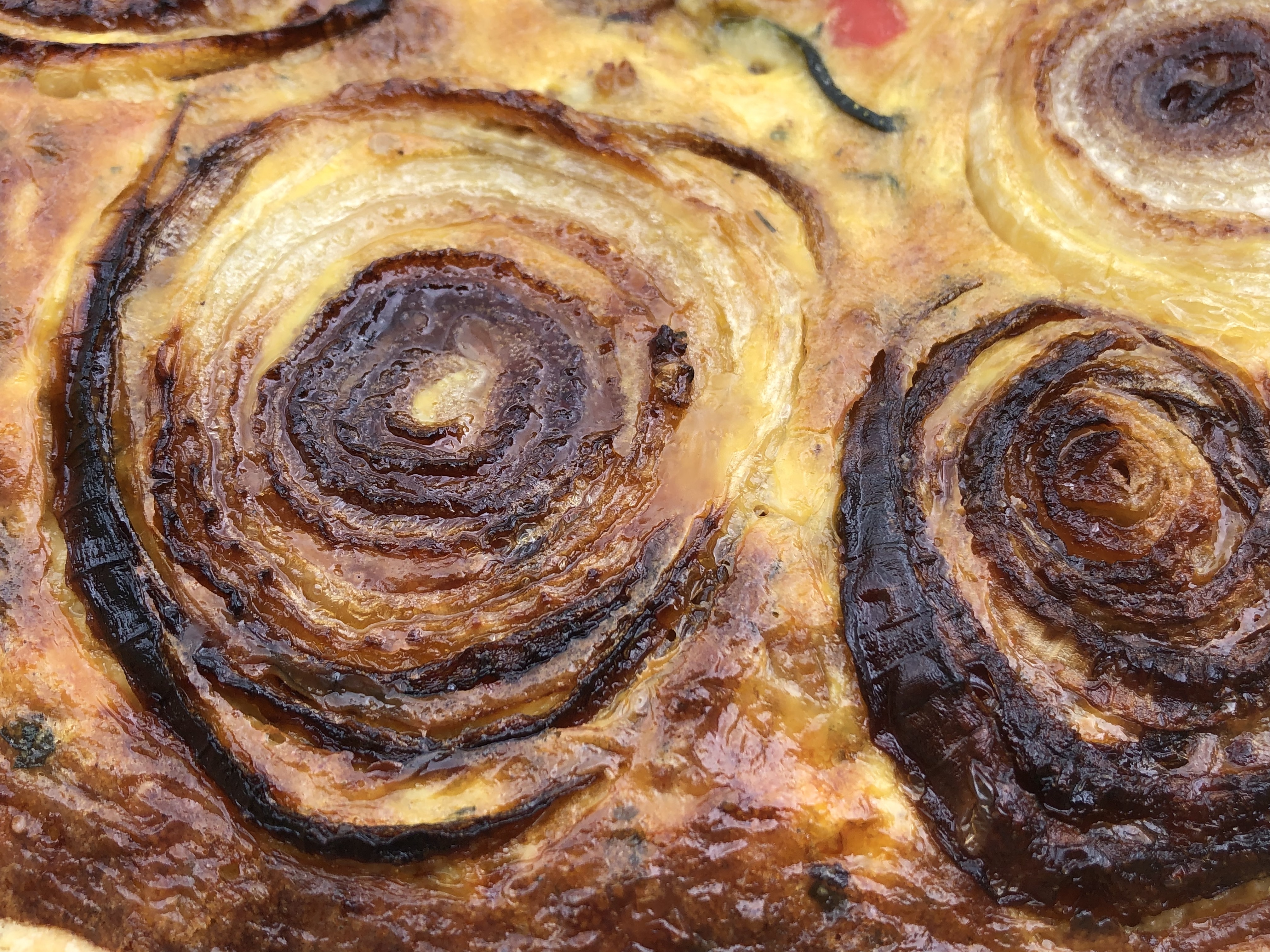
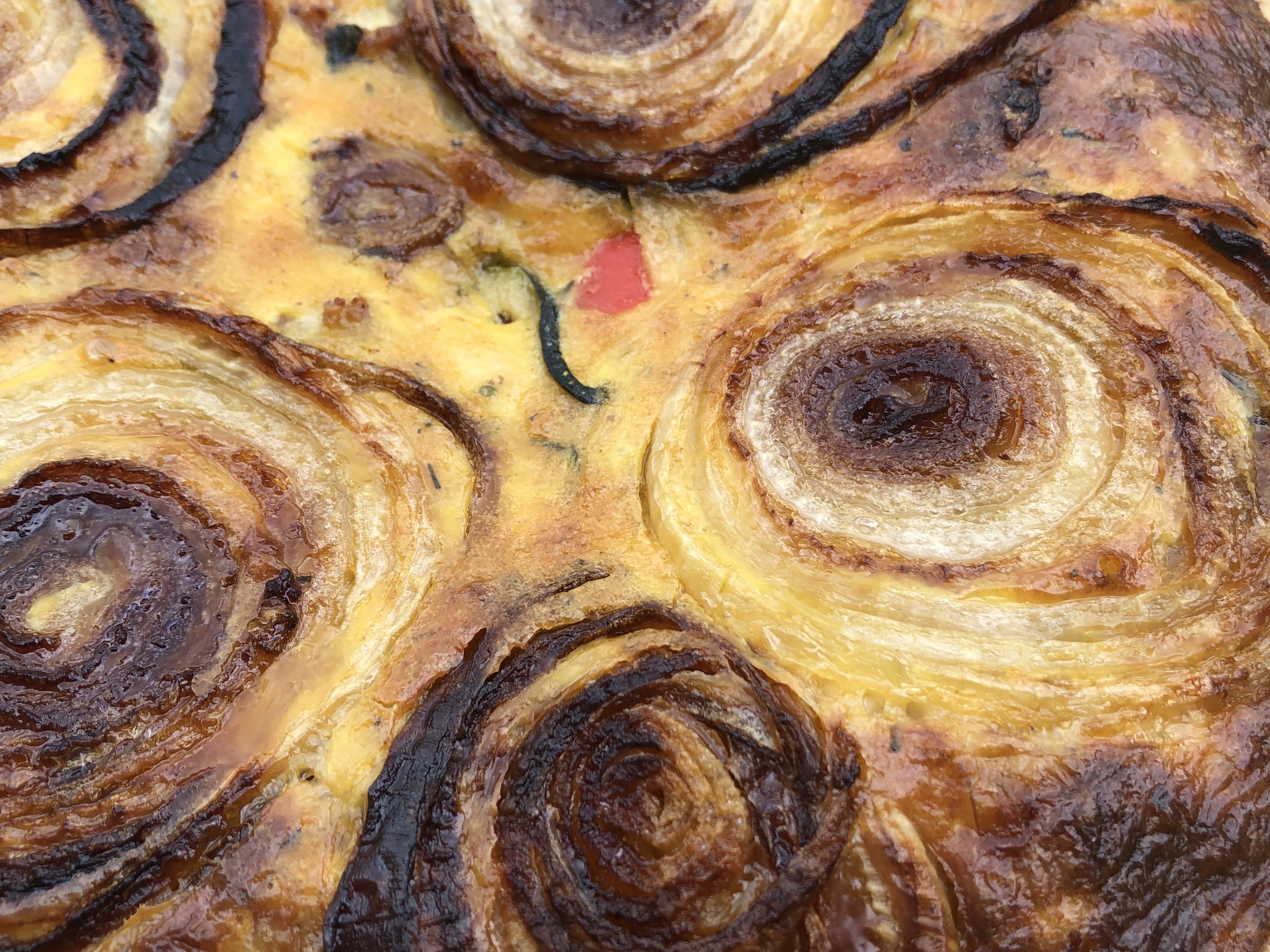
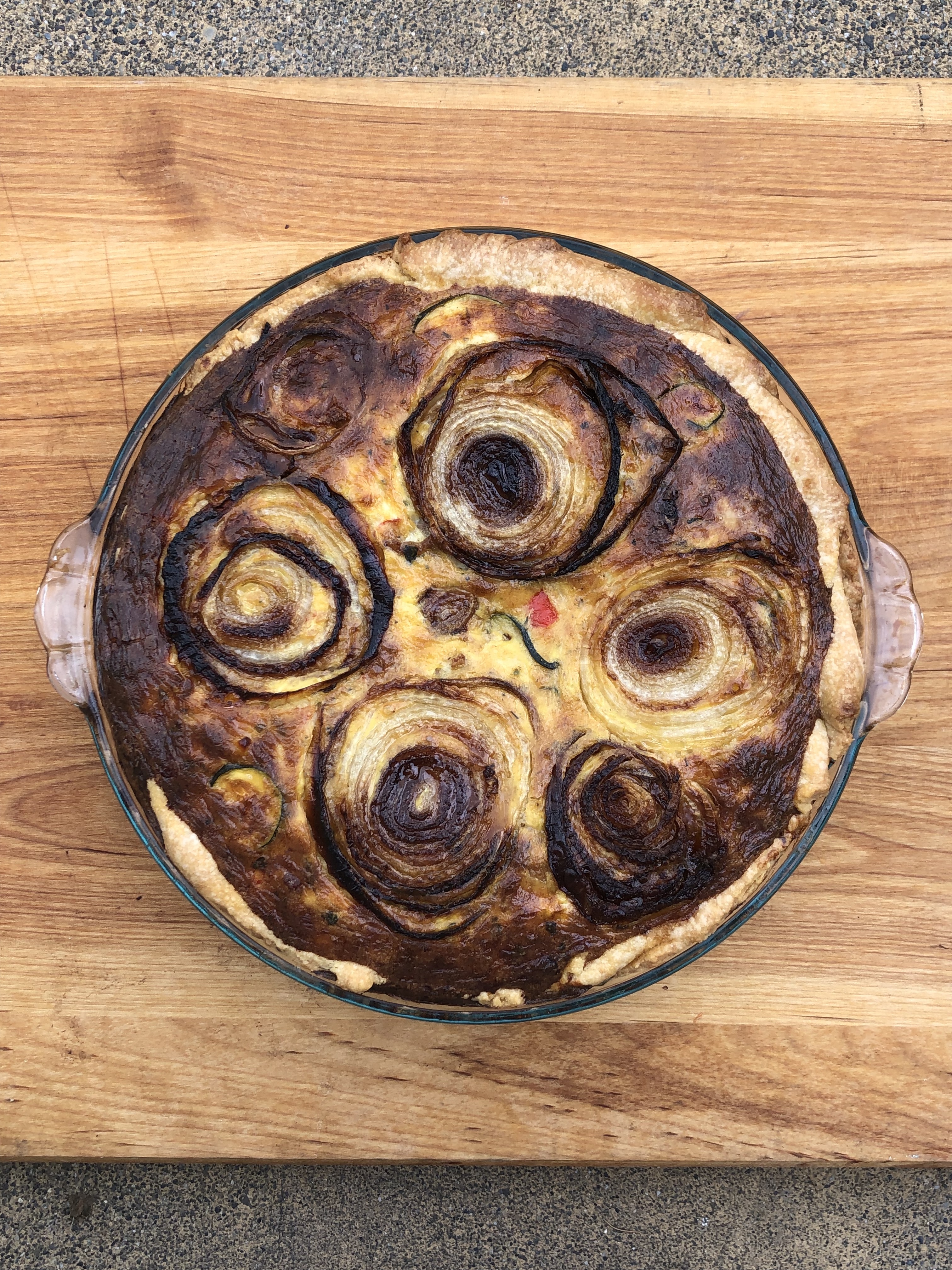
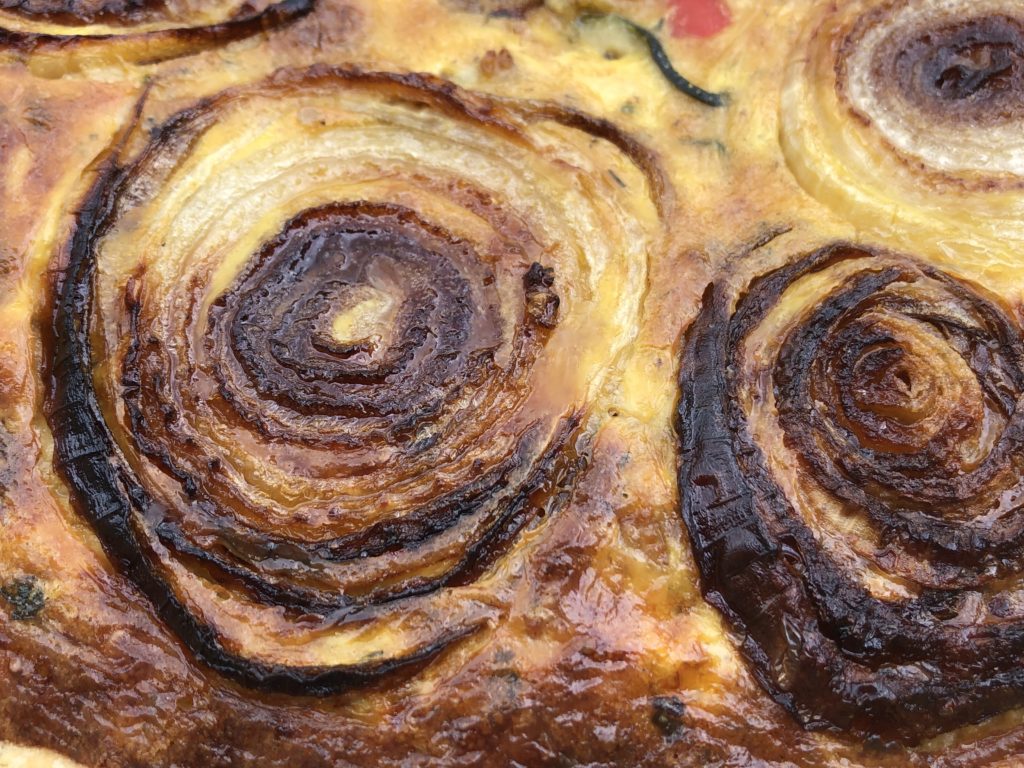
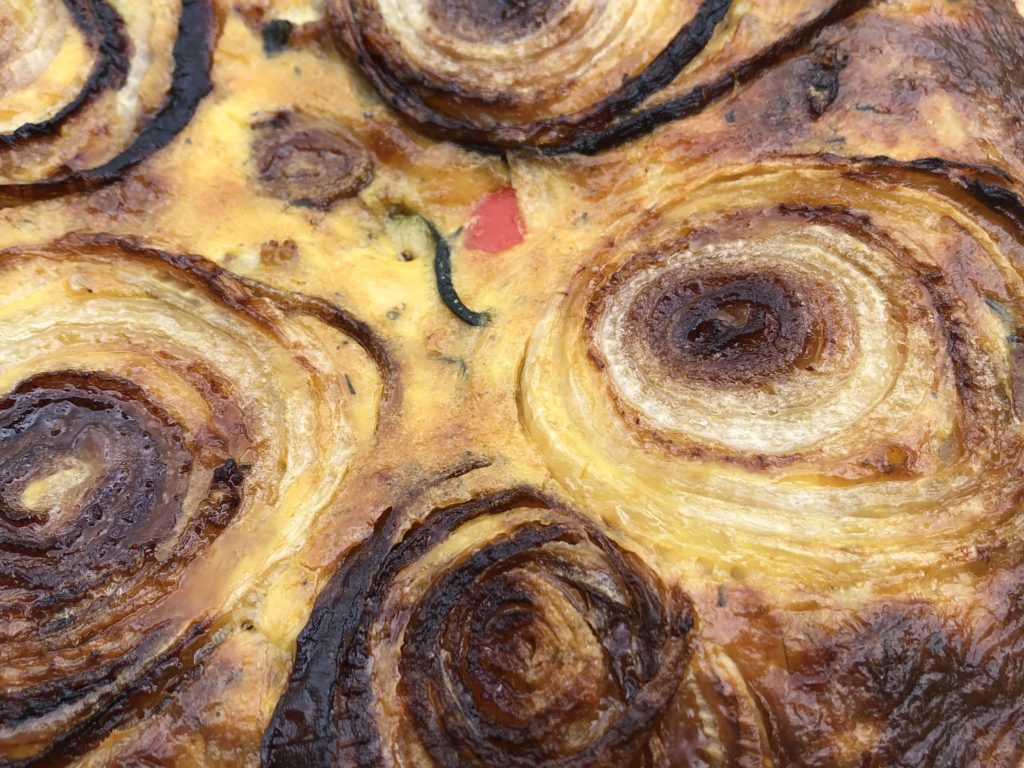
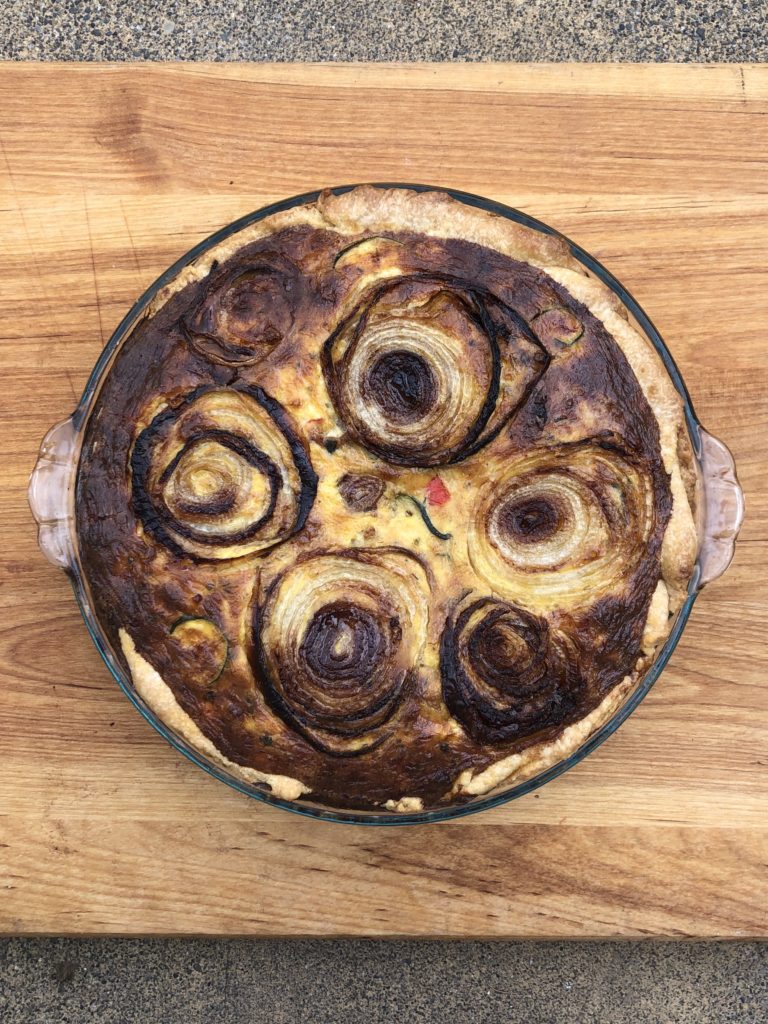
This quiche contains a mild Italian sausage, sharp cheddar cheese, eggs and milk. Mixed in are sauteed peppers, onions, and zucchini seasoned with salt, pepper, and dried Italian herbs. The whole thing is topped with sweet yellow onions that I allowed to brown in olive oil before placing them on top of the quiche. The quiche actually looks a lot browner in the photos than in real life. The crispy browned onions add the perfect punch of flavor up front and really shine alongside the cheddar cheese, yum
The Quiche Equation
- pie crust. I always use store bought.
- egg & milk mixture. I use anywhere from 4 or 6 eggs whisked with 3/4 to a cup of whole milk. Like Kate, it’s always an estimate. I’ve never measured and never had a mishap.
- cheese. I use about a 1/2-3/4 cup of grated cheese. Again, I never measure it, I just eye it up and toss it in. Normally I use sharp cheddar. Sometimes gouda, sometimes a mixture of parmesan and others. Really it’s whatever I have on hand or what calls to me in the Trader Joe’s cheese aisle.
- seasoning. I add a pinch or two of salt to the egg and milk mixture. Otherwise, I season my cooked veggies to taste, a little salt and whatever other flavors I’m aiming for. If I have fresh parsley, sage, or rosemary I will add one of them to the mix.
- savory ingredients. Like Katie, I always cook my veggies before putting them into the quiche. Most of my quiches involve a sweet onion and some garlic or chives for flavor. I also like some combination of peppers, zuchinni, mushrooms, and asparagus. Of course, I usually end up using bits of whatever I have in the fridge.
- meat (optional). I find myself adding sausage, chorizo, ham, and smoked salmon most often. With the exception of the salmon, I cook and drain the meats before adding them to the quiche mixture.
That’s that. I’ve been making my quiche ingredients the night before, storing them in a bowl in the fridge, putting it all together, and baking it the next day. This makes the whole process feel more manageable to me. I’m usually eating a meal while making it too, which helps my overall happiness level. Enjoy!