Welcome April

On the first Wednesday of every month, you can find us checking in with what’s coming up on the calendar. 

Well, Punxsutawney Phil was not joking this year! March never quite warmed up, did it? As I sat down to write this month’s welcome letter, I thought about how almost nothing has happened in our backyard, but that just means we have so much to look forward to in April!

The snowdrops and winter aconite that I mentioned last month timed their bloom to the first day of spring. Sarah reports that the forsythia and magnolias are blooming in North Carolina.  And we can feel the warmth moving north as our mom’s crocuses bloomed last week in Virginia, while mine started blooming just two days ago in PA. With everything off to a slow start, April will be bursting with flowers. I’m a big proponent of picking flowers and bringing the beauty inside. A vase of cherry blossoms, daffodils, hyacinth, and tulips creates the perfect early spring mix! And if we’re lucky, that will be followed by vases of lilacs and tree peonies.

Continue reading

Moving West!

*This post is probably best read as a drinking game ~ line up the shot glasses and knock one back every time we use the words excited and explore, or anything similar. What can we say, we’re excited (ding ding!).*

liveseasoned_spring2014_boulder_cash_wm

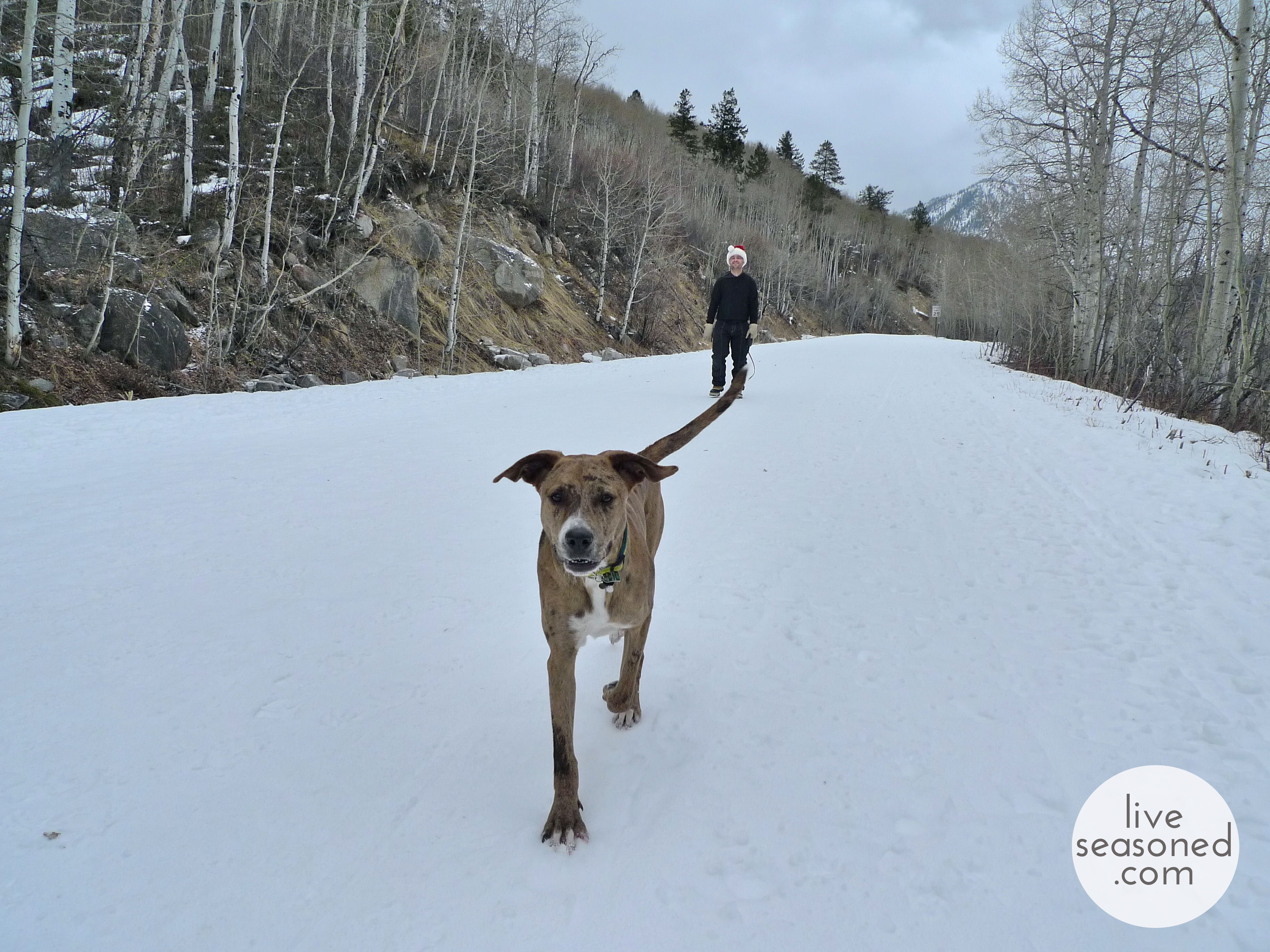
Cash & Calder on Independence Pass, Dec. 2011

We have (ahem) exciting news ~ half of the Seasoned crew is moving west! To Boulder, CO, specifically, and we are jumping at the guns to explore our new digs.

We knew that sooner or later our current posts would be up and it would be time to move. For the longest time we didn’t know where to go, batting around east and west coast ideas, and just dabbling at the thought of planting ourselves in the majestic scenery that is the Rockies. Then, as luck would have it, an opportunity came up for Calder, and we jumped! We’re moving in shifts this summer, with a little bit of back and forth because there’s east-coast-beach-fun that has to happen before we settle out west.

Needless to say, I’ve been researching all things Boulder, trying to learn more about the new place we’re going to call home. I thought it would be fun to share a bit of what I’ve discovered, and if you any suggestions, please share!

  • Perhaps one of the most surprising things to me is that we can expect to have better weather than we’ve experienced living in central PA. The Boulder area folks are quick to point out that they average about 300 sunny days per year. Calder’s first reaction was “that’s excessively sunny,” which still has me laughing; we are so used to the cloudy and overcast days here.
  • In the interest of research, we’ve been looking for movies filmed in Boulder, so far all we have is Catch and Release. The reviews are average, but C and I loved it! Have any other recommendations?
  • Bon Appetit named Boulder America’s #1 Foodiest Town. The sheer quantity of restaurant mentions and food-based blogs that have come up in my online searches for Boulder, suggest there’s something to this. It’s obvious that there’s a lot to explore, and I can’t wait to get out there to start sampling and sharing my experiences. And of course there are a million and one CSAs ~ which to choose?
  • Likewise, there’s  a healthy brewery, distillery, and winery scene. Is there any question that I’m beyond excited to report back?
  • So of course, with sunshine, good eating, good drinking, and good mountains, it’s no surprise that Boulder has won a slew of “happiest/healthiest city” awards in all variations of the phrase.
  • Hiking is going to be a whole new adventure as I learn about Boulder’s grassland ecosystem and the ponderosa pine forests, which are both so different from the humid forests of PA.  Along the same lines, I’ve been researching native plants with the hopes that we’ll eventually have a yard that needs tending.
  • And then there’s the biking. I think this sums it up: they don’t just have bike lanes, they have “bike  routes”, “sharrows”, “multi-use paths”, and underpasses so you don’t have to even intersect with cars. Everything will be done by bike (until we get cold)! When Alex was born, my mom bought a Taga, and I think we’re going to clock a lot of miles on it as we explore.
  • I love a good city guide, especially written by a local, and find myself heading straight for Design Sponge’s guides whenever I’m going to a new place. So of course, I immediately opened their Boulder guide, and am excited to visit their recommendations.
liveseasoned_spring2014_boulder_trees_wm

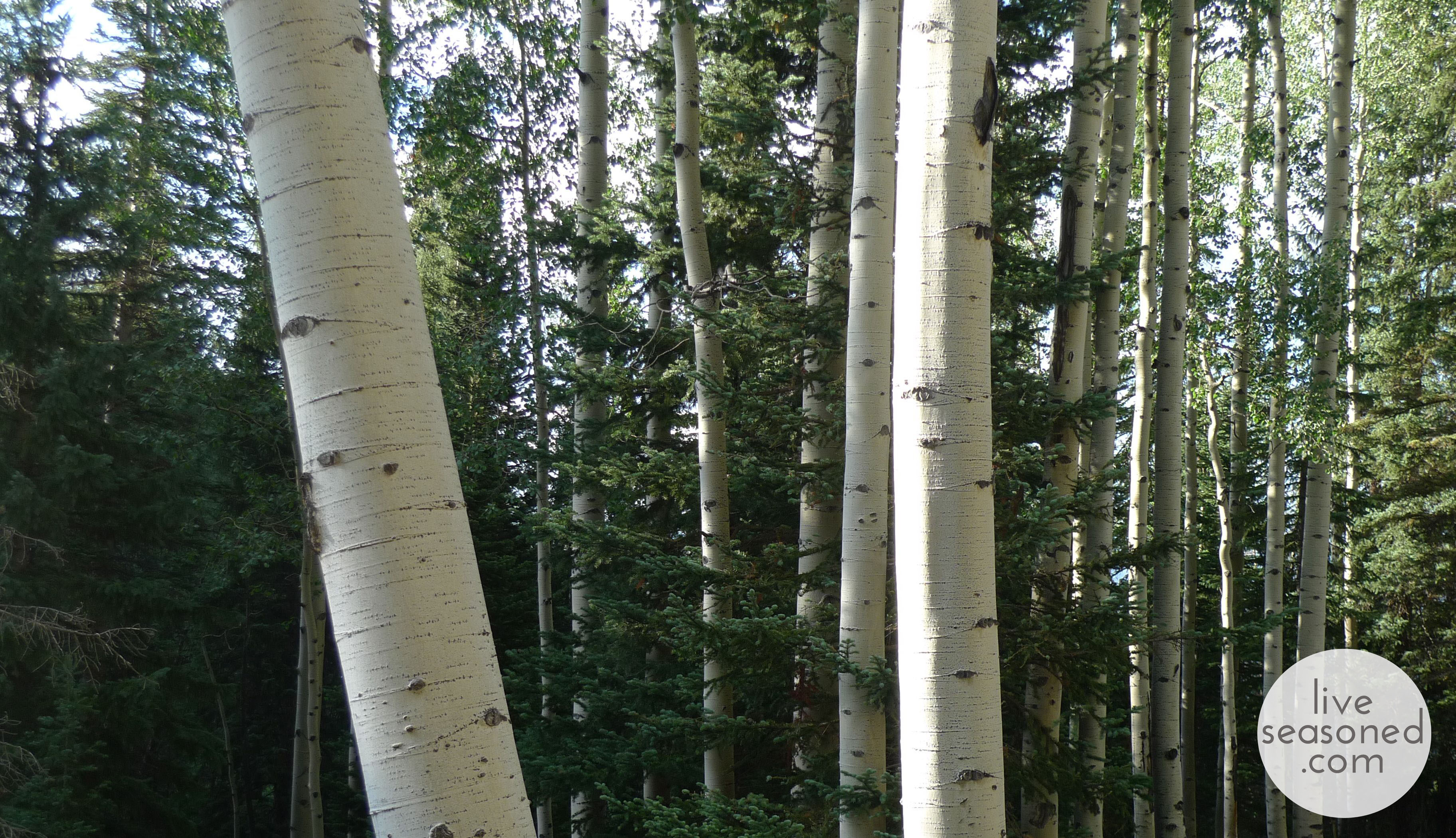
Snowshoeing near Ashcroft, January 2014

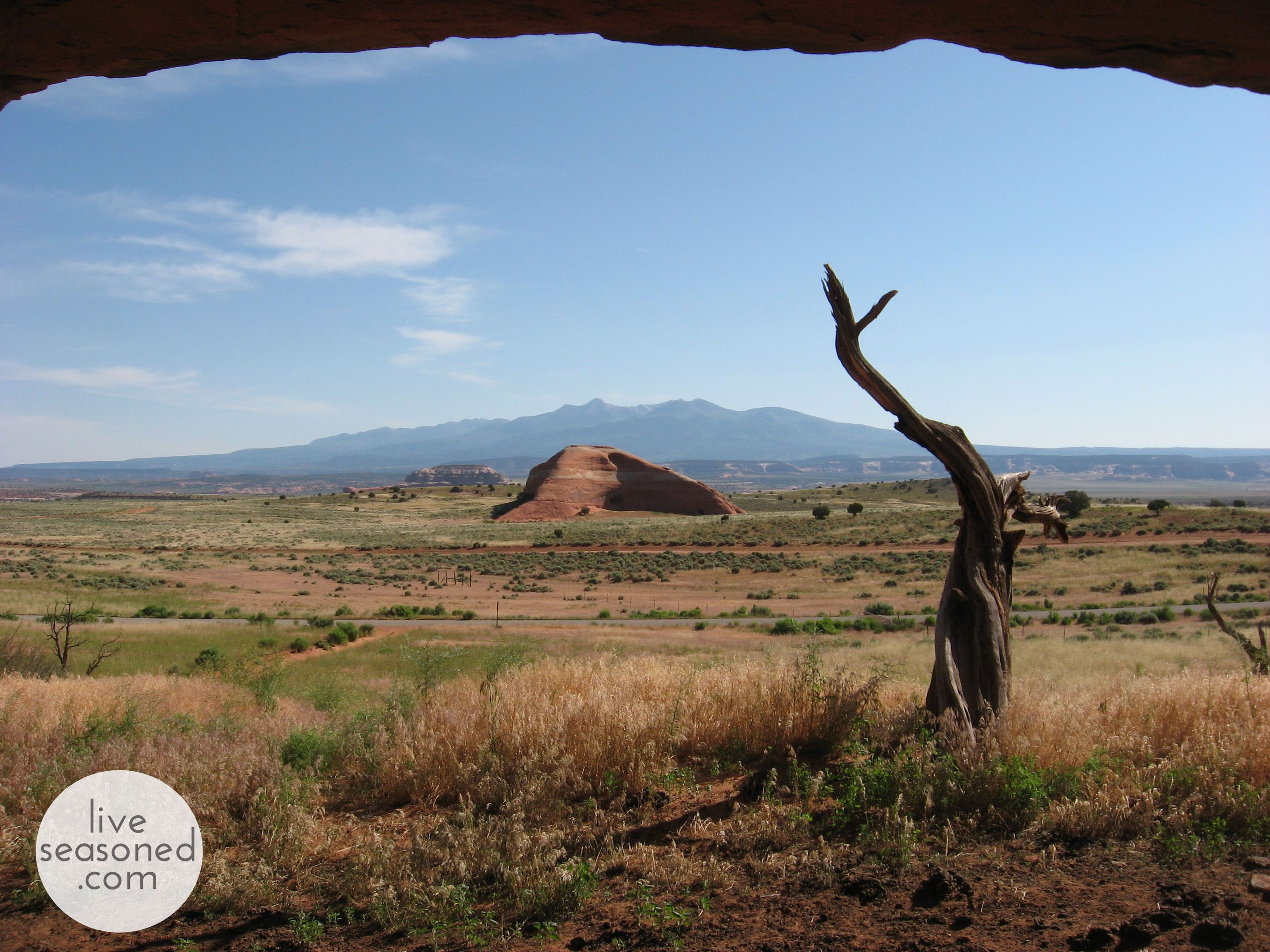
We’ve visited Colorado quite a bit (thus the Colorado photos in this post), and Calder even lived out there for a year in high school, but neither of us have spent much time in the Boulder area. As I said above, we would love recommendations ~ if you’ve been there or live there, give us some tips! 

liveseasoned_spring2014_boulder_scenery_wm

From our road trip in 2008. Can’t wait to go on more photo-taking adventures!

But ugh, as exciting as this is, I still find a lump in my throat when I think about moving so far away from my east coast home and family. My head is a whirlwind of “you only live once” excitement mixed with the homesick blues. {Sarah here: I have that same lump! I also have excessively tapping feet because I can’t wait to plan my visit!} I hope that if anything, our lives will be richer because we already know the east coast up and down, so now we’ll get to explore the big mountains and skies of the west.

Cloud cover map from here.

Early Spring Camping

liveseasoned_spring2014_springbreak16_wm2

Surprise! We had to come back with a one-two punch, because what goes better with a maple syrup festival than camping?!

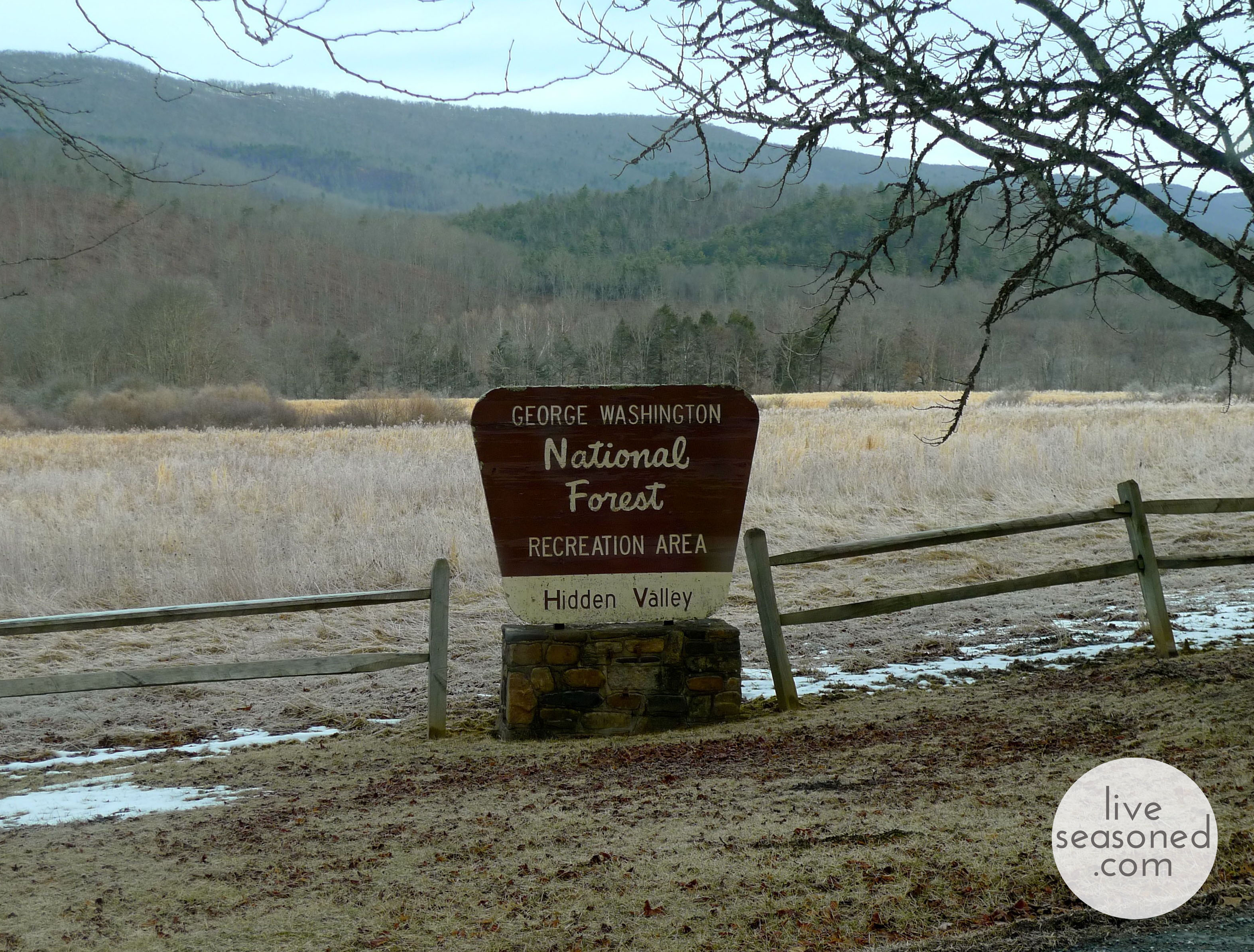
If you haven’t tried it yet, early spring camping can be a lot of fun. During our week-long road trip in early March, we spent almost as much time camping as we did sleeping indoors. Albeit our camping isn’t necessarily roughing it; the back seat of our van folds down into a bed big enough for the three of us (four when Cash curls up for a snooze). These were taken on the first morning in George Washington National Forest, just outside of Warm Springs, VA. 

liveseasoned_spring2014_springbreak13_wm2

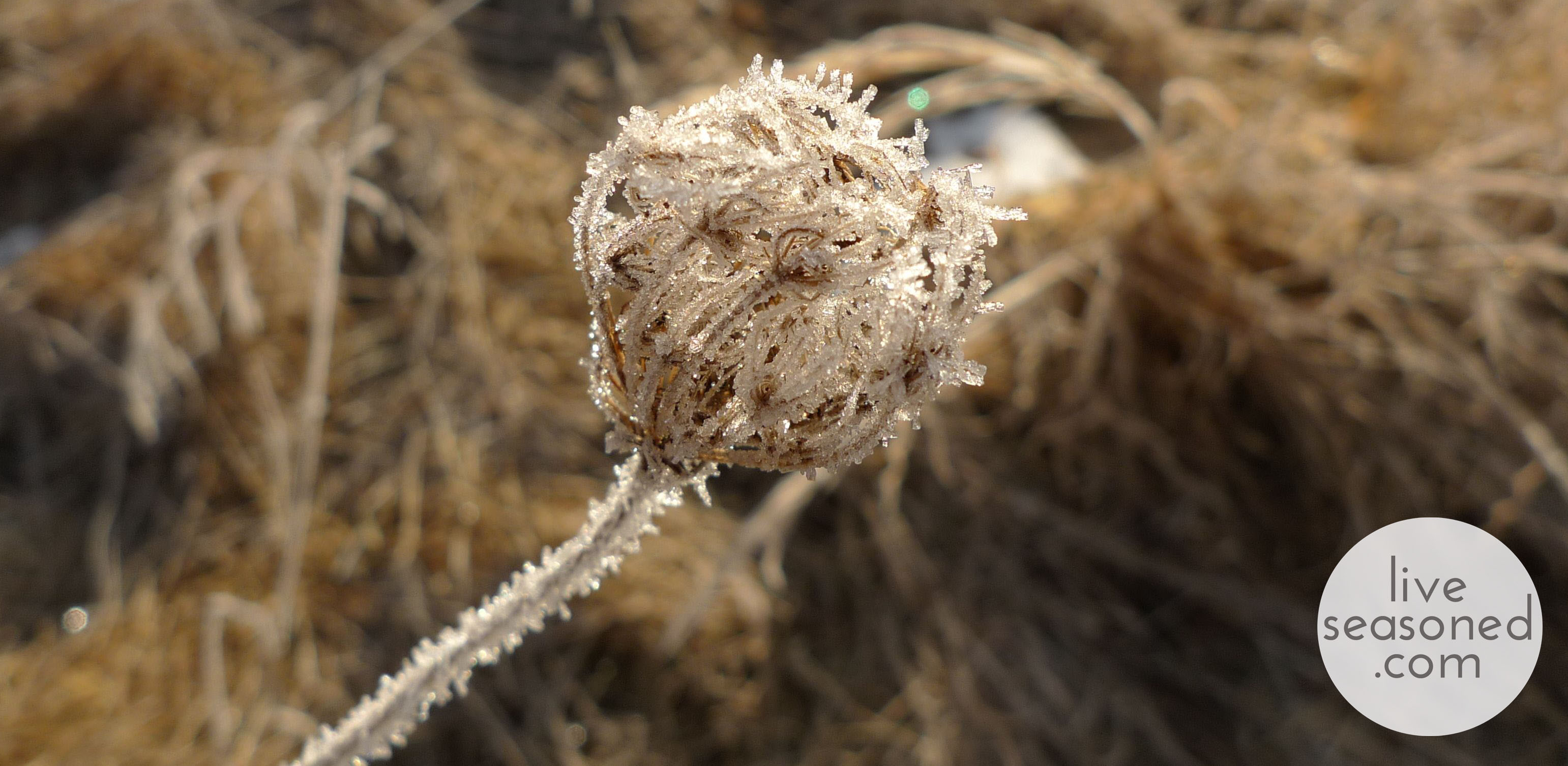
As you can tell, the morning air was freezing crisp and refreshing, with a beautiful layer of frost and ice crystals covering every surface. So first things, first, Calder made some coffee in the french press while I wandered off to check out the scenery. Soon I was back at the van, grabbing my coffee, and encouraging everyone to get out and watch the rising sun sparkle on the ice.

Continue reading

Tap that Maple.

liveseasoned_spring2014_maple18_wm

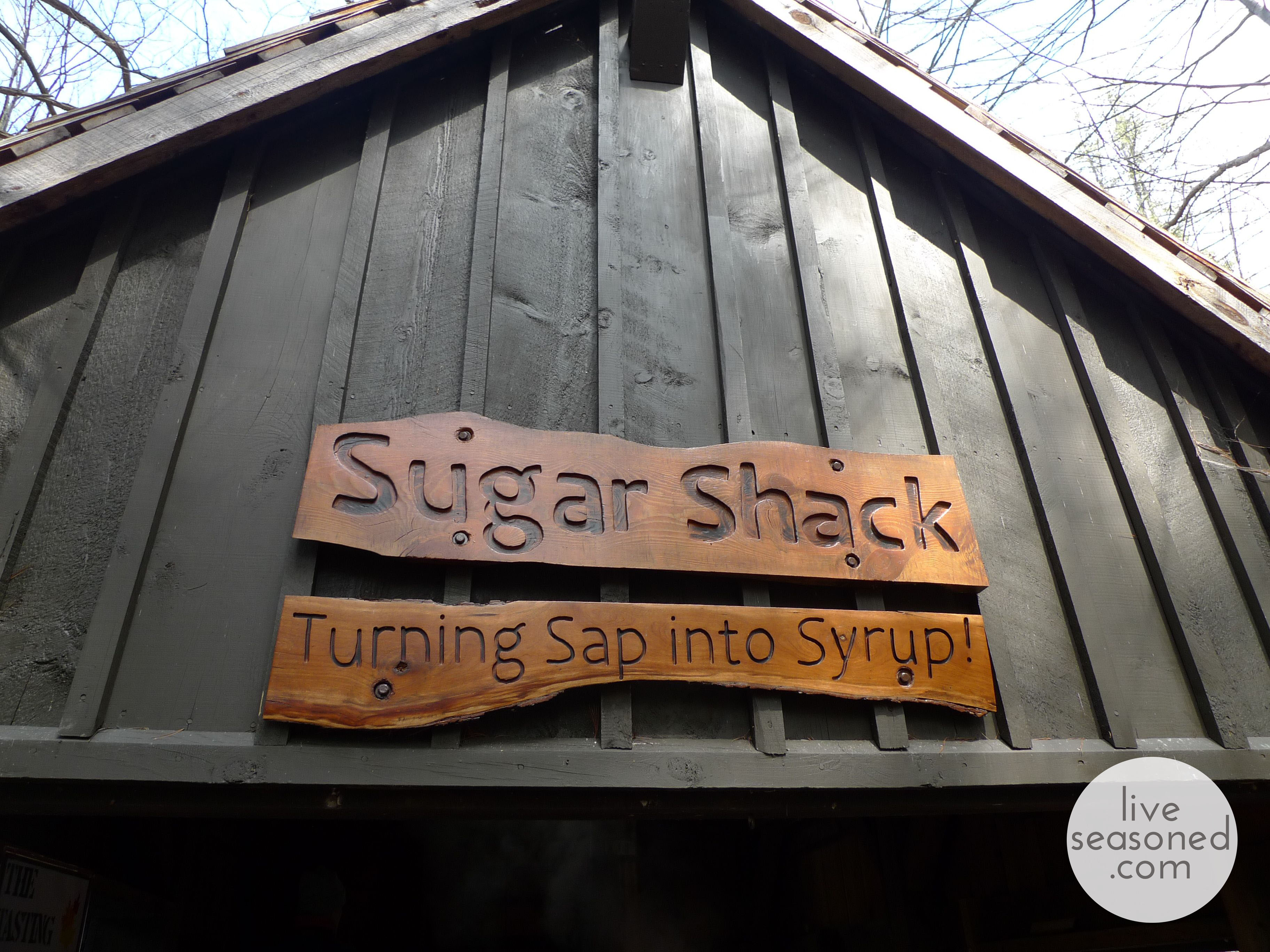
Last weekend we finally (finally! I whisper/shout under my breath because I’ve been wanting to go for the past three years.) made it to our local environmental center for their maple harvest festival. As we mentioned in our Welcome March post, this month is prime maple tapping time in PA as the warm weather creeps north. You’re laughing because we started this week with temps in the teens, aren’t you? Well, while everyone agrees that it’s time for winter to throw in the towel, below freezing overnight temps are necessary for a good tapping season.

Why do we tap trees in the spring? When maple trees are growing throughout the summer, they produce starches that are stored in tree’s sapwood. During the fall and spring some of these starches are converted to sugar molecules (mostly sucrose) and stored in the sap allowing it to flow throughout the tree as the temperatures warm. A healthy supply of sap requires water, which is plentiful at this time of year from snowmelt and rain showers.  And lastly, the season’s combination of cold nights with temps below freezing and warm days with temps above freezing creates a pressure in the sapwood. When we drill into the tree, that pressure pushes the sap out of the hole and into our buckets!

I was surprised to learn that you can tap more than just Sugar Maples! Black, red, and silver maples can all be tapped, but as you may have guessed, sugar maples have the highest sugar content. The sugar content ranges from 1-6% in sap, and can be measured using a refractometer. On average 40 gallons of sap are required to produce 1 gallon of syrup, which will have a final sugar content of 66-67%. Now for the sad news, on average a single taphole will only produce 15 gallons of sap in a season, but under ideal conditions it is possible to collect 40-80 gallons from that tap!

Continue reading

The Meaning of the Moon

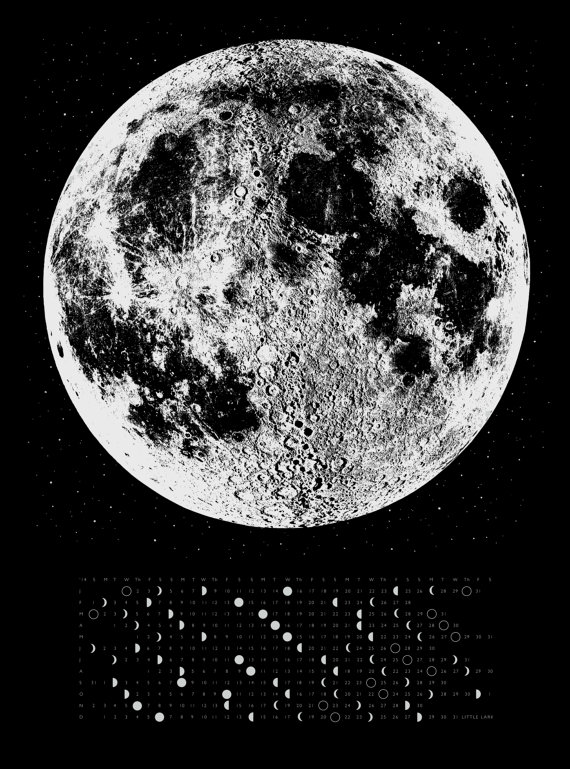
Moon Cycles Calendar

Moon Cycles Calendar

Month after month we gaze up at the full moon in appreciation.  It’s a captivating sight and made even more special by it’s relatively rare occurrence (only 12 or 13 each year).  Personally full moons inspire me to write poems (that aren’t very good) and create cosmic artwork.  I also like to plan goals around the moon cycle, like mini new moon resolutions instead of one big New Year’s resolution.  Each month I stare at that pale disk and fall madly in love.  I feel inspired and giddy with feeling.  We are so small, the galaxy is so big, I love you moon!  Imagine how amazing it would be if we lived on Jupiter? Sixty moons, yes please!  Although maybe if we had sixty moons we wouldn’t appreciate our one full beauty as much.  Sixty moons would also make this post really, really, really long, so thank the solar system for our position while I describe the reasons for our full moon names.

Were you aware that each moon has a different name?  I’ve heard of a few, like the harvest moon (the moon that occurs closets to the autumnal equinox) and the snow moon, but until a few months ago I had no idea each month’s moon was assigned a name. Full moons occur about every 29.5 days as the moon is directly opposite the sun from an earth perspective.  The moon reflects the sun’s rays and appears as a perfectly round disk.  For millennia humans have used the moon cycle to keep track of seasons and to set schedules for planting, hunting and harvesting.  The same is true with the Algonquin Native American tribes that spanned from New England to west of Lake Superior.  These are the names I’ll mainly be describing here and the ones that are most commonly referred to in the United States.  If you’re reading this from the Southern Hemisphere (welcome!) the months and names are listed at the end of the post.

  • January-Wolf Moon is named after angry howling wolves.  During deep snows and cold winters, wolf packs would howl hungrily near the perimeters of Native American villages.  It’s sometimes referred to as the Old Moon, the Ice Moon or the Moon after Yule.
  • February- Snow Moon is named for, you guessed it, the ridiculous amount of snow that falls each February.  Usually this month has the highest recorded snowfall so it’s no wonder why it was deemed the snow moon.  February’s full moon is also known as the Hunger Moon since temperatures were so low, hunting was difficult and food was scarce.
  • March-Worm Moon got its name because worm castings (poop) would appear as the ground thawed.  This also signaled the return of the robins who love to chow down on worms.  March is also referred to as the Crow Moon because of their incessant cawing.  I love crow cawing (am I the only one?) so I tend to refer to this moon as the Crow Moon.  It’s also known as the Crust Moon because the ground thaws during the day, but freezes again at night forming a crust.  Lastly, it can also be referred to as the Sap Moon because trees are prime-tappin’-time during March.
  • April-Pink Moon is named for a species of early blooming wildflower known as wild moss pink or ground phlox.  Coastal tribes refer to April’s moon as the Fish Moon.  Other names include Egg Moon and Grass Moon.
  • May-Flower Moon is a given for the month of May. April showers bring May flowers, ya dig?  Some tribes also referred to May’s moon as Corn Planting Moon and Milk Moon.
  • June-Strawberry Moon is apparently the only name that is universal to all Algonquin tribes.  It was deemed Strawberry Moon because strawberries are in their peak picking season during June each year.  European settlers named it the Rose Moon, but I think Strawberry Moon sounds way cooler. *I’m obsessed with Strawberries*
  • July-Buck Moon is named because male deer begin to grow new antlers each year during July.  Bucks shed their antlers at some point during the year, which means if you scour the woods you may find some! Take a dog with you to increase your odds.  July is also known as Thunder Moon because of the frequent storms during this month.
  • August-Sturgeon Moon was named by Native American fishing tribes.  Sturgeons were caught in abundance every August. It can also be called the Red Moon, the Grain Moon or the Green Corn Moon.
  • September-Corn Moon signifies when corn and other crops are to be harvested.  It’s often called the Harvest Moon, which is the full moon closest to the autumnal equinox (2 out of 3 years it falls in September).  At the peak of harvest, farmers can work late into the night with the help of the light from the Corn Moon.  Another fun fact, usually the full moon rises an average of fifty minutes later each night, but for the few nights around the Harvest moon it rises only 25-30 minutes later across the U.S. and only 10-20 minutes later for much of Canada and Europe.  I always imagine the Harvest Moon to be the happiest of the year for the Native Americans.
  • October-Hunter’s Moon signifies the perfect time to hunt deer and other animals.  Deer are fattened up from summer and easily spotted in the bare forest.  Fox, squirrels and smaller game are also more easily seen now that the fields are bare.  October’s moon is also referred to as the Travel Moon and the Dying Grass Moon.
  • November-Beaver Moon is named for beavers, but it’s not clear why.  It’s either because beavers are highly active preparing winter dams or because it’s time to set beaver traps to stock up on warm winter furs.  The animal lover in me hopes it’s because of the busy beavers.  It’s also known as the Frost Moon.
  • December-Cold Moon because it’s darn cold during December.  It’s also known as the Long Night Moon, which I prefer because I dislike the cold so much that I’d rather it be left out of my vocabulary and because it describes December’s moon so well.  In December, nights are the longest and the moon has a high (above the horizon) trajectory across the sky because it’s opposite a low sun so long nights, long moon.
  • Blue Moon-Full Moons are roughly 29.5 days apart, which leaves 11 days before the Earth finishes its orbit around the sun (one year).  Roughly every 2.5 years there’s an ‘extra’ full moon during a season (usually it’s three full moons per season), which is where the Blue Moon comes in.  It was a common mistake that the Blue Moon referred to the second full moon of the year, but it is actually the name given to the third full moon during a season that has four full moons.  Apparently the big mix-up came about way back in 1946 when Sky and Telescope magazine claimed the Blue Moon fell on the second full moon of the calendar month.  This error caused widespread misunderstanding until it was corrected more than fifty years later in 1999.

Southern Hemisphere Full Moon Names:

  • January-Buck Moon
  • February-Sturgeon Moon
  • March-Corn Moon also usually the Harvest Moon
  • April-Hunter’s Moon
  • May-Beaver Moon
  • June-Cold Moon
  • July-Wolf Moon
  • August-Snow Moon
  • September-Worm Moon
  • October-Pink Moon
  • November-Flower Moon
  • December-Strawberry Moon


Did you learn a little something here?  We’re all about educatin’ [insert your best hillbilly accent here] over here at Live Seasoned.  Do these names still ring true for you or do you label your moons differently?  Since I learned all the names, I’ve been trying to decide which I like best and also adopting some new names for fun.  I love living my life by the lunar cycle.  It’s a fun way to set goals mainly because you can’t do too much procrastinating in only 29 days. Do you find the moon shaping your life in any way?  Tell us about it, we’re all ears.


*Image via Little Lark

In Season: Spring Cleaning

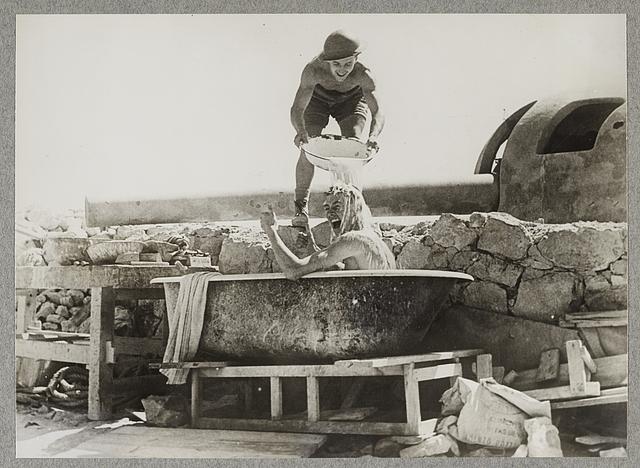
loc_bath

What can we really say about spring cleaning? On the one hand it’s a chore, especially during those first few days of perfect spring weather. On the other hand, giving your space a good, deep clean, letting the fresh air in, and even rearranging the furniture may leave you smiling when you’re stuck inside during the inevitable April showers. However you look at it, we’ve found a few fun supplies and useful resources to put a spring in your cleaning.

Do you have a whole closet dedicated to cleaning supplies? Me neither, but check out this amazing cleaning closet overhaul by Little Green Notebook.

You can always count on Kaufmann Mercantile for quality products, including this wool duster.

Perhaps this tells you something about my cleaning tendencies: I bought this scrub brush because I loved the Japanese packaging… and four years later it’s still in that cute paper bag.

Spring is a great time to clean your wool sweaters and coats before packing them away for summer. Be sure to look for any signs of wool moths and pack them with some cedar or lavender as a repellant.

We have a glass shower door with a million nooks and crannies, I kind of want this power scrubber to give it a good clean. Does anyone have one? Does it work well?

I want to make this homemade sage cleaning spray this year. Sarah made a cleaning spray with oranges that she’s going to share soon!

Cleaning with a bit of elbow grease and without harsh chemicals is important to me, especially with a kiddo and pup in the house. This post provides a great overview of the essential ingredients to have on hand and how to use them.

I always find a good list helpful. This one overwhelms me, but I like the “bonus point” encouragement of this one.

Ahhhhhh, and then there’s this dustpan.

Need justification for the dustpan or a bit of encouragement to pare down as you clean? 

Have nothing in your house that you do not know to be 
useful, or believe to be beautiful. William Morris

Happy Friday, friends!

$17 Saturday: Raleigh Flea Market

This is the first post of our $17 Saturday series.  From time to time we’ll suggest some weekend activities where we challenge ourselves to only spend $17.

If you’ve never experienced the magic of flea markets I’m begging you to drop everything and just go! Get up right now, grab your shopping bags and a fist full of cash and scoot! Oh wait, read this post and get a taste of the magic and a few tips before heading out the door.  First off, it’s not a barn full of fleas like I previously thought.  It’s actually an eclectic mix of old, used and new treasures waiting to be taken home and loved.  Be prepared for a day of searching, sifting and scouting out the best finds at the market.  Also prepare yourself for a few heartbreaks.  You’re bound to come across the most wonderful treasures and obscure finds that cannot be afforded, but don’t mope too long, move on and find something meant for you!  Read on to learn a few tricks before heading to the market.

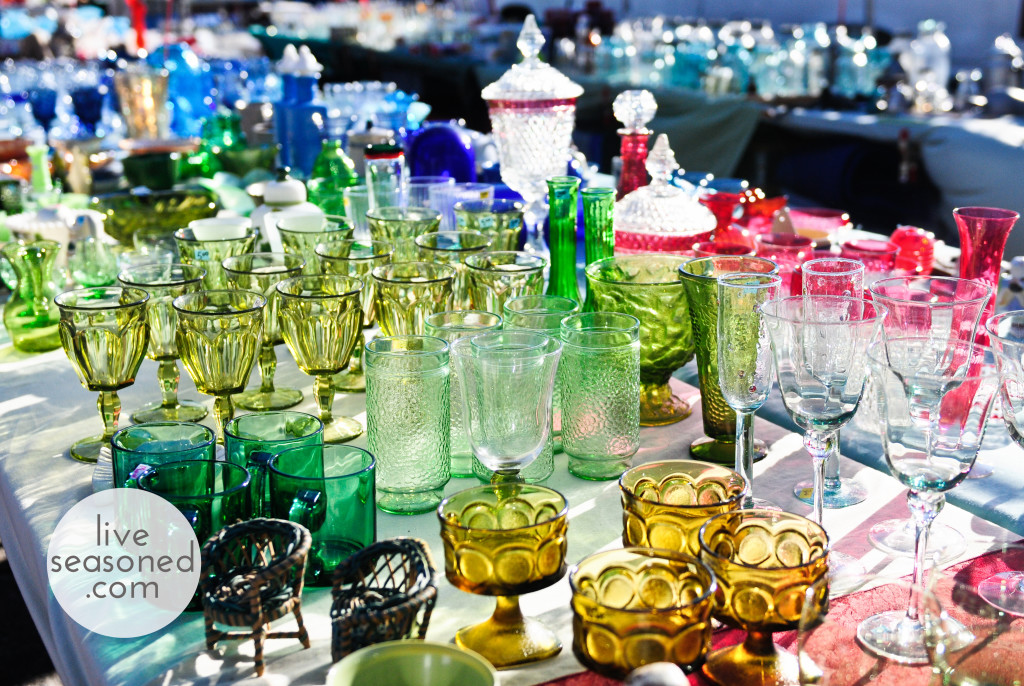
liveseasoned_spring2014_$17fleamarket-9

I knew I wanted to hit up a flea market or thrift store for an installment of $17 Saturday so this past weekend I decided to check out the flea market in Raleigh, North Carolina.  It has been around since 1971 and it definitely shows.  The grounds were huge!  There were vendors both inside and out selling all kinds of stuff. It’s kind of like a thrift store on steroids with a bunch of individual sellers.  Some sellers price high and others price unbelievably low.  Some stands are organized and have a clear flow of merchandise while others are just piles on the ground.  The sellers inside tended to have new merchandise for sale while the people in the outer lot tended to sell antiques and older items.  While the records, kitchen supply store and handmade furniture inside the building peaked my interests the real treasures were to be found outside.  I knew I wanted the flea market to be a $17 Saturday feature, but all bets were off once I saw the goods to be had.

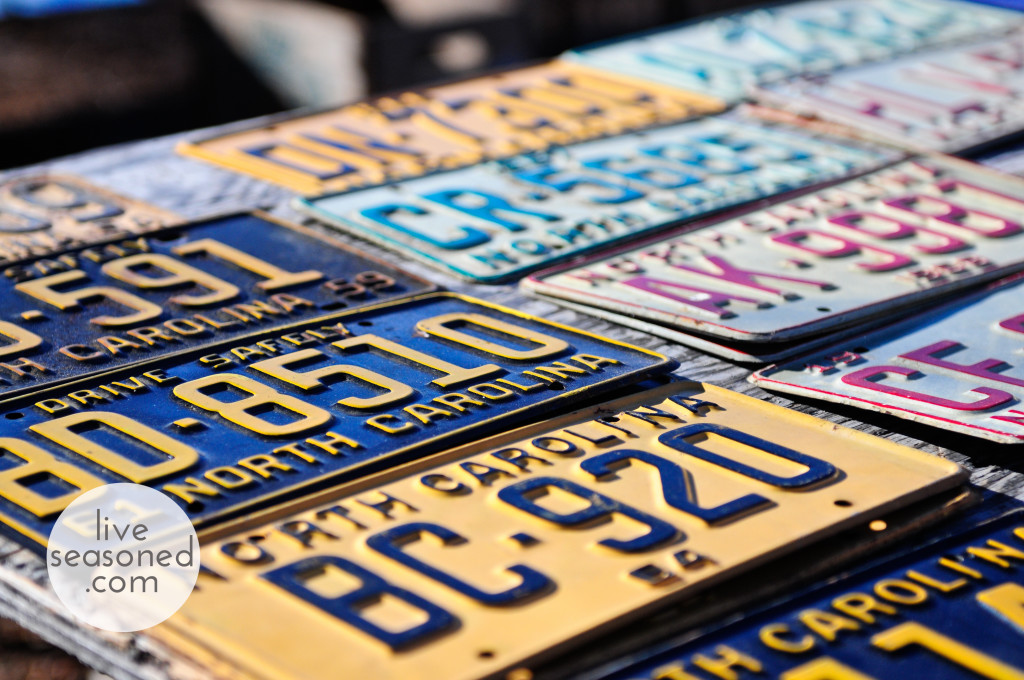
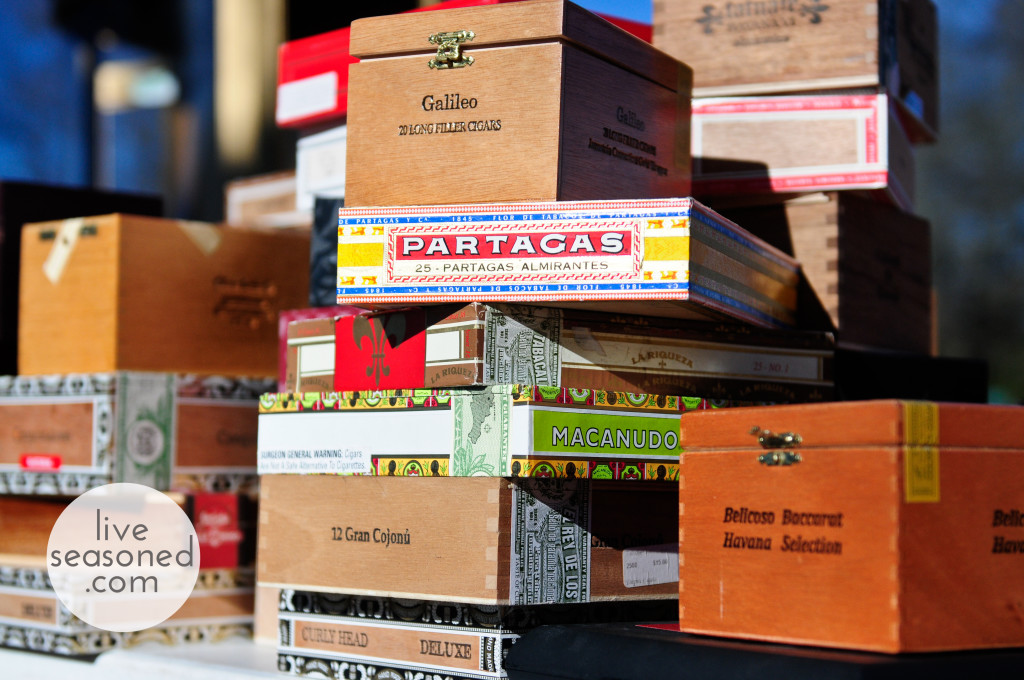
Hundreds of vendors displayed their items on tables, in booths and overflowing out of the back of their vehicles.  There were rows and rows of furniture, antique kitchen gadgets, old license plates, wooden cigar boxes, books, plates, crystal stemware, jewelry and toys.  Some vendors specialized in particular items.  One man had tables and tables of arrowheads that he found throughout North Carolina.  Another man had hundreds of old cigar boxes and yet another had tables of colorful glassware.  You could tell some vendors cleaned out houses for a living while others meticulously picked the collections displayed on their tables.  Once outside I started skipping and prancing from table to table.  It’s hard to contain your excitement when you’re basically standing in the middle of a treasure chest.  At one point I even yelled, “CANDLESTICKS!” and started running in the opposite direction, away from my boyfriend, and towards the shiny objects.  It was a glorious day.  Being led around by my eyes like a dog is by his nose from one pretty item to the next.

liveseasoned_spring2014_$17fleamarket-2


I didn’t go to the market with one particular item in mind.  Since it was my first time at this flea market I didn’t know what to expect and I didn’t want to get my hopes up.  I wandered around for a while before getting in the grove and seeking out special items.  Sometimes it takes a bit of time before you can see individual gems among the piles of stuff.  At first glance some stands look like one big heap of junk, but among those mounds you might find an old dictionary or a seasoned cast iron skillet or an antique film camera.  Once you spot something you like there are a few questions you should ask yourself: How much do I want to pay? How much am I willing to pay?  Is it likely I’ll find this item at another stand?  Do I really need this or is it enough knowing that it’s out there and someone else will enjoy it if I don’t?  I’m pretty thrifty so I always run through those questions before I attempt to buy something.  I also don’t like to get attached to things because I like to move a lot and we all know moving with less stuff is a heck of a lot easier than towing a sixteen-wheel U-Haul.  After I decide how much I’d like to pay, I ask the seller the price of the item.  He or she will either quote a price or ask how much I think it should cost.  If the seller asks me to price it then I’ll knock a couple bucks off the price I’d like to pay.  Usually they’ll ask for a few dollars more and it all works out.  If they tell you a set price and it’s too high you can usually talk them down a few dollars, but if you’re not comfortable haggling, kindly put the item back and skip on over to the next table.  Don’t be discouraged by the prices or lack there of.  Sellers have different ways of pricing their items and you may be surprised by how high and low each will go.

liveseasoned_spring2014_$17fleamarket-16

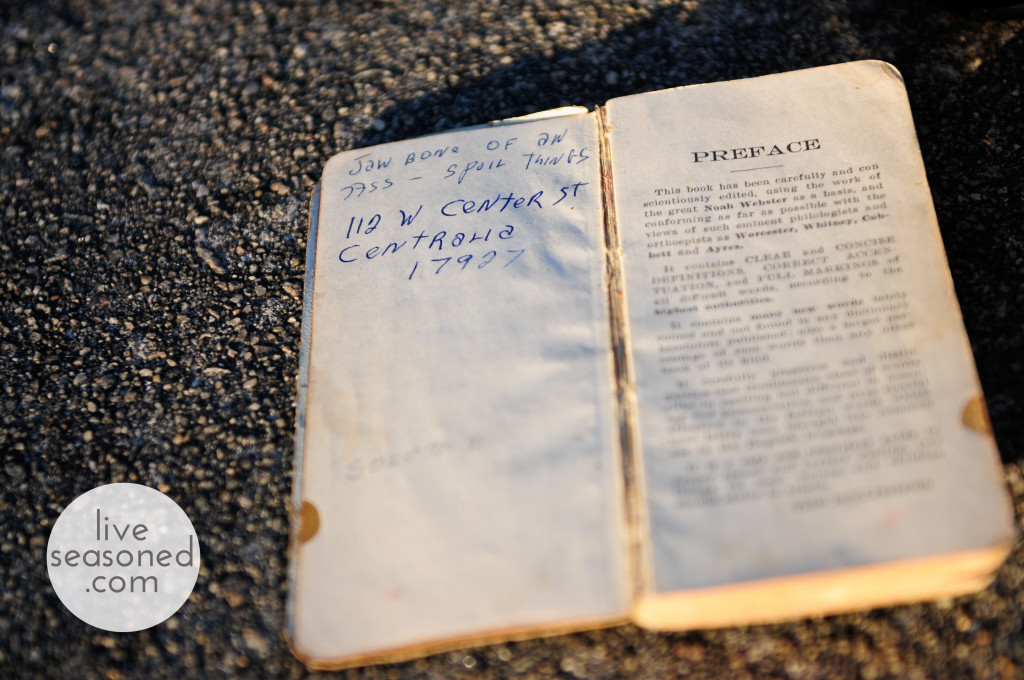
I was reluctant to ask about the price of a vintage Webster’s Dictionary, but it was the second one I saw that day.  When I opened the cover and noticed that it was owned by a man from Centralia, Pennsylvania, I knew I had to at least ask.  Centralia was a tiny little town near the one I grew up in.  In the sixties a vein of coal underneath the town caught fire and it still smolders to this day.  Because of the mine fire most of the residents have relocated and the houses have been torn down.  Less than a dozen houses remain.  It has always been a little fascination of mine, which is why I wanted this dictionary so badly.  I told myself I would only pay $5 for it and to my surprise it was only a dollar!  When the vendor saw the look on my face he said, “Well, now it’s $2.” I smiled, scurried away and tucked my little treasure into my bag.  From that point on I was floating around the market finding one prized piece after another.  I picked up the set of juice glasses for $5 and the little bowl for $4.  I also picked up a small spoon for puddings, sauces and taste testing recipes mid-cook for $3. Lastly, I picked up a black and white bracelet for $1.  It’s rare that I can resist black, white or gold jewelry.  There were a few items I swooned over, but couldn’t justify buying.  I saw a beautiful crystal bottle that would be perfect for alcohol or olive oil and I was extremely tempted to buy an antique lamp, but there was no shade.  I currently have three beautiful lamps that I need shades for, I couldn’t forgive myself if I acquired yet another.  I’m happy just knowing that those items are out there and when I’m ready to buy them I’ll be able to find them.  I finished my day with a huge piece of pizza for the hefty price of $3.  After three hours at the market I was pretty tired.  Sifting and searching takes a lot out of you.  For me it’s mostly mental.  It’s three hours of arguing with myself and talking myself out of purchases, but seeing tables of beautiful old goods makes it all worth it.  I ran through my purchases in my head and couldn’t believe it when they totaled exactly $17!  I hadn’t even kept track of my spending all day until I walking back to the car.  It’s funny how things work out like that.  I almost talked myself out of the pizza because I had delicious leftovers at home, but I must have sniffed it out for the sake of $17 Saturday.

A few market tips:

  • Start your day with an energizing breakfast and a coffee or tea.  That way by the time you’re at the market you’ll have energy to browse and stamina to walk up and down the rows of goodies.
  • Take a bottle of water and a snack along too.
  • Remember to wear comfy shoes and take an empty shopping bag for your future treasures.
  • Credit cards won’t do you much good at a flea market.  Some vendors accept them, but most only accept cash.  It’s best to take a bunch of small bills unless you plan on buying higher priced items.  After haggling down a price it would feel like a slap in the face if you asked the vendor to break a $50.
  • Above all, remember that it takes time to find treasures.  You can’t go into a flea market expecting gems to fall into your purse.  You need to put the time in.  Sift through tables, talk to vendors, hear their stories and get intrigued.  Who knows maybe you’ll find something worth a lot of money or meaning to you.

liveseasoned_spring2014_$17fleamarket-3

Here’s a final rundown of how I spent my dollars:

  • mini spoon $3
  • Webster’s Dictionary $1
  • little bowl $4
  • set of 4 juice cups $5
  • black and white bracelet $1
  • enormous piece of pizza $3
  • Grand Total: $17

Did you ever score something amazing at a flea market?  Do you have a favorite flea market? Tell us about it or show us your treasures on Instagram. Use the hashtags #liveseasoned #fleamarketfinds so we can see your scores.

In Season: Pi Inspired Links

PiPineapplePie

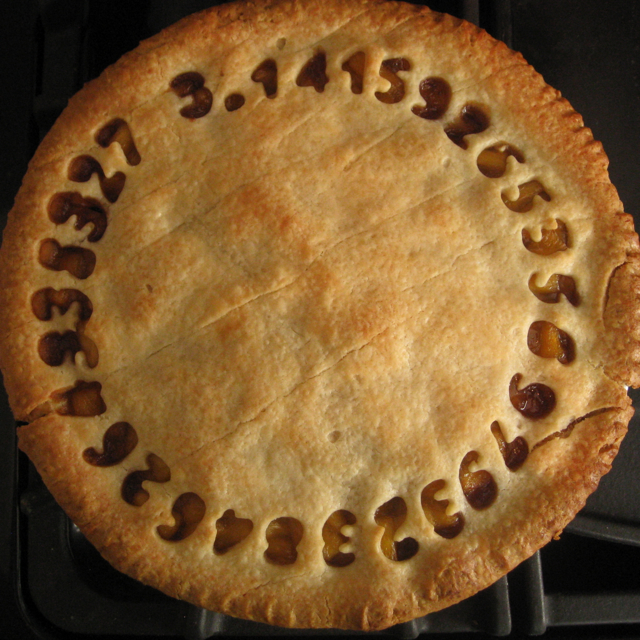
Happy Pi Day from Live Seasoned!  Today we have math and pies on the brain, well mostly pies.  Here’s a few pi (and pie) inspired links for your Friday, there’s still time to make it a Pieday!

New to this whole Pi Day business? Well it’s time to get your act together! Learn a bit about Pi here.

People compete to memorize Pi, which is a challenge since its decimal digits never end and never develop a repeating pattern. If you want to do the same and impress your friends, get this mug. Looking at it every morning is sure to help.

I must admit, it’s rare that I bake a pie, but I recently spent two months on a mountain with an amazing pie baker!  He whipped them up like it was nothing and he also told me about this sweet pie blog that his friend created.  Eating his pies was inspirational, but I still haven’t gotten around to baking one yet. Shh, don’t tell.

What is 3.14 backwards? PIE!

I’m more likely to make a pot pie or shepard’s pie.

One of my favorite Christmas presents this year was a really pretty white ruffled pie dish.  Everyone should own one.  Here’s a few other pretty pieces.

And how cute are these Easy As Pie dishtowels?

One of the best pies I’ve ever had was raw.  I remember my roommates and I all shared it until it was finished, which took about five minutes.

This split decision pie pan is a great idea, especially to accommodate for different diets;  now gluten-freebies and vegans can eat pie with the rest of the gang.

If you succeed at baking and eating a pie today, please order this t-shirt.

Need some more pie inspiration?  Check out our pinterest board for more recipes and cute pie supplies.


*Image via the Nerdista

In Season: Gettin’ Crafty With It

liveseasoned_spring2014_craftlinks_knittinggals

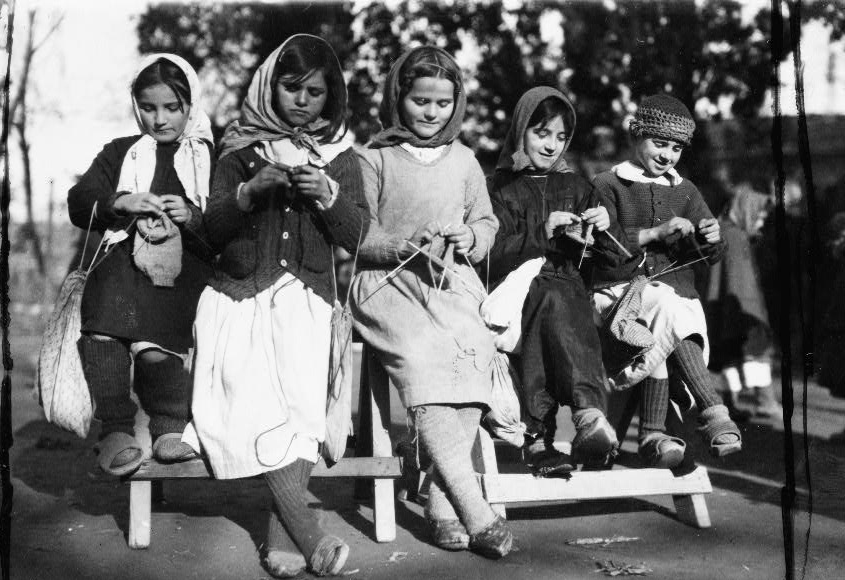
This week I worked two smaller gigs that paid in cash and after each one I stopped off at Michaels, A.C. Moore and Lowes on the way home.  I realized I have a tendency to immediately spend my cash on craft supplies even though I already have a whole room full of fabrics, papers, ribbons and yarns.  Are you the same way?  What are your favorite craft supply sources and items?  We’ve rounded up a few fun ones here, but we’re always looking for those mystical bead shops or that warehouse full of fabrics so let us in on your secret supply stores too.

In a few weeks we’ll be sharing some map-tastic crafts so now would be a good time to stock up on these.

These safety pins make awesome removable stitch markers for your knitting projects, and with 300 in a box, you have plenty to lose, share, or stash!

Our mom left Katie with an extra (EXTRA) large crochet hook. What to do with it? Maybe this cowl? Or a crocheted rug?

And then there’s this yarn. wow.

Need a place to store your supplies? Katie uses a library card catalog she picked up on Ebay.

We also love metal tackle boxes for storage. One for jewelry supplies, another for the tools and bobbins we use when at the sewing machine.

Shop Goodwill is a great site for so many reasons.  Sarah is currently perusing their listings for a good sewing machine.

We don’t own fringe scissors, at least not yet! But don’t they look equally scary and exciting at the same time?

When it comes to making wearable gifts for others, the hardest part is getting the sizes right. Size charts like this one for hats are my go-to reference.

Of course, crafting doesn’t have to require buying the supplies, sometimes you have everything you need at home. Take these wine cork stamps as an example. (We all have wine waiting for an excuse to be opened, right?)

Have a great weekend everyone and hopefully it involves a little pro-craft-tination.

Ps. you can find us here now!

*Image via Library of Congress

Welcome March!

On the first Wednesday of every month, you can find us checking in with what’s coming up on the calendar, both literally and figuratively. 

It’s 50F as I type this. I’m at the kitchen table, and the ground outside is covered in a blanket of snow, but there’s a steady drip of water as the snow on the roof begins to melt.

March is truly a month of transitions as we leave winter behind and take that first confident step into spring. Of course, there were a few warm days towards the end of February that hinted at the coming spring, and Mother Nature has started to make her move.
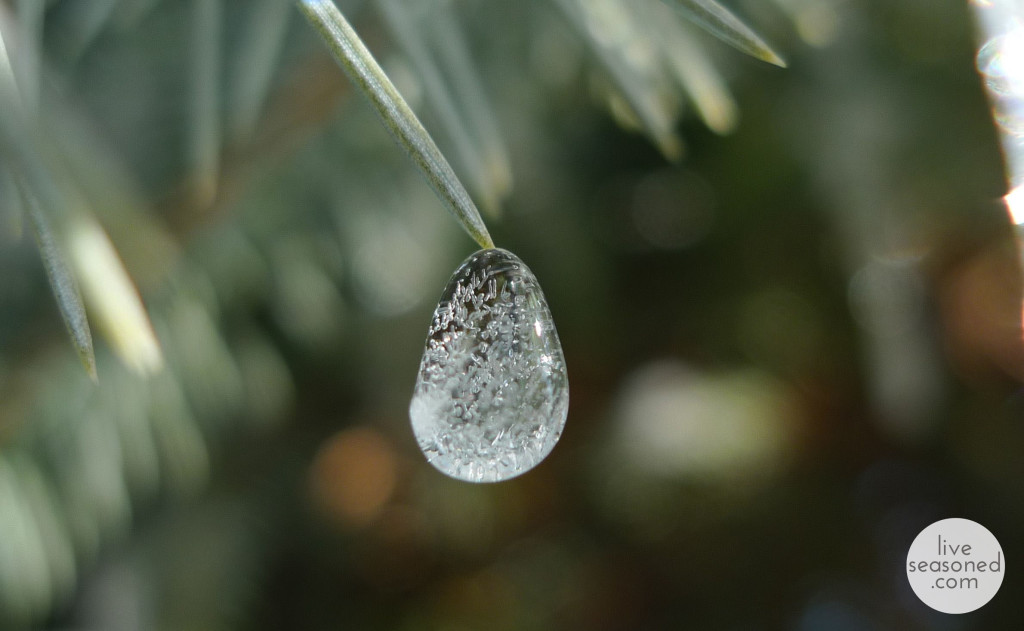
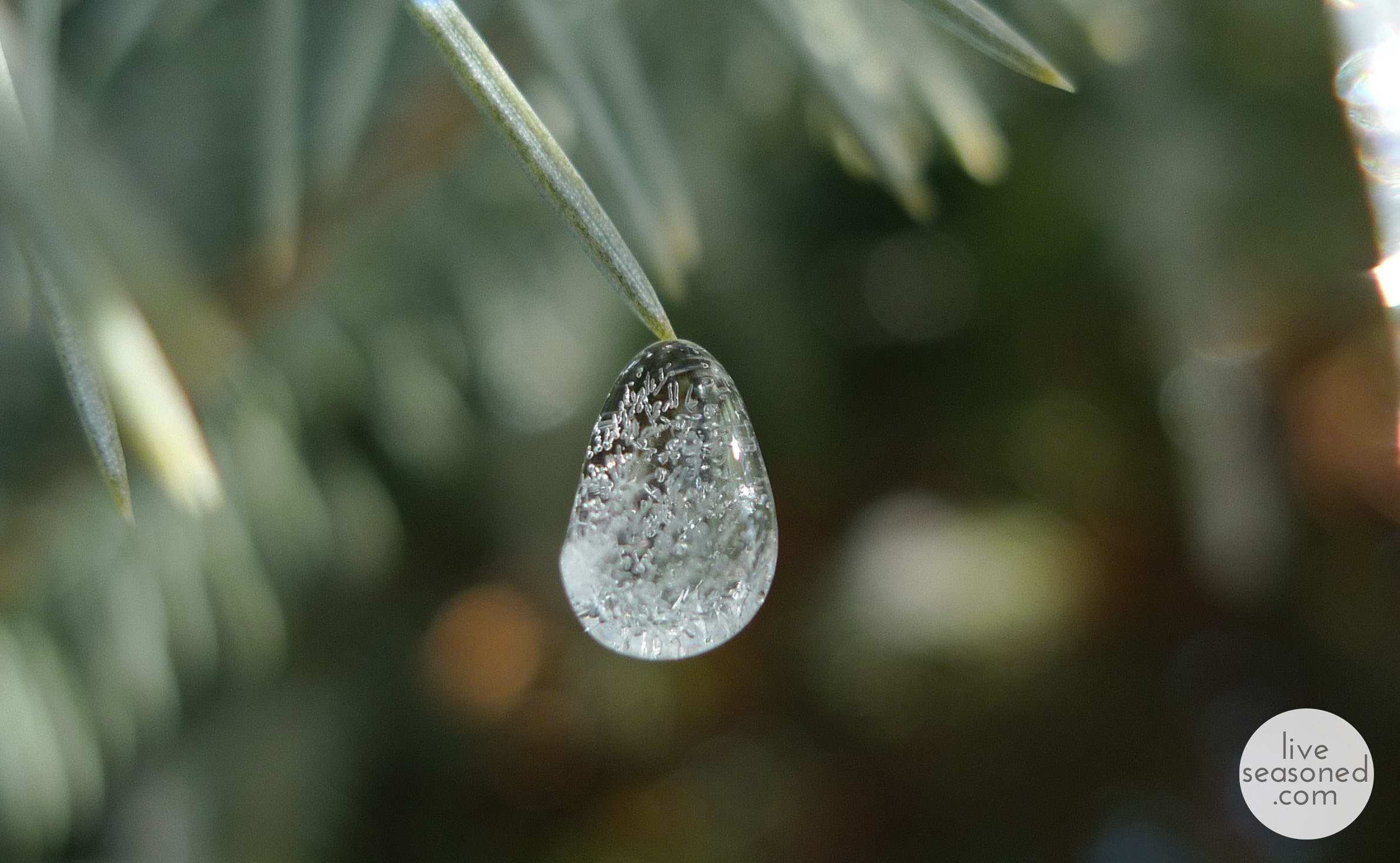
liveseasoned_spring2014_welcomemarch_ice_wmDeciduous trees and shrubs that have stored sugars and nutrients in their roots all winter begin sending it up their trunks to their outer branches as the days warm. That stored energy will be used to open the tree’s buds, making leaves and flowers. It’s during this time of year, that we tap the sap from the maple trees and boil it down into syrup. Maple syrup festivals abound throughout the tapping region and follow the slow warming of the east coast beginning with festivals in Virginia in early March and PA and NY festivals in mid to late March. Along with the maple trees, the opening of the Cherry blossoms are a cause for celebration throughout Japan and here in the US. The month-long National Cherry Blossom Festival begins in DC on March 19th.

Even before the deciduous trees fill out, the earliest of bulbs begin to flower. Crocus may be the typical early spring bloom that pops into your mind, but they are preceded by winter aconite (Eranthis) or snowdrops (Galanthus) bloom.  Of course, all of these will soon be followed by daffodils, hyacinth and tulips.

March is a month of intense activity for many of our migratory animals, including some of our favorites: the monarch butterfly, whooping crane, and ruby-throated hummingbird. Monarchs* are leaving Mexico and southern US for their multi-generation trip north. The endangered Whooping Crane, which is North America’s tallest bird at around 5 feet, take off from their Texas wintering grounds in mid-March. Ruby-throated hummingbirds that flew all the way down to Panama for the winter are now well into their migration north. Many have reached the Yucatan peninsula by now where they will gorge on insects before making the non-stop flight across the Gulf in early March. From there they will continue north following the blooming flowers they rely on for nectar.

Robins have already arrived in central PA. They differ than the other species we’ve mentioned in that they don’t have a direct north-south migration, and their movements are not well understood. They move in large flocks, avoiding areas with deep snow, looking for the availability of fruit in the fall and then returning to their summer breeding grounds as the soil warms and earthworms are available.

The vernal equinox and first official day of spring occurs on March 20th when the sun is positioned directly over the equator. While it may be the most anticipated, that’s not the only fun celestial activity this month. Coincidentally, also on March 20th an extremely rare event will take place shortly after 2 a.m.. An asteroid known as 163 Erigone will pass in front of the bright star Regulus in the constellation of Leo, causing the star to disappear.  This event is even more special because it will only be visible (invisible?) along a 45-mile-wide path that begins in the span between New York City to Oswego, NY and continues northwest into Ontario, Canada. If you’re in the center of this path, the star will remain invisible for 12 seconds.

March’s full moon occurs on the 15th. The native american tribes of the US named the full moons in order to help them keep track of the seasons, most names have to do with natural phenomena or seasonal activities. Many of the moons have a single name, but March’s moon takes the cake in naming. It’s known as the Worm Moon because earthworm casts appear (with the worms feeding the aforementioned robins). The more northern tribes referred to the moon as the Full Crow Moon or Full Crust Moon; the cawing of crows signaled the end of winter, and as many readers can probably relate to this year, the carpet of snow still present in the north thaws during the day and then forms a hard crust overnight when it freezes.  In conjunction with the tapping of the make trees, March’s moon has also been called the Full Sap Moon.
liveseasoned_spring2014_welcomemarch_beer_wm

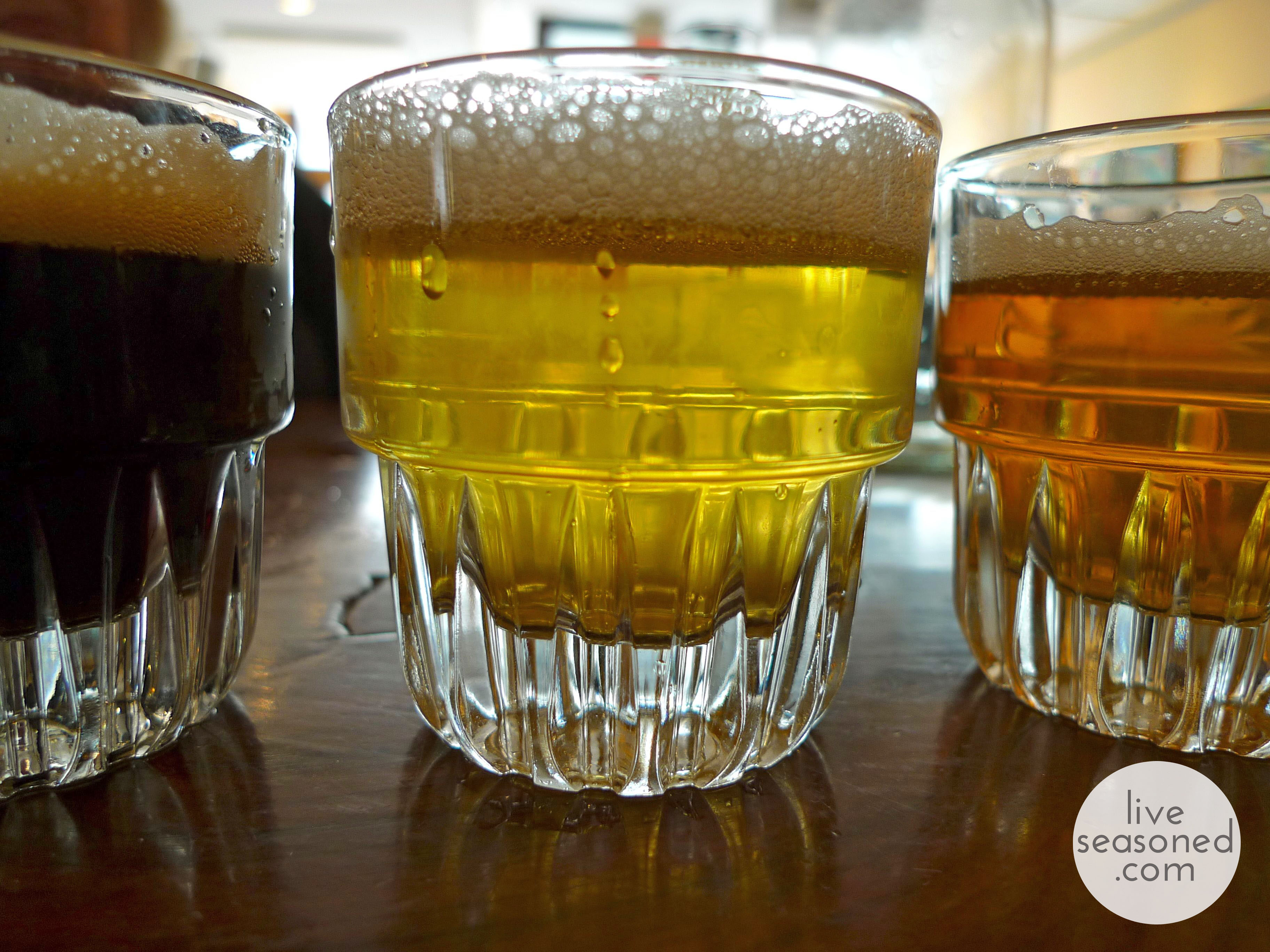
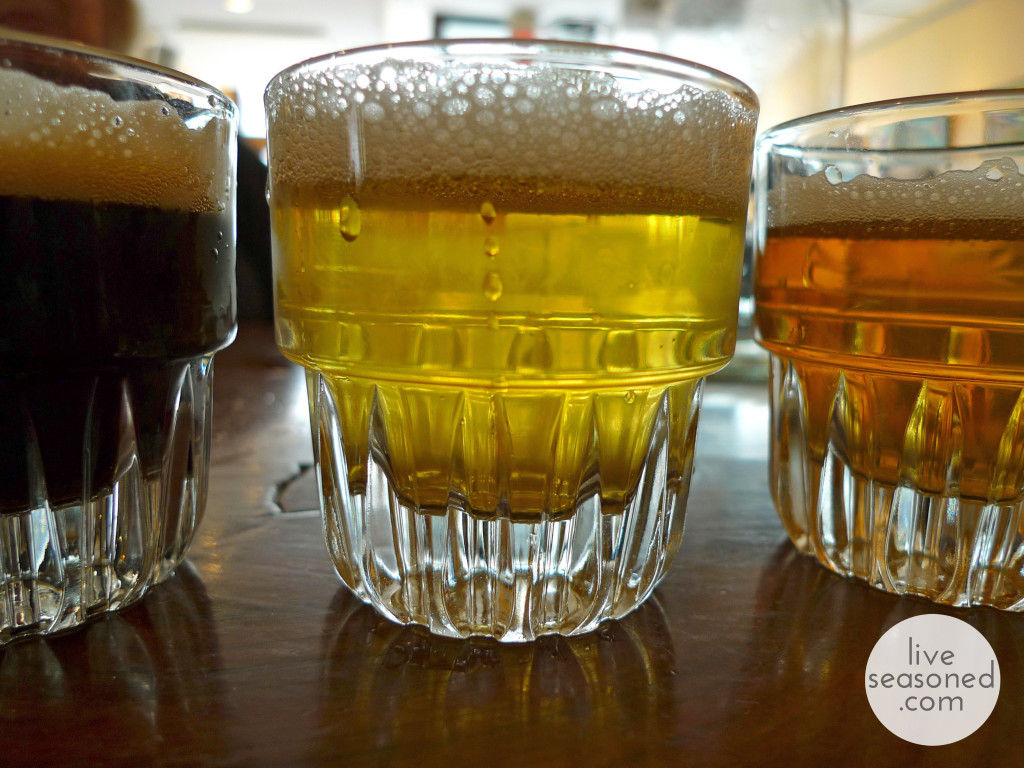
Back in the human realm, Mardi Gras was celebrated yesterday on March 4th (maybe you’re still recovering? or still snacking on those donuts?). Daylight savings time begins at 2:00 a.m. on March 9th; spring ahead lovelies! March 14th is Pi Day. March 17th is St. Patrick’s Day, don’t worry, we’re doing the heavy lifting and planning a little beer review for you. This year the 17th also happens to be India’s famous Holi Festival, also known as the Festival of Colors, celebrating the coming of spring and the victory of good over evil. If you can’t make it to India, there’s a festival on March 8th in LA and the 29th-30th in Spanish Fork, UT.

Finally, just a little warning from Scottish folklore ~ the last three days of March have a reputation for being stormy, and the story has it that these days were borrowed from April. So if the sun is shining today, enjoy it, but be prepared for the end of March and those pesky April showers.

So, that’s a little bit of what’s going on around here, what we’re excited for, and what we’re looking for in our backyard. What’s on your agenda for March?

*Have you heard that the overwintering populations in Mexico are at record lows? This is a concern that we thought was worth acknowledging here, but we would love to discuss it in more detail in a future post.